
Side Dishes
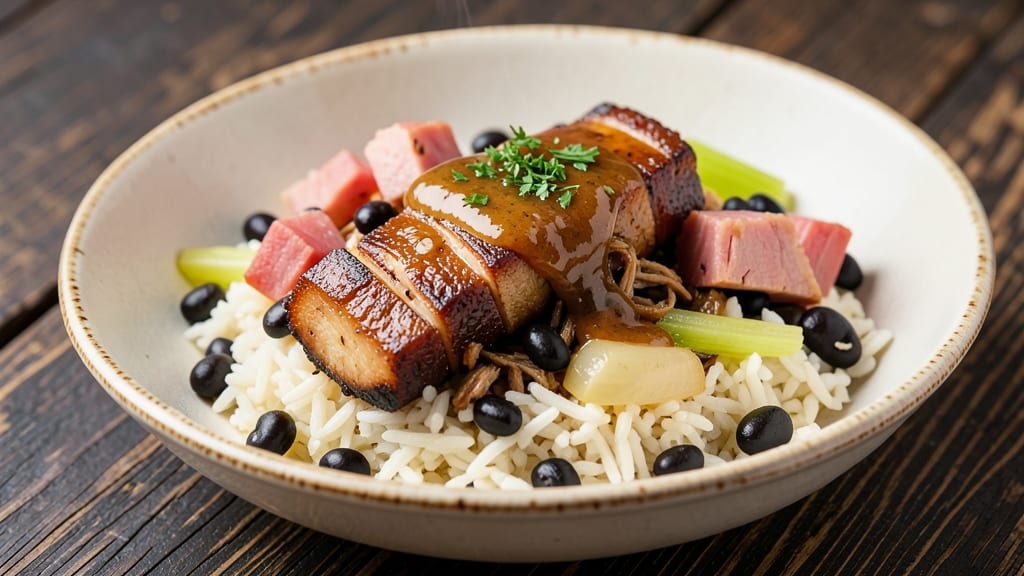
This black eyed peas rice ham recipe brings the soulful flavors of Southern New Year’s tradition to your table in one comforting pot. 💛 The combination of tender black-eyed peas, fluffy rice, and savory ham creates a dish rich in history and flavor—each bite promises prosperity and warmth for the year ahead.
Perfect for gatherings or cozy family meals, this recipe delivers restaurant-quality results with minimal effort. The ham hock infuses the rice with deep, smoky flavor while the peas soak up every bit of savory goodness.
By the time you serve it, you’ll have a dish that’s as meaningful as it is delicious.
Ingredients for black eyed peas rice ham
Pantry staples meet Southern tradition in this one-pot wonder—rich, hearty, and full of New Year's promise.
| Ingredient | Amount | Notes |
|---|---|---|
| Black-Eyed Peas (Dried) 🌱 | 1 ½ cups | Picked over for stones |
| Long-Grain White Rice 🍚 | 2 cups | Uncooked, not instant |
| Ham Hock (Smoked) 🥓 | 1 whole | For deep flavor infusion |
| Diced Ham 🍖 | 1 ½ cups | Bone-free, pre-diced preferred |
| Onion (Yellow) 🧅 | 1 whole | Medium, chopped |
| Celery Stalks 🥬 | 3 whole | Fresh, chopped |
| Carrot (Baby) 🥕 | 2 whole | Whole, chopped |
| Garlic Cloves 🧄 | 4 cloves | Fresh, minced |
| Bay Leaves 🌿 | 2 whole | Dried, crushed |
| Salt 🧂 | 1 ½ tsp | Kosher or sea salt |
| Black Peppercorns 🌶️ | 1 tsp | Freshly cracked |
| Dried Thyme 🌿 | 1 tsp | Or 1 tbsp fresh |
| Vegetable Broth 💧 | 4 cups | Low-sodium preferred |
| Hot Sauce 🔥 | 1 tbsp | Optional, for heat |
The ham hock is non-negotiable for that authentic, smoky depth. Grab a smoked one from the deli counter—it's what gives this dish its soul. If you can't find a ham hock, a smoked ham bone works too, but the hock's jelly-like texture melts into the rice like magic. For the peas, dried is best—soak them overnight for perfect texture, but if you're in a rush, the canned kind (drained and rinsed) will do in a pinch. The rice? Long-grain white is traditional, but jasmine or basmati works just as well. Just don't use instant—it won't hold up to the long cooking time.
No ham hock? Double the diced ham and add a splash of liquid smoke—it's a decent stand-in. Fresh thyme? Dried works at one-third the amount, but trust me, the fresh stuff makes all the difference. The vegetable broth can be swapped for chicken broth if you're not strict about vegetarian elements, but keep it low-sodium. For the veggies, whatever you've got in the crunchy trifecta (onion, celery, carrot) works—just chop them evenly so they cook at the same rate. And if you're feeling spicy, hot sauce at the end lets you control the heat.
This dish tastes even better the next day as flavors meld, so make extra. Store leftovers covered in the fridge for 4-5 days, or freeze portions for up to 3 months. I like to portion it into containers with a little extra broth on top—just reheat with a splash of water. The ham hock? Pick it clean after cooking and compost it. The peas and rice will keep well for a week in the fridge if you store them separately, but honestly, they're best together in that rich, savory broth.
Why You'll Love This Recipe
- One-Pot Magic: I swear by this recipe because it’s all in one pot—peas soaking overnight, rice cooking with the ham hock’s rich broth, and diced ham melting into the mix. No chopping stress, no switching pans, just layer after layer of flavor building together while you sip your coffee.
- Smoky Depth Bomb: That ham hock? Absolute game-changer. It infuses the rice with smoky, savory goodness that sticks to every grain, while the diced ham adds salty, tender bites. Honestly, the first time I tasted it, I thought, “Why haven’t I been doing this all along?”
- Holiday or Weeknight: Between us, this dish works for everything—Sunday suppers, New Year’s Day gatherings, or when you’re too tired to care. The peas add a hearty texture, the rice soaks up all the juices, and the ham makes it feel special without needing a fancy presentation.
- Budget Meal That Feeds: A ham hock and a bag of dried peas stretch this recipe into days of leftovers—think fried rice, tacos, or just reheated with a sprinkle of hot sauce. I’ve fed my whole family (plus a few friends) for under $15, and no one ever complains about the taste.
Step-by-step instructions for one-pot black-eyed peas and rice
This Southern classic comes together beautifully in one pot—rich, hearty, and perfect for New Year's celebrations.
🍳 Step 1: Soak the Black-Eyed Peas and Prep the Ham
First, rinse the 1.5 cups black-eyed peas (dried) under cold water to remove any debris. Place them in a large bowl and cover with plenty of water—at least 3 cups—then let them soak for at least 2 hours (or overnight if possible). This step is crucial for tender peas that won't stay hard or crunchy.
While the peas soak, rinse the ham hock (smoked) under cold water to remove any surface salt or preservatives. Place it in a large pot—the same one you'll use for cooking—and cover with cold water. Bring to a boil over high heat, then reduce to a simmer for 15 minutes. This pre-cooking step extracts deep, smoky flavor into the water, which will infuse your entire dish.
🥘 Step 2: Build the Flavor Base with Vegetables and Broth
After the ham hock simmers for 15 minutes, drain it and set it aside (you'll return it later). In the same pot, add 2 cups long-grain white rice, 1.5 cups diced ham, 1 whole chopped onion (yellow), 3 chopped celery stalks, 2 chopped baby carrots, and 4 minced garlic cloves. Stir everything together and let it cook over medium heat for 5 minutes, stirring occasionally.
Next, add the 4 cups vegetable broth, the drained black-eyed peas, 2 crushed bay leaves, 1.5 teaspoons salt, 1 teaspoon cracked black peppercorns, and 1 teaspoon dried thyme. Bring the mixture to a boil, then reduce heat to low and cover the pot with a tight-fitting lid. Let it simmer for 30 minutes without lifting the lid—this gives the rice and peas time to absorb the initial flavors.
🔥 Step 3: Simmer and Infuse the Flavor
After 30 minutes, carefully remove the ham hock from the pot and place it on a cutting board. Using a fork, shred the meat into small, bite-sized pieces—discard any bones or connective tissue. Return the shredded ham to the pot and stir gently to distribute the flavor.
Continue simmering the pot over low heat for another 30-40 minutes, stirring occasionally to prevent sticking. The rice should be tender and the peas should be soft but still hold their shape. If the liquid evaporates before the rice is fully cooked, add ½ cup hot water at a time until the rice reaches your desired consistency. The dish is ready when the rice is fluffy and the peas are tender—about 1 hour total cooking time from the start of simmering.
🍽️ Step 4: Finish with Heat and Rest
Once the rice and peas are fully cooked, stir in the 1 tablespoon hot sauce (if using) and taste for seasoning. Adjust with additional salt or black peppercorns if needed. Remove the 2 bay leaves before serving, as they can be bitter.
Let the dish rest for 10 minutes before serving—this allows the flavors to meld and the rice to absorb any remaining liquid. Serve warm, with extra shredded ham on top if desired. This one-pot wonder is rich, comforting, and packed with Southern tradition in every bite.
Pro Tips For Making Black Eyed Peas Rice Ham
- Soak Peas Overnight: I learned this the hard way—skipping the soak turns your black-eyed peas into mushy, sad little orbs instead of tender, creamy bites. Toss them in a bowl of water (about 3 cups per cup of peas) and let them sit for 8 hours or overnight. Drain before cooking, and you’ll get that perfect texture every time.
- Brown the Ham Hock: That smoked ham hock isn’t just for flavor—it’s for depth. After rinsing it off, sear it skin-side down in a cold pot for 5 minutes until the fat renders and the meat starts to brown. This step locks in flavor and keeps your rice from tasting like plain broth.
- Layer Rice and Liquid: Dumping all the rice and broth in at once guarantees uneven cooking. Instead, spread half the rice in the bottom of the pot, pour a third of the liquid over it, then repeat. Top with the remaining rice and liquid, then stir once. This guarantees fluffy, even grains instead of a gummy mess.
- Simmer, Don’t Boil: The moment your pot starts rolling like a storm, you’ve crossed the line. Keep the heat at a gentle simmer—just enough to see tiny bubbles breaking the surface. Boiling turns rice mushy and black-eyed peas mealy, and nobody wants that. (Yes, even if you’re impatient like me.)
Essential equipment for black eyed peas rice ham
One-Pot Essentials
You only need one large pot (I recommend a 6-8 quart Dutch oven like the Le Creuset or All-Clad) to pull off this recipe beautifully. The deep sides prevent overflow, and the heavy base distributes heat evenly for that perfect simmer.
If you don’t have a Dutch oven, a heavy-bottomed stockpot with a tight-fitting lid works just as well. 🔥
Soaking Setup
A large mixing bowl (at least 3-quart capacity) is perfect for soaking the black-eyed peas. I use a stainless steel bowl—it’s easy to clean and won’t absorb odors.
For the ham hock, a sharp chef’s knife (like a Victorinox 8-inch) is essential for trimming excess fat or connective tissue. A fine-mesh strainer helps rinse the peas thoroughly before cooking.
Flavor Extraction Tools
After simmering the ham hock, you’ll need a cutting board and fork to shred the meat. I prefer a wooden cutting board (like Teakhaus) for grip, and a sturdy fork makes quick work of separating the meat from bones.
A small bowl also comes in handy for holding the shredded ham while you clean up the pot.
Seasoning and Finishing
A mortar and pestle (or spice grinder) is ideal for crushing the black peppercorns and bay leaves to release their full flavor. For the hot sauce, a small measuring spoon ensures you add just 1 tablespoon without overpowering the dish.
A wooden spoon is best for stirring—it won’t scratch your pot like metal utensils can.
Optional Upgrades
For extra flavor control, a meat thermometer (like the Thermoworks Smoke) helps monitor the ham hock’s internal temperature—aim for 165°F before shredding. If you’re serving a crowd, a large serving spoon (or ladle) makes plating easier.
And for presentation, a small bowl of hot sauce on the table lets guests adjust spice levels to their taste. ✨
Nutrition facts
Frequently asked questions
Why do we eat black-eyed peas and rice on New Year's Day?
This dish, known as Hoppin' John, is a Southern tradition believed to bring good luck and prosperity for the coming year. The peas symbolize coins (for wealth), rice represents money, and ham stands for progress. Eating it on New Year's Day is said to ensure financial success and abundance throughout the year.
Can I substitute canned black-eyed peas instead of dried?
Yes, you can use canned black-eyed peas in a pinch! Drain and rinse them thoroughly before adding to the pot. However, dried peas develop a creamier texture and richer flavor when cooked from scratch. For best results, soak dried peas overnight—this ensures tender, perfectly cooked peas that hold their shape.
What if my rice comes out mushy?
Mushy rice usually means the dish needed more liquid or longer cooking time. To fix it, reduce the broth by ½ cup next time and simmer for 5-10 minutes longer**. Stir occasionally and check the rice consistency frequently. For future batches, use a 1:2 ratio of rice to liquid and avoid lifting the lid too often while simmering.
How do I make this vegetarian?
Replace the ham hock and diced ham with smoked paprika (1 tsp) and mushrooms (1 cup, sliced) for umami depth. Use vegetable broth and add 1 tbsp soy sauce for a savory touch. The dish will still be hearty and flavorful while keeping the traditional New Year's symbolism—just focus on the peas and rice for prosperity!
Can I make this dish ahead of time?
This dish tastes even better the next day as flavors meld together. Store leftovers in an airtight container in the fridge for 4-5 days. Reheat gently on the stove with a splash of water or broth to restore moisture. For freezing, portion into containers and freeze for up to 3 months—just thaw overnight in the fridge before reheating.