
Salads
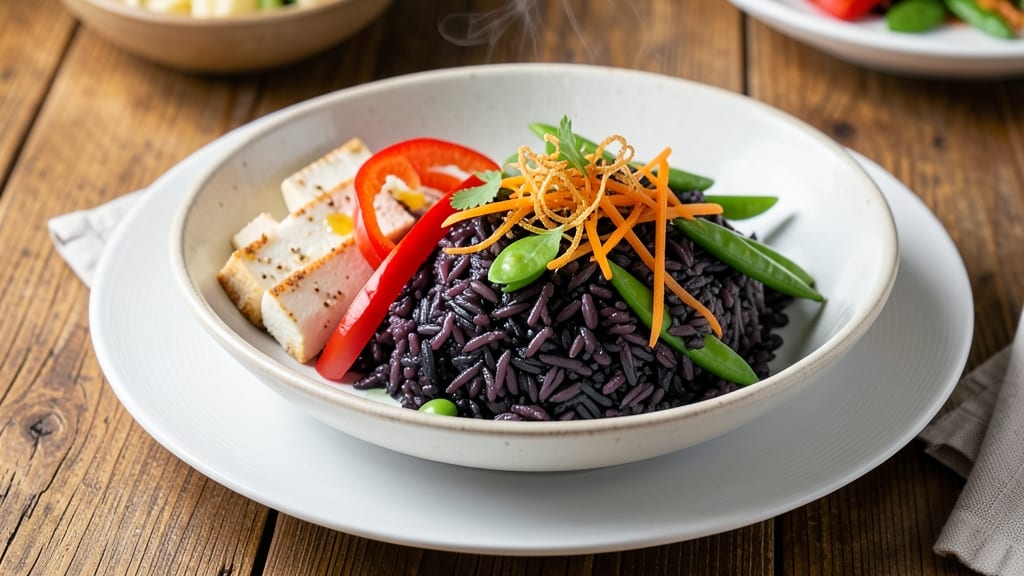
This black rice and vegetables recipe delivers a vibrant, nutrient-dense power bowl packed with antioxidants and bold flavors. 💛 The deep purple hue of black rice isn't just striking—it's loaded with anthocyanins, while the crisp-tender vegetables add texture and freshness.
Perfect for meal prep or a satisfying lunch, this dish balances earthy grains with bright, complementary ingredients.
What sets this recipe apart is the combination of traditional techniques and modern convenience. The black rice cooks up fluffy and slightly nutty, while the vegetables—think bell peppers, snap peas, and carrots—are roasted or stir-fried to enhance their natural sweetness.
A simple sesame-ginger dressing ties everything together, creating a dish that's as nutritious as it is delicious. Ready in under 30 minutes, it's the ideal way to boost your weekly meals with color and nutrition.
Ingredients for black rice and vegetables
Fifteen ingredients blending antioxidant-rich black rice with vibrant vegetables for a nutrient-packed power bowl.
| Ingredient | Amount | Notes |
|---|---|---|
| Black Rice 🌾 | 1 cup | Uncooked, rinsed thoroughly |
| Red Bell Peppers 🌶️ | 2 whole | Sliced into thin strips |
| Snap Peas 🌱 | 1 cup | Fresh or frozen, trimmed |
| Carrots 🥕 | 1 cup | Julienned or matchstick cut |
| Extra-Firm Tofu 🍲 | 1 lb | Pressed and cubed |
| Fresh Ginger 🌿 | 2 tbsp | Grated finely |
| Sesame Oil 🫒 | 1 tbsp | Toasted sesame preferred |
| Tamari or Coconut Aminos 🌿 | 2 tbsp | Gluten-free alternative |
| Maple Syrup 🍯 | 1 tbsp | For subtle sweetness |
| Lime Juice 🍋 | 1 tbsp | Freshly squeezed |
| Toasted Sesame Seeds 🌰 | 1 tbsp | For garnish |
| Avocado Oil 🫒 | 2 tbsp | High smoke point |
| Garlic Cloves 🧄 | 3 cloves | Minced finely |
| Red Chili Flakes 🌶️ | ½ tsp | Adjust to taste |
| Sea Salt 🧂 | 1 tsp | Diamond Crystal preferred |
The black rice is the foundation here—look for organic or specialty brands at Whole Foods or Asian markets for maximum anthocyanin content. Lundberg Organic is a reliable choice, or check the bulk bins for the deepest purple hue. Fresh ginger and garlic should be vibrant and fragrant; avoid any with mold or dull color. The tofu matters too—extra-firm holds shape best during cooking, and pressing it removes excess water for better texture. For the vegetables, fresh snap peas and bell peppers add the brightest flavor, but frozen peas work in a pinch if you're short on time.
No tamari? Coconut aminos or low-sodium soy sauce are perfect substitutes. The maple syrup can be swapped for agave or date syrup if preferred. Red bell peppers can be swapped for yellow or orange for color variation, and carrots can be replaced with shredded purple cabbage for extra antioxidants. Fresh ginger can be substituted with 1 tsp ground ginger, though the flavor will be less complex. For extra protein, add edamame or chickpeas to the bowl. The sesame oil is non-negotiable for authentic flavor—avoid the cheap, flavorless versions.
Black rice keeps well in the fridge for 5 days once cooked, but it's best enjoyed within 3 days for optimal texture. Store cooked rice and vegetables separately to maintain crispness. The dressing separates naturally—simply stir before using. For meal prep, portion into glass containers with tight lids; the vegetables will stay crisp for 4 days. Freezing isn't recommended for the vegetables, but the cooked rice freezes beautifully for 3 months. Garnish with fresh sesame seeds right before serving to preserve their crunch.
Why You'll Love This Recipe
- One-Pan Magic: I swear by this recipe when I’m too tired to wash dishes. Toss everything—black rice, crisp snap peas, and that extra-firm tofu—into one pan, and let the steam work its magic. No chopping boards left in the sink, no fuss.
- Deep Umami Crunch: That black rice? It’s not just pretty—it’s packed. The nutty, almost earthy flavor soaks up the smoky char from the tofu and the sweetness of the carrots like a sponge. Honestly, the first bite makes me forget it’s supposed to be healthy.
- Lunchbox Hero: Between us, this is my go-to for meal prep. The rice stays fluffy for days, the tofu holds its shape, and the veggies don’t turn to mush. Pack it cold for work or reheat it for dinner—it’s the kind of dish that actually saves you.
- Budget Meal, Big Payoff: Black rice might sound fancy, but it’s cheaper than quinoa and stretches farther. Tofu’s a protein powerhouse, and frozen snap peas work just as well as fresh. I’ve fed four people for under $10, and no one complains—even my picky teenager.
Step-by-step instructions for antioxidant-packed black rice bowls
Master this nutrient-dense dish with precise techniques for vibrant flavors and perfect textures.
🍳 Step 1: Press and Pan-Fry the Extra-Firm Tofu
Start by pressing the 1 lb extra-firm tofu between two paper towels or a clean kitchen towel, weighted down for 20 minutes. This removes excess moisture and ensures crispy edges when cooking. Cut the pressed tofu into 1-inch cubes using a sharp chef's knife—uniform size guarantees even cooking.
Heat 2 tablespoons avocado oil in a large skillet over medium-high heat until shimmering. Add the tofu cubes in a single layer, letting them sit undisturbed for 2-3 minutes per side until golden brown and crispy. Avoid overcrowding the pan—this prevents steam from forming, which keeps the tofu dry. Transfer the cooked tofu to a plate and sprinkle immediately with ½ teaspoon red chili flakes and ½ teaspoon sea salt while it's still hot.
👨🍳 Step 2: Sauté the Vegetable Medley
In the same skillet (no need to clean it—the fond adds flavor), add 2 tablespoons avocado oil and heat over medium heat. Add the 2 whole red bell peppers sliced into thin strips and cook for 4-5 minutes until slightly softened but still vibrant. Add the 1 cup julienned carrots and 1 cup snap peas, stirring occasionally for 3-4 minutes until the carrots turn tender and the peas brighten in color.
Push the vegetables to one side of the pan and add 2 tablespoons finely grated fresh ginger and 3 minced garlic cloves to the empty space. Sauté for 30 seconds until fragrant—this prevents burning while infusing the vegetables with aromatic depth. Stir everything together and cook for another 2 minutes until the vegetables are tender-crisp with a slight char.
🍲 Step 3: Cook the Black Rice to Perfection
Rinse 1 cup black rice thoroughly under cold water until the water runs clear—this removes excess starch that can make the rice gummy. Combine the rice with 2 cups water in a medium saucepan and bring to a boil over high heat. Once boiling, reduce to low heat, cover tightly with a lid, and simmer for 35-40 minutes until the liquid is fully absorbed and the rice is tender.
Fluff the rice gently with a fork, then stir in 2 tablespoons tamari or coconut aminos, 1 tablespoon maple syrup, and 1 tablespoon lime juice. The rice should have a glossy sheen and a subtle sweet-tangy balance. If it's too dry, add 1-2 tablespoons water and stir well. Keep the rice warm while you assemble the bowls.
🥘 Step 4: Assemble and Finish the Power Bowls
Divide the cooked black rice evenly among 4 bowls. Top each serving with ¼ of the pan-fried tofu, ¼ of the vegetable medley, and a drizzle of 1 tablespoon sesame oil. The contrast of crispy tofu, tender vegetables, and chewy black rice creates the perfect texture profile.
Garnish each bowl with ½ teaspoon toasted sesame seeds and an additional sprinkle of red chili flakes for heat. Serve immediately while the tofu is still crispy and the vegetables retain their vibrant colors. The bowls should be packed with nutrients, balanced flavors, and satisfying textures in every bite.
Pro Tips For Making Black Rice And Vegetables
- SOAK THE BLACK RICE: I learned this the hard way—skipping the soak means gummy, uneven grains. Toss 1 cup black rice in 3 cups water for at least 4 hours (or overnight), then drain. The longer it soaks, the fluffier it gets when cooked, and it cuts down on cooking time by 15 minutes. Trust me, your rice will thank you.
- CUT TOFU IN HALF: Extra-firm tofu stays rock-hard if you slice it thin. Instead, split each block into two thick slabs (about 1.5 inches), then press with a heavy pan for 10 minutes. This guarantees even cooking and a better texture—no more chewy centers or dry edges.
- CHAR THE VEGETABLES: High heat. Seriously, crank it up. Sear the tofu and chopped veggies (bell peppers, carrots, snap peas) in batches for 3-4 minutes per side until they develop a slight crust. That caramelization adds depth—skip it, and you’re left with bland, mushy veggies.
- SALT THE SNAP PEAS: Sounds weird, but it works: Toss snap peas with a pinch of salt right after cutting. Let them sit for 5 minutes before cooking. This draws out moisture, so they crisp up beautifully instead of turning soggy when stir-fried with the rice. (Yes, even if you’re impatient like me.)
Storing and reheating your black rice and vegetables
Refrigerator Storage
Store cooked black rice in an airtight container for up to 5 days—it keeps best when refrigerated at 40°F or below. The vegetables should be stored separately in a sealed container to maintain crispness. I like using glass containers with snap-on lids because they preserve flavors better than plastic. Just
Freezing Cooked Rice
Black rice freezes beautifully for up to 3 months if you want to prep ahead. Portion it into single-serving glass containers and freeze flat for easy stacking. When reheating, add 1 tablespoon water per serving and microwave on medium power for 2-3 minutes, stirring halfway. The texture stays firm, but it won’t be as fluffy as fresh-cooked rice. 🧊
Vegetable Reheating
Reheat the vegetable medley in a skillet over medium heat with 1 teaspoon avocado oil for 3-4 minutes, stirring occasionally. This restores their crisp-tender texture. For microwave reheating, cover with a damp paper towel and heat in 30-second bursts, stirring between each, until warmed through.
Avoid overcooking—they’ll lose their vibrant color and snap. 🥕
Assembling Cold Bowls
If you’re making this for meal prep, assemble the bowls just before eating to keep the tofu crispy. Store the components separately: rice in one container, tofu in another, and vegetables in a third.
When ready to eat, simply reheat the tofu (if needed) and toss the vegetables with 1 teaspoon sesame oil and a pinch of salt. The flavors meld beautifully even when served cold. ✨
Reviving Stale Rice
If your black rice has gone dry, revive it by steaming for 5 minutes with a splash of water or broth. For extra flavor, stir in ½ teaspoon toasted sesame oil and 1 teaspoon tamari while steaming.
This works wonders for restoring moisture and adding depth. I’ve saved many a forgotten batch this way! 💫
Garnish Freshness
Toasted sesame seeds and red chili flakes should be added right before serving to maintain their crunch and potency. If storing garnishes separately, keep them in a small airtight container with a paper towel to absorb moisture.
Fresh lime wedges can also be stored in a sealed container for up to 3 days—just squeeze them fresh when ready to serve. 🍋
Nutrition facts
Frequently asked questions
Can I substitute white or brown rice for black rice in this recipe?
While you can technically use white or brown rice, the deep purple hue and antioxidant benefits of black rice are unique. For a similar texture, brown rice works best—just adjust cooking time to 40-45 minutes with 2 cups water. White rice will be lighter in color and less nutritious, but it's a quick alternative if you're in a pinch.
How do I make this recipe gluten-free?
This recipe is already gluten-free! Just ensure your tamari or coconut aminos are certified gluten-free (most brands specify this on the label). Double-check that your red chili flakes and sesame seeds don't contain hidden gluten—some brands process them in shared facilities. The tofu and vegetables are naturally gluten-free as well.
What vegetables can I swap for the ones listed?