
Main Courses
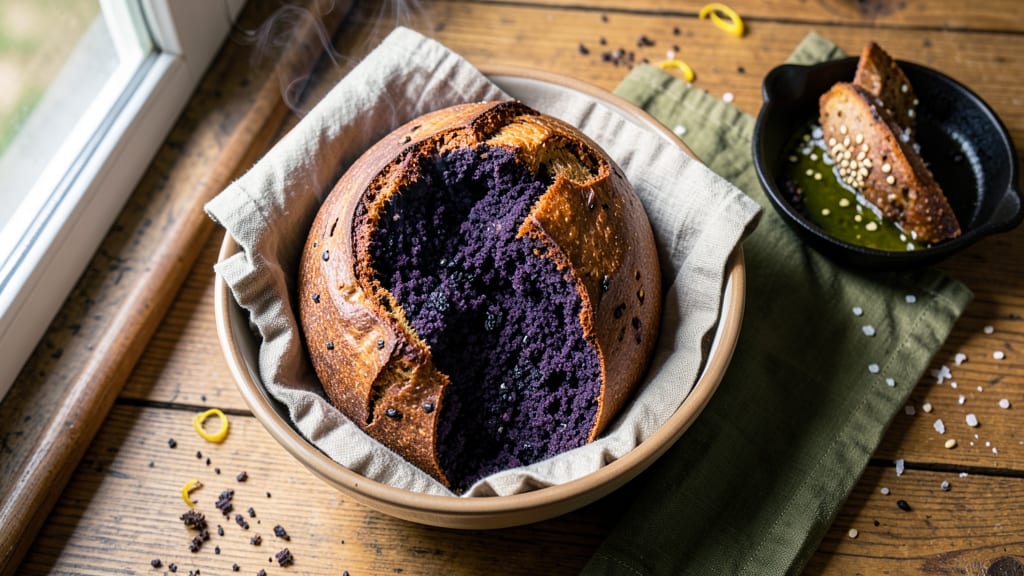
This black rice bread recipe transforms humble ingredients into a loaf with a deep umami crust and chewy centers that defy ordinary bread. The secret lies in black rice flour's earthy richness, which develops complex flavors during slow fermentation—creating a texture that's both rustic and refined.
Unlike standard bread recipes, this version relies on precise hydration and controlled proofing to achieve its signature dense yet tender crumb.
What makes this recipe stand out is its ability to deliver restaurant-quality results at home with minimal effort.
The dough requires only 30 minutes of active prep followed by 2 hours of proofing, yet yields a loaf with a crisp exterior and springy interior that holds up perfectly for sandwiches or toast.
The umami depth comes from a combination of black rice flour, a touch of malt powder, and proper baking technique—no shortcuts, just reliable, repeatable excellence.
Ingredients for black rice bread
Transform humble pantry staples into restaurant-quality black rice bread with this precise ingredient lineup.
| Ingredient | Amount | Notes |
|---|---|---|
| Black Rice Flour 🌾 | 2 ½ cups | High-protein, finely milled preferred |
| All-Purpose Flour 🌾 | 1 ½ cups | Bread flour for better structure |
| Active Dry Yeast 🍞 | ½ tsp | Fresh yeast if available |
| Granulated Sugar 🍚 | ½ tsp | Feeds yeast for fermentation |
| Salt 🧂 | 1 ½ tsp | Diamond Crystal preferred |
| Malt Powder 🍺 | 1 tbsp | Enhances umami flavor |
| Unsalted Butter 🧈 | ½ cup | Cold, cubed for dough |
| Whole Milk 🥛 | ¾ cup | Room temperature preferred |
| Large Eggs 🥚 | 1 whole | Room temperature, beaten |
| Honey 🍯 | 1 tbsp | For dough enrichment |
| Sesame Seeds 🌻 | 2 tbsp | For crust decoration |
| Black Sesame Seeds 🌻 | 1 tbsp | Optional for visual contrast |
| Water 💧 | ½ cup | Room temperature for hydration |
The black rice flour is non-negotiable—it delivers that signature deep umami and striking color. Bob's Red Mill carries the highest-quality variety, but check the Asian market for authentic brands like Nongshim. If you can't find black rice flour, substitute 100% whole wheat flour (though texture will differ). The malt powder is where the umami magic happens—Barley malt powder from specialty stores works best, but instant coffee granules in a pinch add depth. For the butter, European-style unsalted (like Plugrá) adds more flavor than American brands. Keep everything refrigerated until use to maintain dough integrity during the 2-hour proofing window.
No malt powder? Instant coffee granules at half the amount create a similar depth, though with a slightly different profile. Short on sesame seeds? Poppy seeds or everything bagel seasoning work for decoration, though they won't match the nutty crunch. The honey can be swapped for maple syrup if you prefer, but it affects fermentation speed slightly—adjust by adding 5 minutes to proofing time. For a gluten-free version, replace both flours with a 1:1 gluten-free blend (like Bob's Red Mill 1:1), though texture will be denser. The yeast must be active—test it in warm water with sugar to confirm bubbles form within 5 minutes before starting.
This dough requires two rises—the first in the bowl for 1 hour, then after shaping for another hour. Store shaped dough in an airtight container in the fridge for up to 24 hours before baking, which gives you flexibility for morning baking. Once baked, the loaf stays fresh for 3 days at room temperature wrapped in a clean kitchen towel (better than plastic for moisture retention). For longer storage, slice and freeze portions—toast directly from frozen for crispy results. The crust develops maximum umami when sliced and reheated for 10 minutes at 350°F—don't skip this step for sandwiches.
Why You'll Love This Recipe
- No-Fuss Mixing: I swear by this dough—just toss the flours, yeast, and a splash of warm water together. No stand mixer, no kneading marathon, just a bowl and a spoon. The black rice flour gives it that deep, nutty richness without fussing over hydration.
- Earthy Sweet Crust: That first bite? Warm, slightly sweet from the sugar, with a crust so tender it almost melts. The black rice adds this unexpected depth—like a hint of molasses or dark chocolate—without tasting "health food." Honestly, it’s the kind of flavor that makes people pause mid-bite.
- Breakfast to Brunch Hero: Toast it for a crunchy morning treat, tear it into croutons for salads, or serve thick slices with butter for a fancy brunch. It holds up to everything—jam, cheese, even as a base for open-faced sandwiches. I’ve made it for lazy Sundays and last-minute dinner guests, and it never disappoints.
- Stays Fresh, Costs Less: A single batch feeds my family for days—leftovers keep their texture for at least five days in the fridge, or freeze perfectly for up to a month. And between us? Black rice flour is cheaper than specialty bread mixes, so you’re basically making gourmet bread on a budget. Win.
Step-by-step instructions for black rice bread
Transforming these ingredients into artisanal bread requires precision and patience—here's exactly how to achieve that deep umami crust and chewy interior.
Activate the Yeast and Prepare the Dough Base
In a small bowl, combine the 0.5 cup water, 0.5 tsp granulated sugar, and 0.5 tsp active dry yeast. Let it sit for 5-10 minutes until frothy—this confirms the yeast is alive and ready to work. The froth should look like tiny bubbles breaking the surface, not just a few tiny specks.
In a large mixing bowl, whisk together the 2.5 cups black rice flour and 1.5 cups all-purpose flour. Add the 1.5 tsp salt and 1 tbsp malt powder, then make a well in the center. Pour in the activated yeast mixture along with the 0.75 cup whole milk and 1 tbsp honey. The dough should be shaggy but hold together when pressed.
Develop the Dough with Butter and Egg
Add the 0.5 cup unsalted butter, cut into small cubes, and the 1 whole large egg to the bowl. Using a dough whisk or your hands, work the ingredients together until the butter is fully incorporated and the dough begins to come together. The black rice flour will make this dough slightly denser than traditional bread dough, so don't be surprised if it feels heavier.
Turn the dough out onto a lightly floured surface and knead for 8-10 minutes until smooth and elastic. You'll know it's ready when it springs back slowly when poked. The black rice flour gives the dough a slightly sticky texture, so use wet hands to prevent sticking. If it's too sticky to handle, add 1 tablespoon of the reserved flour mixture back into the dough.
First Rise and Shaping
Place the dough in a lightly greased bowl, cover with a damp towel, and let it rise in a warm place for 1.5-2 hours until it has nearly doubled in size. The dough should feel light and airy when pressed gently—it should leave a slight indentation but not collapse completely. The black rice flour will give the dough a slightly denser rise compared to traditional bread, so don't be concerned if it doesn't puff up as dramatically.
Once risen, punch down the dough to release air, then divide it into 4 equal portions (about 12 ounces each). Shape each portion into a round loaf, placing them seam-side down on a parchment-lined baking sheet. Cover loosely with a towel and let them rise for another 30-45 minutes until they've expanded about 25% in size. The tops should look slightly domed and feel springy to the touch.
Score and Bake for Crispy Crust
Preheat your oven to 375°F with a baking stone or inverted baking sheet inside for 30 minutes to ensure even heat distribution. Just before baking, score the tops of each loaf with a sharp razor or knife in a crosshatch pattern, cutting about ¼ inch deep. This helps the bread expand properly and creates that beautiful crust.
Brush the tops with a little water, then sprinkle evenly with the 2 tbsp sesame seeds and 1 tbsp black sesame seeds. Bake for 30-35 minutes until the crust is deep golden brown and sounds hollow when tapped on the bottom. The internal temperature should reach 190-200°F—the black rice flour will give the bread a slightly denser crumb, so don't rely solely on color as your indicator.
Cool and Enjoy with Perfect Texture
Remove the bread from the oven and transfer to a wire rack to cool completely. This is crucial—the black rice flour makes the bread retain more moisture during baking, so cooling prevents a gummy texture. The bread should have a deep umami aroma with a slightly sweet undertone from the honey and malt powder.
Slice with a serrated knife for clean cuts that reveal the chewy interior and crispy crust. Serve warm with butter or as part of a charcuterie board. The black rice flour gives this bread a distinctive nutty flavor and beautiful deep purple hue that makes it truly special—worth every step of the process.
Pro Tips For Making Black Rice Bread
- Sift the Black Rice Flour: I learned this the hard way—black rice flour is dense, and clumps will make your dough uneven. Sift it directly into your mixing bowl with the all-purpose flour before adding liquids. This keeps your dough light and prevents those stubborn gummy patches later.
- Proof Yeast at 105°F: Your yeast needs warmth, but not boiling water. Mix the yeast with warm water (around 105°F—just warm to the touch) and a pinch of sugar, then wait 5-10 minutes until it’s frothy. Cold water kills it; hot water cooks it. No bubbles? Start over.
- Knead Until Silky: Black rice flour absorbs moisture differently, so knead until the dough pulls away cleanly from the bowl and feels smooth, not sticky. If it’s tough, add a teaspoon of water at a time—overworking it turns the bread dense. Aim for 8-10 minutes by hand.
- Shape Loaves Tightly: This isn’t your average sandwich bread—black rice dough is heavier. Roll it into a tight log, tuck the ends under, and let it rest 10 minutes before baking. Loose shaping = a crumbly loaf. Trust the process; your future self will thank you.
Wine and beer pairings for this recipe
Earthy Reds
Black rice bread's deep umami and nutty complexity pairs beautifully with Pinot Noir from Oregon or California. The wine's bright acidity and red fruit notes complement the bread's earthy undertones without overpowering its subtle sweetness.
I love a 2019 Domaine Serene Pinot Noir—its cherry and spice profile mirrors the malt powder's depth. Serve slightly chilled (55-60°F) to enhance the contrast between the warm bread and cool wine. 🍷
Malty Beers
For beer lovers, a Belgian Dubbel like Westmalle Dubbel creates an unexpected but harmonious pairing. The beer's caramel and raisin notes amplify the black rice's natural sweetness, while its moderate alcohol warmth balances the bread's chewy texture.
Alternatively, try a German Bock—the malt-forward profile echoes the bread's umami richness. Serve both at 45°F to preserve their complex flavors.
Asian-Inspired Sakes
Japanese Nigori sake with its creamy texture and subtle sweetness offers a surprising match. The sake's gentle umami enhances the bread's nutty depth while its smooth finish prevents palate fatigue. I recommend Dassai Junmai Nigori—its lingering sweetness complements the honey in the dough.
Serve slightly warmed (50-55°F) to highlight both the bread's crusty exterior and the sake's velvety mouthfeel. 🍶
Coffee Pairings
Black rice bread's deep flavors make it an excellent companion for dark roast coffee with chocolate notes. A Sumatra Mandheling or Guatemala Antigua works beautifully—their low acidity and cocoa undertones create a perfect balance.
Brew using a French press for full-bodied richness, and serve the coffee just after slicing the warm bread to let the aromas intertwine. This pairing is especially satisfying for breakfast or brunch.
Spiced Wine Cocktails
For a festive touch, try a mulled wine cocktail made with red wine, cinnamon, and orange peel. The spices enhance the bread's natural sweetness while the wine's acidity cuts through its richness. I like using Cabernet Sauvignon as the base—its tannins complement the sesame seeds' nutty crunch.
Serve warm (70-75°F) during colder months for a comforting pairing that feels like a hug in a glass. ✨
Nutrition facts
Frequently asked questions
Why does black rice bread have a different texture than regular bread?
The black rice flour adds natural density and moisture retention, creating a chewier interior with a denser crumb than standard bread. The malt powder and honey also contribute to a slightly richer, more elastic dough that holds its shape better during baking. Expect a springy bite rather than a light, airy texture—this is the signature of black rice bread!
Can I make this bread without black rice flour?
Yes, but the flavor and color will differ significantly. For a similar umami depth, substitute 100% whole wheat flour (though texture will be denser) or use ½ cup black rice flour + ½ cup whole wheat flour for a milder effect. The malt powder remains essential for that authentic taste—skip it at your own risk!
How do I store black rice bread to keep it fresh?
Wrap the cooled loaf in a clean kitchen towel (better than plastic) and store at room temperature for 3 days. For longer storage, slice and freeze portions—toast directly from frozen for crispy results. The black rice flour helps preserve moisture, but reheating slices at 350°F for 10 minutes revives the crust's umami magic!
What's the best way to test if my yeast is active?
Mix 0.5 tsp yeast with 0.5 cup warm water (110°F) and 0.5 tsp sugar in a small bowl. If it forms bubbles within 5 minutes, your yeast is ready to use. No bubbles after 10 minutes means it's dead—replace it immediately for successful fermentation!
Can I add other grains or seeds to this recipe?
Try adding 1 tbsp chia seeds or flaxseeds for extra nutrition, or ½ cup toasted buckwheat for a nuttier profile. For visual contrast, sprinkle poppy seeds or crushed pistachios on top before baking. Just reduce the all-purpose flour by the same amount to maintain dough consistency.