
Main Courses
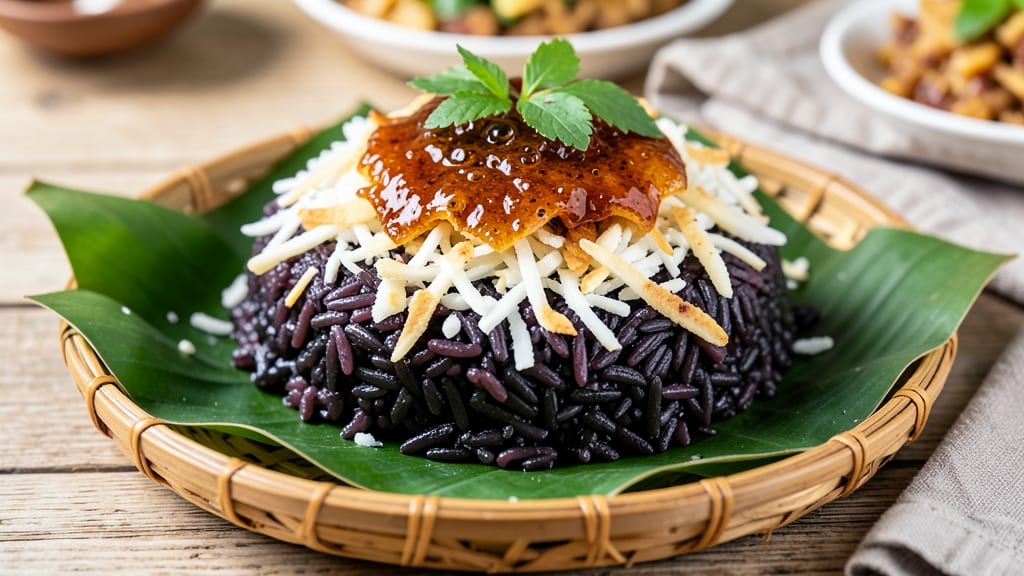
This black rice suman recipe delivers the perfect balance of sticky, fragrant coconut and rich black rice—each dumpling steamed to golden perfection. 🌟 The secret lies in properly cooking the glutinous black rice until tender yet firm enough to hold its shape when wrapped, creating those signature chewy yet tender bites with every steamed batch.
What makes these suman truly special is the aromatic coconut filling that infuses through the rice, creating a fragrant, slightly sweet contrast to the earthy black rice. The traditional banana leaf wrapping adds an authentic touch, though parchment paper works perfectly as a substitute.
Once steamed, you'll have beautifully shaped dumplings with a tender exterior and a perfectly sticky interior—ideal for festive occasions or special family gatherings.
Ingredients for black rice suman
Balancing sticky rice, fragrant coconut, and perfect wrapping for suman that shines at gatherings.
| Ingredient | Amount | Notes |
|---|---|---|
| Glutinous Black Rice 🍚 | 1 ½ cups | Uncooked, soaked overnight |
| Shredded Coconut 🥥 | 1 ½ cups | Fresh or unsweetened dried |
| Granulated Sugar 🍚 | ½ cup | White or brown sugar |
| Salt 🧂 | ½ tsp | Fine sea salt preferred |
| Banana Leaves 🌿 | 4 whole | Fresh, cut into 6-inch squares |
| Parchment Paper 📄 | 1 sheet | For wrapping substitute |
| Coconut Milk 🥥 | ½ cup | Full-fat for richness |
| Vanilla Extract 🌸 | 1 tsp | Pure vanilla preferred |
| Water 💧 | 1 ½ cups | For soaking rice |
| Vegetable Oil 🫒 | 1 tbsp | For banana leaf coating |
| Toothpicks 🪥 | 12 whole | For securing wraps |
The glutinous black rice is the heart of this recipe—look for high-quality brands at Asian markets like Sunrice or Thai Kitchen, which offer the best texture. Soak it overnight in twice the volume of water to ensure tender yet firm dumplings. Fresh banana leaves are ideal for wrapping, but parchment paper works beautifully as a substitute if you can't find them. For the best flavor, use unsweetened shredded coconut—the dried kind from Trader Joe's or Filipino markets holds up perfectly during steaming. If you can't find fresh coconut, unsweetened flakes work too, just add a splash of coconut milk to keep them moist.
No banana leaves? Parchment paper is a foolproof substitute—just oil it lightly to prevent sticking. Swapping out the coconut milk for more water keeps the filling lighter, but you'll lose some richness. For a less sweet version, reduce sugar to 0.25 cup and add 1 tsp cinnamon for warmth. The vanilla extract enhances the coconut flavor, but 1/2 tsp almond extract works in a pinch. If your coconut is too dry, soak the shredded coconut in warm water for 10 minutes before mixing to restore moisture. For extra aroma, toast the coconut lightly before combining with rice.
Soaked rice keeps 2 days in the fridge—cover tightly to prevent drying. The prepared filling stays fresh for 1 day, but steam immediately for best texture. Wrapped suman can be steamed ahead and reheated in a steamer basket for 5-10 minutes to restore softness. Store leftovers in an airtight container for 3 days or freeze for up to 3 months. For festive presentation, arrange steamed suman on a platter with extra shredded coconut and a sprinkle of flaky sea salt—trust me, it elevates everything.
Why You'll Love This Recipe
- No-Fuss Wrapping: I’ll admit, the banana leaves took me by surprise at first—but once I saw how they steam the rice to just the right chewy texture without sticking, I never looked back. No fancy equipment, just a pot and a little patience.
- Coconut-Sugar Magic: That perfect balance of caramelized sugar and toasted coconut? It’s like dessert and comfort food had a lovechild. The black rice soaks up the sweetness without turning cloying, and the coconut adds this nutty crunch that makes every bite feel special.
- Party in a Bowl: Honestly, this is my go-to for potlucks, birthdays, or even just a lazy Sunday. You can make a big batch ahead, and it stays fresh for days—plus, the deep purple color makes any spread look instantly festive. (My kids still ask for seconds, even though they pretend it’s "weird.")
- Budget-Friendly Luxury: Between us, black rice might sound fancy, but a single bag of glutinous rice and a can of coconut goes a long way. The sugar and salt are pantry staples, and the banana leaves? Often cheaper than parchment paper. Feels indulgent, costs next to nothing.
Step-by-step instructions for black rice suman
Here's how to craft these fragrant, sticky dumplings with restaurant-quality precision.
👨🍳 Step 1: Prepare the Glutinous Black Rice Filling
Drain the soaked 1.5 cups Glutinous Black Rice thoroughly, then transfer it to a medium saucepan with 1.5 cups Water. Bring to a boil over medium-high heat, then immediately reduce to low heat and simmer for 15-18 minutes until the rice is tender but still slightly sticky—this is crucial for the perfect texture. You'll know it's ready when the rice absorbs all the water and forms a thick, cohesive mass.
While the rice cooks, mix together the 0.5 cup Granulated Sugar, 0.5 cup Coconut Milk, 1 tsp Vanilla Extract, and 0.5 tsp Salt in a small bowl. Once the rice is done, stir this mixture into the warm rice until fully combined. Let the mixture cool slightly—it should be warm but not hot to the touch, making it easier to handle when shaping the suman.
🥘 Step 2: Mix in the Shredded Coconut
In a separate bowl, gently fold in the 1.5 cups Shredded Coconut using a silicone spatula. Be careful not to overmix—just combine until the coconut is evenly distributed throughout the rice mixture. The coconut should remain in small clumps rather than being fully incorporated. This texture contrast is what makes these suman so delightful.
Here's the thing—if the mixture feels too dry or crumbly, add 1 teaspoon of Coconut Milk at a time until it reaches a soft, pliable consistency that holds together when pressed. You want it to be moldable but not sticky enough to make a mess when shaping. The ideal mixture should cling slightly to your fingers but still be easy to work with.
🍳 Step 3: Prepare the Banana Leaves
Cut each of the 4 whole Banana Leaves into 6-inch squares—you should have 16 squares total. This size works perfectly for making 4 suman. If you're using parchment paper as a substitute, cut it into the same size squares.
Lightly brush each square with 1 tablespoon Vegetable Oil, coating both sides evenly. This prevents the suman from sticking to the leaves during steaming and adds a subtle richness. I like to use a pastry brush for this step—it ensures even coverage without soaking the paper. Set aside the prepared leaves while you shape the suman.
👨🍳 Step 4: Shape and Wrap the Suman
Divide the rice mixture into 4 equal portions, each about ½ cup in size. Take one portion and flatten it into a 3-inch round disc about ½-inch thick on a clean surface lightly dusted with coconut. Roll the edges inward to create a smooth, compact shape—this prevents the filling from leaking during steaming.
Place the shaped suman onto a banana leaf square, then fold the leaf over the top. Secure tightly with 3 toothpicks (use the remaining 9 toothpicks for the other suman), pressing down firmly to seal the edges. The toothpicks should pierce through the center and both sides of the leaf to create a secure, airtight wrap. Repeat with the remaining portions.
⏰ Step 5: Steam to Perfection
Arrange the wrapped suman in a steamer basket or colander, making sure they're not touching each other. Bring 2 inches of water to a rolling boil in the pot below, then place the steamer on top. Cover with a lid and steam over medium-high heat for 20-25 minutes until the banana leaves are fragrant and the suman feels firm to the touch.
Here's where it gets tricky: the suman are done when they're fully steamed but still slightly underdone in the center. They should have a glossy sheen and the aroma of coconut should be intense. Let them cool for 5 minutes before removing the toothpicks and unwrapping carefully. Serve warm, with the banana leaves still attached for that authentic presentation.
Pro Tips For Making Black Rice Suman
- SOAK THE RICE LONGER: I learned this the hard way—black glutinous rice needs at least 6 hours in water, not just a quick overnight soak. The extra time breaks down the starches enough to make the suman tender, not gummy, and the color stays rich instead of turning muddy.
- TOAST THE COCONUT FIRST: Skip the raw shredded coconut—it’ll turn soggy and dull. Lightly toast it in a dry pan over medium heat for 3-4 minutes until fragrant and just golden. This adds depth of flavor and keeps the texture crisp even after steaming.
- STEAM ON MEDIUM HEAT: High heat makes suman dry out unevenly; low heat takes forever. Aim for medium heat with a steady stream of steam—about 15-20 minutes after the initial boil. If your lid fogs up, you’re on the right track.
- SALT THE WATER: I used to skip this, thinking it was for savory dishes. But a pinch (½ tsp in 2 cups water) prevents the rice from tasting flat and helps the sugar caramelize better. Trust me, the difference is subtle but noticeable.
Storing and reheating this dish
Refrigerator Storage
Store wrapped suman in an airtight container for up to 3 days—the banana leaves help preserve freshness, but if using parchment, cover with a damp towel to maintain moisture. Place them on a single layer to prevent sticking, and let them cool completely before sealing.
The coconut filling stays fragrant but may dry out slightly after 2 days, so steam again for 5-10 minutes to restore tenderness. 🌿
Freezer Prep
For long-term storage, wrap individual suman in plastic wrap before placing them in a freezer bag—this prevents freezer burn and preserves texture. Label with the date and freeze for up to 3 months.
Thaw overnight in the fridge, then steam for 15-20 minutes (covered with a damp towel) to revive their softness. Avoid microwaving—it turns the rice gummy.
Reheating Methods
Steam is the best way to reheat suman—place them in a steamer basket over boiling water for 10-15 minutes until heated through. For a quick fix, microwave on high for 30 seconds (covered with a damp paper towel) to avoid drying.
If reheating from frozen, add 5 extra minutes of steaming time to ensure even warmth. 💫
Banana Leaf Tips
If storing with banana leaves, keep them in the fridge for up to 2 days—the leaves act as a natural moisture barrier. For longer storage, remove the suman from the leaves and wrap them separately in plastic wrap before refrigerating.
To reuse banana leaves, rinse and dry them completely before storing in the freezer for up to 6 months.
Texture Preservation
The key to maintaining the perfect sticky-yet-firm texture is reheating with moisture. Spritz suman with 1 teaspoon of water before steaming if they look dry. For extra richness, add a dash of coconut milk to the steaming water—it infuses back into the rice, keeping it luscious.
Avoid oversteaming, or the coconut will turn mushy. ✨
Nutrition facts
Frequently asked questions
Why does my black rice suman turn out too sticky or crumbly?
The texture depends on rice cooking time and moisture balance. If too sticky, your rice likely cooked longer than 15-18 minutes—reduce heat immediately once boiling. For crumbly results, the mixture may be dry: add 1 tsp coconut milk at a time until pliable. Always let the rice cool slightly before shaping to prevent sticking.
Can I make black rice suman without banana leaves?
Use parchment paper cut into 6-inch squares as a perfect substitute. Lightly oil both sides to prevent sticking, then wrap and steam as directed. For extra authenticity, toast the parchment briefly before using to mimic banana leaf aroma.
How do I know when the suman are fully steamed?
They're done when the banana leaves smell intensely fragrant and the suman feels firm to the touch but still slightly soft in the center. Oversteaming makes them dense—remove them when the edges are set but the center yields gently. Let them rest 5 minutes before unwrapping to prevent breaking.
What's the best way to serve black rice suman?
Serve warm with the banana leaves still attached for presentation. Pair with coconut milk drizzle or toasted coconut flakes for extra richness. For a complete meal, serve with grilled chicken skewers or a light mango salad to balance the sweetness.
Can I make this recipe gluten-free?
Yes! This recipe is naturally gluten-free as long as you use certified gluten-free ingredients. Check your shredded coconut and vanilla extract labels, and ensure your banana leaves or parchment paper are uncontaminated. The glutinous black rice itself is gluten-free.