
Main Courses
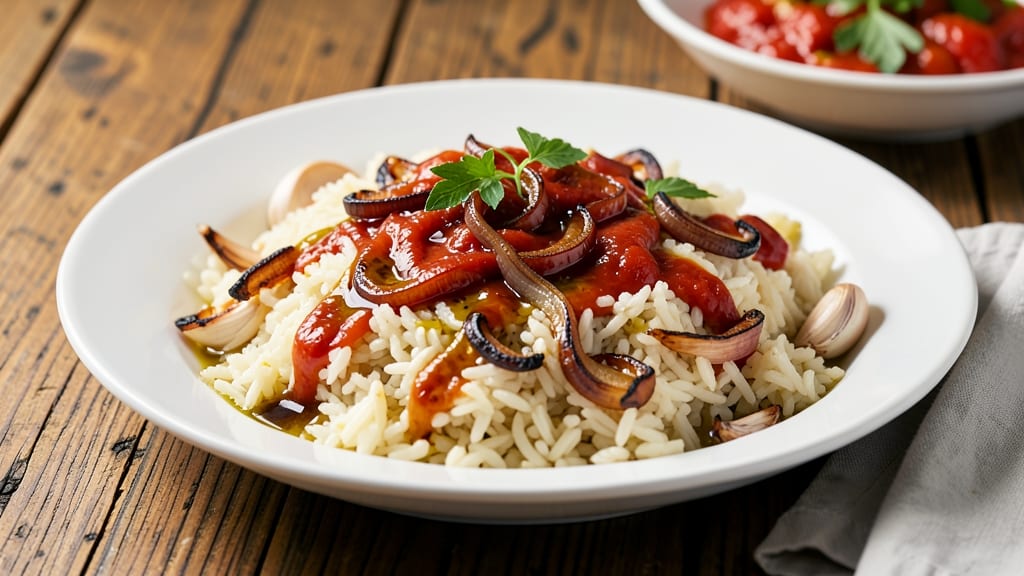
This blanco rice recipe transforms simple grains into aromatic, golden rice with deep garlic and smoky tomato flavors—perfect for pairing with proteins or enjoying as a standalone dish.
The secret lies in toasting the rice and building layers of flavor through slow cooking in rich broth, creating a texture that's tender yet firm with each bite.
What makes this method special is how it balances simplicity with restaurant-quality results, requiring just 30 minutes of active time for a dish that feels like a labor of love.
The process begins with gently toasting the rice in olive oil until fragrant, then cooking it in a flavorful broth with garlic, onions, and tomatoes until perfectly tender. This traditional approach ensures the rice absorbs all the savory essence while maintaining its distinct shape and satisfying bite.
Whether served alongside grilled meats, seafood, or as a hearty side, this blanco rice recipe delivers the kind of depth that turns ordinary meals into memorable ones.
Ingredients for blanco rice
Six aromatic ingredients transform basic rice into restaurant-quality blanco rice with smoky garlic depth.
| Ingredient | Amount | Notes |
|---|---|---|
| Long-Grain White Rice 🌾 | 1 ½ cups | Uncooked, like jasmine or basmati |
| Extra-Virgin Olive Oil 🫒 | ¼ cup | For toasting rice and flavor base |
| Yellow Onion 🧅 | 1 whole | Medium size, finely diced |
| Garlic Cloves 🧄 | 6 cloves | Fresh, minced finely |
| Canned Tomato Sauce 🍅 | 1 cup | San Marzano preferred |
| Chicken Broth 💧 | 2 cups | Low-sodium preferred |
| Bay Leaves 🌿 | 2 whole | Fresh preferred, dried works |
| Smoked Paprika 🌶️ | 1 tsp | For smoky depth |
| Ground Black Pepper 🌶️ | ½ tsp | Freshly cracked |
| Salt 🧂 | 1 ½ tsp | Diamond Crystal preferred |
| Fresh Parsley 🌿 | ¼ cup | Chopped, for garnish |
The rice is the foundation—jasmine or basmati stays distinct when cooked, while long-grain white works universally. Toast it in olive oil until fragrant (this step can't be skipped). For the garlic, fresh is non-negotiable—pre-minced loses its punch. I grab mine at Whole Foods when I'm making this, but any grocery store's fresh garlic works. The San Marzano tomato sauce gives the best flavor, though any quality canned sauce will do in a pinch. If you're using dried bay leaves, crush them lightly between your palms before adding to release their aroma.
No San Marzano? Any good-quality canned tomato sauce works—just check for no added salt. Fresh parsley is ideal for garnish, but dried oregano at half the amount gives a similar earthy note. Short on chicken broth? Vegetable broth plus a splash of soy sauce mimics the umami depth. The smoked paprika is what gives this its signature flavor—substitute a pinch of liquid smoke if you're out, but it's not the same. For the salt, Diamond Crystal kosher dissolves cleanly, but any fine sea salt works. If you're making this ahead, skip the parsley until serving—it wilts quickly in the warm rice.
This rice reheats beautifully—just add a splash of water or broth to the pot and cover until warmed through. Keeps 4-5 days in the fridge, though the flavor peaks within the first two. For longer storage, freeze portions in airtight containers for up to 3 months. I always make a double batch—it disappears fast with grilled meats or as a side dish. The leftovers actually taste better the next day as the flavors meld further.
Why You'll Love This Recipe
- Here’s what sold me: the slow-cooked garlic in that tomato base. It’s not just flavor—it’s depth. One bite and you’re hooked, especially when the rice soaks it all up.
- Pantry Magic: I swear by this one—no fresh herbs, no fancy prep. Just rice, onion, garlic, and a can of tomato sauce. That’s it. The olive oil sizzle alone makes me smile.
- Garlic Bomb: Here’s what sold me: the slow-cooked garlic in that tomato base. It’s not just flavor—it’s depth. One bite and you’re hooked, especially when the rice soaks it all up.
- Weeknight Workhorse: Between us, I make this at least twice a week. Taco Tuesday? Check. Leftover chicken? Done. Even as a side for grilled fish—it’s the quiet hero that never lets you down.
Step-by-step instructions for garlic-toasted blanco rice
This method delivers perfectly toasted rice with deep garlic flavor and smoky tomato undertones.
Toast the Rice in Olive Oil
Heat a heavy-bottomed pot over medium heat and add the 0.25 cup extra-virgin olive oil. Once the oil shimmers (about 2 minutes), add the 1.5 cups long-grain white rice and stir constantly for 3-4 minutes. The rice will begin to turn opaque and smell nutty—this is your signal that the toasting is working.
I press the rice against the bottom of the pot occasionally to ensure even browning. The goal is to develop flavor in the rice grains before adding liquid. If the rice starts to brown too quickly, reduce the heat slightly to prevent burning. This step creates the signature toasted flavor that sets blanco rice apart from plain white rice.
Sauté Onion and Garlic
Add the finely diced yellow onion to the pot and cook for 4-5 minutes until softened and translucent. Then add the 6 minced garlic cloves and cook for another 30 seconds until fragrant. The garlic should turn golden—not brown—at this stage.
If you notice the garlic browning too quickly, remove the pot from heat for 10 seconds to cool slightly. Fresh garlic burns in seconds, and that bitter flavor will ruin the dish. This aromatics base forms the flavor foundation for the entire rice.
Add Tomato Sauce and Seasonings
Pour in the 1 cup canned tomato sauce and stir to combine with the rice mixture. Add the 2 whole bay leaves, 1 tsp smoked paprika, 0.5 tsp ground black pepper, and 1.5 tsp salt, stirring well to distribute the seasonings evenly. Let the mixture cook for 2 minutes to allow the tomato sauce to meld with the rice.
This is where the smoky depth develops. The paprika and bay leaves infuse the tomato sauce with complex flavors. If you're using dried bay leaves, make sure they're fresh to avoid a bitter taste. The sauce should coat the rice grains completely at this stage.
Cook with Broth
Pour in the 2 cups chicken broth and bring the mixture to a gentle boil. Once boiling, reduce heat to low, cover the pot with a tight-fitting lid, and cook for 15 minutes without disturbing it. The rice should absorb the liquid evenly, and you'll see steam rising from the sides of the lid.
I check for doneness by lifting the lid slightly after 12 minutes to see if the rice looks tender. If there's still liquid remaining, continue cooking for another 2-3 minutes. The key is to maintain a gentle simmer—not a rolling boil—to prevent the rice from becoming mushy.
Rest and Garnish
Once the rice is tender and all the liquid has been absorbed, remove the pot from heat and let it sit covered for 5 minutes. This resting period allows the rice to finish cooking evenly and redistribute any remaining moisture.
Fluff the rice gently with a fork, then stir in the 0.25 cup chopped fresh parsley. The parsley adds a bright finish that balances the smoky, garlicky flavors. Serve immediately while still warm, with any remaining juices spooned over the top for extra flavor.
Pro Tips For Making Blanco Rice
- SOFTEN THE RICE FIRST: Skip the raw rice straight into the pot—soak long-grain rice in warm water for 15 minutes before cooking. I learned this the hard way when my rice turned out gummy and uneven. The starch absorbs better, and the grains stay distinct, which is crucial for blanco’s texture.
- SWEAT THE ONIONS LOW: Don’t rush the onion and garlic step—cook them over medium-low heat until they’re translucent and just starting to caramelize. High heat burns them fast, and you’ll taste the bitterness in every bite. This is where the flavor base builds, so take your time.
- DON’T SKIP THE DEGLAZE: After toasting the garlic, pour in a splash of water or white wine (if you have it) and scrape up those browned bits from the pot. Those bits pack flavor, and ignoring them means missing out on the richest part of the dish. It’s the non-negotiable step that makes the sauce taste homemade.
- USE TOMATO PASTE, NOT SAUCE: Swap half the canned tomato sauce for tomato paste—just 2 tablespoons mixed in with the sauce. It thickens the blanco naturally and deepens the color without overpowering the dish. I was skeptical until I tried it, and now it’s my go-to upgrade.
Storing and reheating this recipe
Fridge Storage Basics
Let your blanco rice cool completely before storing—this prevents condensation that makes it soggy. Transfer to an airtight container (I use glass Pyrex) and refrigerate for up to 4 days.
The rice actually develops deeper flavor as the aromatics meld overnight, making leftovers taste even better than fresh. 💫
Freezer Prep Tips
For longer storage, portion rice into freezer-safe bags with 1-inch headspace to prevent expansion cracks. Press out excess air to avoid freezer burn, and label with the date—it keeps 3 months at 0°F or below. I freeze individual servings so I can reheat just what I need.
Stovetop Reheating
My preferred method: Add 2 tablespoons water or broth to the pot per cup of rice, cover, and heat on low for 10-15 minutes. Stir occasionally to prevent sticking—this maintains that perfect toasted texture. If it looks dry, add more liquid in 1-tablespoon increments.
Microwave Fixes
For quick meals, transfer rice to a microwave-safe dish with a damp paper towel covering it. Heat on 50% power for 2 minutes, stir, then continue in 30-second bursts until reaching 165°F. The moisture keeps the rice from drying out completely.
Broth Boost Method
For restaurant-quality reheats, add ¼ cup fresh chicken broth per cup of rice and cover tightly. The broth revives the smoky tomato flavors while keeping the grains separate. I often add a pinch of smoked paprika at this stage for extra depth.
Garnish Refresh
Always finish with fresh parsley and a drizzle of olive oil after reheating—this brightens the flavors. For extra flair, sprinkle with toasted sesame seeds or a pinch of red pepper flakes to mimic the freshness of homemade rice. ✨
Nutrition facts
Frequently asked questions
Can I use short-grain rice for this recipe?
While this recipe calls for long-grain white rice (like jasmine or basmati), you can use short-grain varieties like arborio or sushi rice—but expect a slightly stickier texture. For best results, reduce the broth by ¼ cup and stir more frequently to prevent clumping. The toasted flavor still develops beautifully!
Why does my rice turn out mushy?
Mushy rice usually happens from one of three things: too much liquid, lifting the lid too early, or using high heat. Always use a 1:1.5 rice-to-broth ratio and maintain a gentle simmer (not a boil) after adding liquid. Let it cook undisturbed for the full 15 minutes—resist peeking!
Can I make this recipe vegetarian?
Replace the chicken broth with vegetable broth and add 1 tablespoon soy sauce for umami depth. For extra flavor, stir in ½ cup diced bell peppers or ½ cup frozen peas during the final 5 minutes of cooking. The smoky paprika and tomato sauce keep it rich and satisfying.
How do I make this in a rice cooker?
Toast the rice in olive oil in a separate pan first (this step can't be skipped). Then transfer everything to your rice cooker, add the broth, and cook on the white rice setting. If your cooker has a "keep warm" function, transfer the rice to a pot after cooking to rest for 5 minutes before serving.
What's the best way to serve this rice?
This aromatic rice pairs perfectly with grilled meats like chicken, steak, or shrimp. For a complete meal, top with sautéed chorizo or black beans. It also works as a base for tacos or burrito bowls—just add your favorite toppings and a squeeze of lime for brightness!