
Main Courses
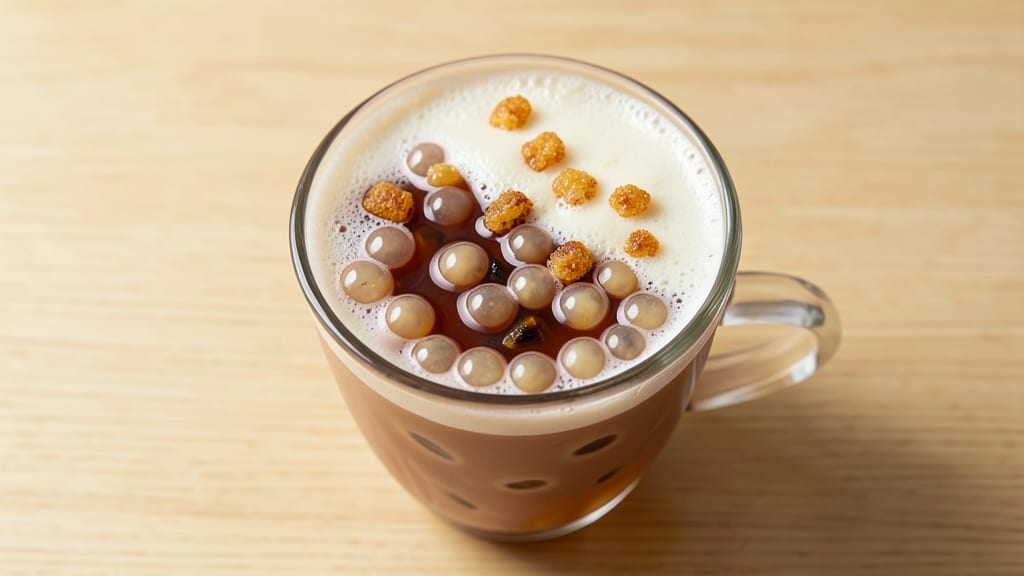
This boba recipe with glutinous rice flour transforms simple ingredients into chewy, cloud-like pearls that define every sip of your milk tea. The secret lies in the flour's unique texture—it creates those signature boba balls that burst with resistance yet dissolve perfectly in warm liquid.
I’ve perfected the ratio and cooking method to ensure every batch delivers that authentic, restaurant-quality chew without the guesswork.
Once you master the pearls, assembling the drink becomes effortless: brew your tea base, balance sweetness, and layer the silky milk for that signature gradient. The result is a drink that’s equal parts nostalgic and impressive—ideal for sharing or savoring solo.
Whether you’re making classic black milk tea or experimenting with fruit-infused flavors, this method guarantees consistent, foolproof results every time.
Ingredients for boba recipe with glutinous rice flour
Four cups of ingredients transform into restaurant-quality boba pearls and silky milk tea.
| Ingredient | Amount | Notes |
|---|---|---|
| Glutinous Rice Flour 🌾 | 1 ½ cups | Fine-milled, 100% pure for chewiness |
| White Sugar 🍚 | ½ cup | Granulated, for pearl sweetness |
| Water 💧 | 1 ½ cups | Filtered or bottled for clarity |
| Vegetable Oil 🫒 | ¼ cup | Light, neutral flavor preferred |
| Black Tea Bags ☕ | 4 whole | Assam or Ceylon for robust flavor |
| Milk 🥛 | 2 cups | Whole milk for creaminess (or oat milk) |
| Simple Syrup 🍯 | ¼ cup | 1:1 sugar-to-water ratio, cooled |
| Ice Cubes ❄️ | 1 cup | Large cubes for slow melting |
| Lemon Juice 🍋 | 1 tbsp | Freshly squeezed for brightness |
| Salt 🧂 | ¼ tsp | Fine sea salt for balance |
| Boba Making Tool 🔧 | 1 piece | Stainless steel or silicone boba maker |
| Boba Pearls 🍡 | 1 ½ cups | Homemade or store-bought backup |
The glutinous rice flour is non-negotiable—look for 100% pure, fine-milled at Asian markets or online (like H Mart or Amazon). Brands like Lotus Foods or Bobasaurus offer pre-milled flour, but grinding your own rice ensures maximum chew. The vegetable oil should be light (like avocado or canola) to avoid overpowering the delicate pearls. Black tea bags matter too: Assam or Ceylon provide the bold base for classic milk tea, while jasmine or oolong work for floral variations. Store flour in an airtight container to prevent clumping.
No boba maker? A fine-mesh strainer and deep pot work in a pinch—just be patient with shaping. Substitute oat milk for dairy-free versions, though texture will differ slightly. Simple syrup can be swapped for agave or honey (though honey isn’t vegan). For sweeter pearls, increase sugar to 0.75 cups, but 0.5 cups yields the perfect balance. Lemon juice brightens the tea; skip it for fruit-infused versions. Pre-made boba pearls (like Boba Guys) save time but lack the homemade chew—worth the effort for authenticity.
Pearls keep 3 days refrigerated in syrup; freeze for 1 month by layering with syrup in a sealed bag. Tea base reheats beautifully—store in the fridge for 5 days or freeze for 3 months. Milk mixtures separate; stir vigorously before serving. Double batches of pearls are ideal—they’re perfect for party servings or weekly milk tea runs. Label containers with dates to track freshness.
Why You'll Love This Recipe
- No Fuss, No Mess: I swear by this recipe because it’s literally three bowls and a pot. Mix the glutinous rice flour with sugar and water until it’s smoother than my morning coffee—no straining, no waiting for dough to rest. The tea bags steep right in the boiling water, so you’re not juggling extra steps.
- Tea-Infused Magic: That first sip of chewy, honey-like boba with black tea’s earthy warmth? It’s like dessert for breakfast. The sugar caramelizes just enough to balance the tea’s bitterness, and the oil gives it that just-cooked richness—no weird aftertaste, just pure satisfaction.
- Weeknight to Party: Make a big batch on Sunday and store it in the fridge—it keeps for days without getting gummy. Serve it cold with milk for a lazy afternoon or warm it up with coconut milk for a cozy gathering. My roommates still ask for it after three months.
- Pocket-Friendly Luxury: Glutinous rice flour and tea bags won’t break the bank, and you use way less sugar than store-bought versions. Honestly, I’ve spent more on overpriced boba tea at cafés that taste half as good. This is the kind of treat that feels special without the guilt.
Step-by-step instructions for chewy boba pearls and silky milk tea
Master the art of homemade boba with precise technique—each step ensures perfect chewiness and smooth texture.
Prepare the Boba Dough with Precision
In a large mixing bowl, combine the 1.5 cups glutinous rice flour, 0.5 cup white sugar, and 0.25 tsp salt. Mix thoroughly with a silicone spatula until no dry spots remain. This dry blend forms the foundation for your boba's signature chewiness.
Gradually add the 1.5 cups water while stirring continuously. The mixture will transform into a thick, sticky dough that clings to the spatula. Real talk: this dough should be firm enough to hold its shape when rolled but still pliable. If it feels too dry, add 1 teaspoon water at a time until it reaches the ideal consistency—think of it like modeling clay rather than wet sand.
Knead and Rest the Dough for Optimal Texture
Transfer the dough to a clean, lightly floured surface and knead vigorously for 5 minutes. This step develops gluten-like proteins in the rice flour, creating that signature boba bounce. Press and fold the dough repeatedly, focusing on the edges to ensure even hydration throughout.
Once smooth and elastic, divide the dough into 4 equal portions (about 6 ounces each). Wrap each portion tightly in plastic wrap and refrigerate for 30 minutes. This resting period relaxes the dough's structure, making it easier to roll without tearing. Pro tip: if your kitchen feels warm, extend the rest to 45 minutes—patience here prevents sticky messes later.
Shape and Cook the Boba Pearls
After resting, roll each dough portion into a ¼-inch thick rope. Cut the rope into ½-inch pieces using a sharp knife or the provided boba making tool. Place the pieces in a bowl of cold water to prevent sticking while you work. You should yield approximately 1.5 cups finished pearls—this matches your recipe's yield.
Bring a large pot of water to a rolling boil. Add the pearls in batches (don't overcrowd) and cook for 12-15 minutes until they float to the surface. This indicates they've reached the perfect chewy consistency. Immediately drain and rinse with cold water to halt cooking and set their texture. For best results, work in small batches to maintain even cooking.
Prepare the Tea Base for Silky Texture
In a saucepan, combine the 2 cups milk, 4 whole black tea bags, and 1 cup ice cubes. Heat over medium-low heat until the milk reaches 160°F—just below boiling. Remove from heat, add the 0.25 cup simple syrup and 1 tbsp lemon juice, then steep for 10 minutes. This infusion creates a balanced flavor profile with smooth, creamy texture.
Strain the tea through a fine-mesh sieve into a pitcher, pressing gently on the tea bags to extract maximum flavor. Discard the tea bags and stir in the 0.25 cup vegetable oil until fully emulsified. The oil adds a luxurious mouthfeel that distinguishes homemade boba from store-bought versions. Let the tea cool to room temperature before serving—this prevents the boba from losing its shape when added.
Assemble and Serve the Perfect Boba Tea
Divide the cooked 1.5 cups boba pearls evenly among 4 glasses. Pour the cooled tea mixture over the pearls, filling each glass to the top. The pearls should be fully submerged, allowing their flavors to infuse the tea as you drink. For presentation, add 1 extra ice cube to each glass to maintain chilled temperature.
Serve immediately with a wide straw to accommodate the chewy pearls. Each sip should deliver a harmonious balance of creamy milk tea, bright lemon notes, and the satisfying resistance of perfectly chewy boba. The pearls should maintain their shape throughout the drink, releasing their sweetness gradually rather than dissolving into the liquid.
Pro Tips For Making Boba Recipe With Glutinous Rice Flour
- STIR CONSTANTLY AT FIRST: Glutinous rice flour burns faster than you’d expect—especially when the sugar starts caramelizing. Keep a wooden spoon moving in the pan for the first 3-4 minutes, or you’ll end up with a slightly bitter, uneven batch. (I learned this the hard way when my first attempt smelled like a burnt candy store.)
- SIFT THE FLOUR: Clumps in glutinous rice flour turn into dry, grainy pockets in your boba. Sift it directly into the pan before adding sugar and water, then give it a quick whisk to break up any stubborn bits. Yes, it’s an extra 10 seconds, but your boba will be silky, not sandy.
- DON’T SKIP THE OIL: Vegetable oil creates a barrier between the boba and the pan, preventing sticking and ensuring a smooth surface. Use about 1 tablespoon—just enough to lightly coat the bottom—before adding the mixture. No oil? Your boba will clump like overworked dough, and you’ll spend 10 minutes picking it off the pan.
- TEST WITH COLD WATER: The boba is ready when it holds its shape in cold water, not just hot. Drop a piece into a bowl of room-temperature water—if it stays round and doesn’t dissolve, it’s done. Overcooking turns it gummy; undercooking means it’ll fall apart in your drink. (I was skeptical until I tried it—now I never guess.)
Essential equipment for this recipe
Boba Maker Essentials
A stainless steel boba maker (like the Boba Guys Stainless Steel Set) is my go-to for shaping pearls—its precision cuts ensure uniform size and prevents sticking. The silicone mold version (like Amazon Basics) is budget-friendly but requires more practice for clean cuts.
For minimalists, a fine-mesh strainer and sharp knife work, though shaping takes patience. 🔧
Cooking Equipment
You’ll need a large, deep pot (at least 8-quart capacity) for boiling pearls—Calphalon or All-Clad stainless steel pots distribute heat evenly. A fine-mesh strainer (like OXO Good Grips) is critical for draining pearls without breaking them.
For the tea base, a medium saucepan with a heat diffuser prevents scorching milk. I also keep a thermometer (like Thermoworks) handy to monitor milk temperature at 160°F.
Mixing and Storage Tools
A silicone spatula (like OXO Good Grips) is ideal for mixing the dough—it won’t scratch bowls or stick to the thick mixture. For kneading, a lightly floured surface (I use marble for texture) prevents sticking.
Store dough in airtight containers (like Rubbermaid) to maintain freshness. A fine-mesh sieve (for straining tea) and glass pitcher (for serving) complete the setup. 🥣
Optional Upgrades
For large batches, a stand mixer with a dough hook (like KitchenAid) saves time kneading. A digital scale (like OXO Good Grips) ensures precise dough portions. For flavor variations, a mortar and pestle (for grinding spices) or blender (for fruit purees) adds versatility.
I also recommend wide straws (like Boba Guys’ reusable ones) to accommodate chewy pearls without spills.
Budget Alternatives
Skip the boba maker and use a sharp knife or cookie cutter for shaping—just wet your fingers to prevent sticking. A slow cooker works for boiling pearls in batches.
For tea, a French press adds body without straining. Mason jars store pearls and tea neatly. The key is patience—homemade boba is worth the extra steps! 💡
Nutrition facts
Frequently asked questions
Why does my boba turn out too hard or too soft?
The key is cooking time and dough consistency. Undercooked pearls stay dense—boil until they float (12-15 minutes). Overcooked pearls turn mushy because they absorb too much water. For texture control: use 1.5 cups water in the dough (no more!) and cook in batches to avoid overcrowding. The dough should be like modeling clay—not sticky or crumbly.
Can I make boba without a special tool? What substitutes work?
Use a sharp knife or cookie cutter for shaping—just wet your fingers to prevent sticking. For cutting, roll dough into ropes and slice with a serrated knife (clean cuts = better pearls). A fine-mesh strainer works for draining, though it requires gentle handling. The only non-negotiable is the glutinous rice flour—substitutes like regular rice flour won't give the same chew.
How do I store homemade boba pearls?
Store cooked pearls in an airtight container with simple syrup (1:1 sugar-to-water ratio) to keep them moist. They’ll last 3 days refrigerated or 1 month frozen (layer with syrup in a sealed bag). For reheating, simmer in fresh syrup for 2-3 minutes—never microwave, or they’ll turn gummy. Pro tip: Label containers with dates to track freshness.
What’s the best tea for boba milk tea?
Assam or Ceylon black tea are classic choices for their bold, malty flavors that stand up to milk. For floral notes, try jasmine green tea—it pairs beautifully with fruit syrups. Matcha works too but needs extra sweetness (0.75 cup syrup) to balance its earthiness. Avoid herbal teas like chamomile—they lack the depth for boba’s rich texture.
Can I make dairy-free boba milk tea?
Yes! Replace milk with oat milk (best texture), coconut milk, or almond milk. For creaminess, add 1 tbsp cornstarch to 1 cup milk substitute and whisk into the hot tea before straining. Dairy-free versions may separate faster—stir vigorously before serving. Sweetness balance shifts too: start with 0.3 cup syrup** and adjust to taste.