
Main Courses
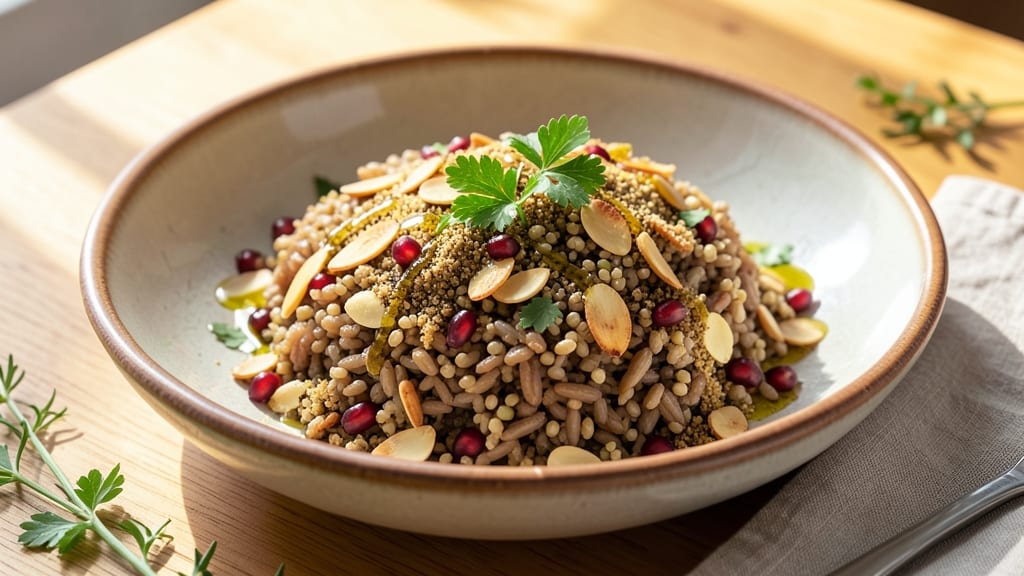
This brown rice and quinoa pilaf recipe delivers a nutty, hearty medley that transforms simple grains into a restaurant-worthy side dish. The secret lies in toasting the grains and spices first—this step unlocks deep, toasty flavors that infuse every bite.
With just 30 minutes of hands-on time and minimal prep, you'll achieve perfectly fluffy grains with a satisfying crunch from toasted almonds.
The result is a versatile pilaf that pairs beautifully with roasted meats, grilled vegetables, or stands alone as a satisfying vegetarian main. The balance of earthy quinoa and chewy brown rice creates a satisfying texture, while warm spices like cumin and turmeric add layers of flavor.
This method ensures even cooking and prevents mushy grains—a common pitfall when combining different types.
Ingredients for brown rice and quinoa pilaf
Toasted grains, aromatic spices, and nutty crunch transform simple ingredients into this restaurant-quality pilaf.
| Ingredient | Amount | Notes |
|---|---|---|
| Long-Grain Brown Rice 🌾 | 1 cup | Uncooked, rinsed thoroughly |
| Quinoa 🌾 | ½ cup | Rinsed to remove bitterness |
| Vegetable Broth 💧 | 2 ½ cups | Low-sodium preferred |
| Extra-Virgin Olive Oil 🫒 | 2 tbsp | For toasting grains |
| Sliced Almonds 🥜 | ¼ cup | Toasted until golden |
| Ground Cumin 🌿 | ½ tsp | Toasted for depth of flavor |
| Turmeric Powder 🌶️ | ¼ tsp | For vibrant color |
| Ground Coriander 🌿 | ¼ tsp | Freshly ground preferred |
| Salt 🧂 | ½ tsp | Diamond Crystal preferred |
| Fresh Parsley 🌿 | ¼ cup | Chopped for garnish |
| Lemon Zest 🍋 | 1 tsp | Brightens the pilaf |
| Lemon Juice 🍋 | 1 tbsp | Freshly squeezed |
The quality of your grains and spices sets the foundation for this pilaf. Look for organic brown rice and quinoa at specialty stores like Whole Foods or Sprouts—they hold their texture better during cooking. For spices, Penzeys Spices or bulk bins at natural markets ensure maximum freshness. Toasting the grains and spices in olive oil is non-negotiable—this step develops the deep, nutty flavors that make this pilaf exceptional. The almonds should be toasted until they're golden and fragrant, not burnt. Use sliced almonds for even toasting and better texture contrast.
No vegetable broth on hand? Low-sodium chicken broth works in a pinch, though the flavor will be slightly different. Substitute ground coriander with cilantro seeds at double the amount for a similar earthy note. Fresh parsley is ideal, but dried parsley at one-third the quantity will suffice. For a tangier finish, lime zest and juice can replace lemon, though lemon pairs better with the warm spices. If you're short on time, pre-toasted nuts from the bulk section save effort, though homemade toasting adds superior flavor. The Diamond Crystal salt is crucial—it dissolves more easily than table salt, ensuring even seasoning throughout the grains.
This pilaf tastes even better the next day as the flavors meld together. Store in an airtight container in the refrigerator for up to 5 days, though it's best enjoyed within 3 days for optimal texture. For longer storage, freeze portions for up to 3 months. Reheat gently on the stove with a splash of water or broth to restore moisture. The pilaf reheats beautifully and maintains its satisfying texture when properly stored. Portion into individual containers for easy grab-and-go lunches or meal prep.
Why You'll Love This Recipe
- One-Pot Magic: I swear by this recipe—just toss everything into one pot, stir once, and walk away. The brown rice and quinoa cook together, so no fussing with separate timers or pans.
- Nutty Crunch Perfection: That toasted almond finish? It’s the little detail that makes this dish ridiculously good. The olive oil adds richness, and the broth keeps it light—like a hug for your taste buds.
- Meal Prep MVP: Between us, this is my go-to for lunches all week. The flavors actually improve overnight, and reheating it? Zero effort. Plus, it’s packed with protein so I’m not starving by 11 AM.
- Budget-Friendly Powerhouse: Brown rice and quinoa are cheap staples, and vegetable broth stretches them into a full meal. I make big batches—it feeds my family for days without breaking the bank. (Yes, even on a Tuesday night.)
Step-by-step instructions for brown rice and quinoa pilaf
This nutty-grain medley delivers perfect texture and vibrant flavor every time.
Toast the Grains and Spices
Heat the 2 tablespoons extra-virgin olive oil in a large skillet over medium heat. Add the 1 cup long-grain brown rice and 0.5 cup quinoa, stirring constantly for 3-4 minutes until the grains turn a deep golden color and release nutty aromas.
Remove the skillet from heat and immediately stir in the 0.5 teaspoon ground cumin, 0.25 teaspoon turmeric powder, and 0.25 teaspoon ground coriander. Let the spices infuse for 30 seconds while the grains remain warm. This step develops the complex flavor base before cooking begins.
Cook the Grains in Broth
Return the skillet to medium heat and pour in the 2.5 cups vegetable broth. Bring to a gentle simmer, then reduce heat to low. Cover tightly with a lid and cook for 40-45 minutes, stirring once after 20 minutes to prevent sticking. The grains should absorb all the liquid and be tender but still slightly firm to the bite.
If the mixture looks dry before the time is up, add 2-3 tablespoons water to maintain moisture. The key is slow cooking - this ensures the grains develop their full nutty flavor without becoming mushy. You'll know it's ready when the grains are fork-tender and the liquid has been fully absorbed.
Toast the Almonds and Finish
While the grains cook, heat a separate dry skillet over medium heat. Add the 0.25 cup sliced almonds and toast for 3-4 minutes, stirring constantly, until they turn a rich golden brown color. Remove from heat immediately and set aside - they'll continue to crisp as they cool.
Once the grains are cooked, remove from heat and stir in the 1 teaspoon lemon zest and 1 tablespoon lemon juice. The acidity brightens the earthy flavors while adding freshness. Let the pilaf sit covered for 5 minutes to allow the lemon to fully integrate into the warm grains.
Garnish and Serve
Transfer the pilaf to a serving bowl and gently fold in the toasted almonds. Sprinkle with the 0.25 cup chopped fresh parsley and adjust seasoning with the 0.5 teaspoon salt if needed. The almonds should add a satisfying crunch against the tender grains, while the parsley adds fresh contrast.
Serve immediately while warm, with the toasted almonds distributed evenly throughout. The pilaf should have a perfect balance of textures - tender grains, crisp almonds, and fresh herbs. This dish makes an excellent side for grilled meats or fish, or as a hearty vegetarian main course with additional protein.
Pro Tips For Making Brown Rice And Quinoa Pilaf
- TOAST THE GRAINS FIRST: I learned this the hard way—skipping the toast can make your pilaf taste bland. Heat the olive oil in a deep pan over medium-high, then add the brown rice and quinoa together. Stir constantly for 3-4 minutes until the grains turn a deeper brown and smell nutty. This step builds flavor that broth alone can’t match.
- USE TWO BROTH BATCHES: Brown rice and quinoa drink broth at different rates. Start with half the broth called for, stir well, then add the rest once the grains have absorbed the first batch. For the first 10 minutes, keep the heat on medium-high to get them cooking fast—after that, drop to low and let them simmer. This prevents gummy quinoa and dry rice.
- TOAST ALMONDS LAST: Crunchy almonds lose their snap if added too early. Save them for the final 2 minutes of cooking, or even better, toast them separately in a dry pan for 1-2 minutes until golden. Sprinkle them over the finished pilaf right before serving—this keeps them crisp and adds texture without soaking up broth.
- STIR THE FIRST 5 MINUTES: I was skeptical until I tried it: Stirring aggressively during the first 5 minutes of cooking prevents the bottom from sticking and ensures even moisture distribution. Use a wooden spoon to scrape up any grains clinging to the pan—this is when most people lose flavor to burnt bits. After that, just leave it alone and let it simmer.
Wine and beer pairings for this brown rice and quinoa pilaf
Crisp White Wine Pairings
For this nutty, aromatic pilaf, I reach for a dry Riesling from Germany or Alsace—its bright acidity and subtle honeyed notes complement the toasted grains beautifully. A Sauvignon Blanc from New Zealand with its citrus and herbal undertones also works wonderfully, cutting through the richness of the almonds. 🍷
Light Beer Options
A German Hefeweizen or Belgian Witbier brings refreshing contrast to the earthy flavors. The banana and clove notes in Hefeweizen enhance the cumin and coriander, while the citrusy coriander in Witbier mirrors the pilaf's spice profile. For a lighter option, try a crisp Pilsner like Peroni or Stella Artois.
Red Wine for Heartier Meals
If serving with roasted meats, a light Pinot Noir from Oregon or Burgundy adds elegant earthiness that won't overpower the dish. Its bright acidity and red fruit notes harmonize perfectly with the toasted almonds and warm spices. Avoid heavy reds like Cabernet—they'll clash with the delicate grain textures.
Non-Alcoholic Options
For a refreshing non-alcoholic pairing, try sparkling apple cider with a hint of ginger—its effervescence cleanses the palate between bites. Alternatively, a cucumber-mint infused water with a squeeze of lemon enhances the dish's bright, fresh elements while keeping it light and refreshing. ✨
Seasonal Variations
In summer, I opt for a chilled Rosé with its crisp acidity and red fruit notes. During winter, a dry sparkling wine like Prosecco adds festive bubbles that complement the warm spices. Each seasonal choice enhances the pilaf's natural flavors while adapting to the meal's temperature and occasion.
Nutrition facts
Frequently asked questions
Can I substitute white rice for brown rice in this pilaf?
While you can use white rice, it will change the texture and cooking time dramatically. White rice cooks in 15-20 minutes and absorbs liquid much faster, so reduce the broth to 1.5 cups and cook for only 12-15 minutes after toasting. The result will be less chewy and more starchy—great for a quick meal but not the same satisfying bite.
Why does my quinoa turn mushy when cooking with other grains?
Quinoa cooks faster than brown rice, so it absorbs liquid quicker. To prevent mushiness, use a separate pot for quinoa (cook it for 12-15 minutes in 1 cup broth), then mix it with the brown rice at the end. Alternatively, add quinoa 10 minutes after the brown rice starts cooking. The key is patience—don't overcook!
Can I make this pilaf ahead of time?
Yes! This pilaf tastes even better the next day as flavors meld. Store in an airtight container in the fridge for up to 5 days. Reheat gently on the stove with 1-2 tablespoons water or broth to restore moisture. For best texture, avoid microwaving—it makes grains rubbery. The almonds stay crispy when reheated properly!
What's the best way to make this vegan?
This recipe is already vegan-friendly! Just ensure your broth is vegetable-based (no chicken or fish). For extra protein, add 1 cup cooked chickpeas or ½ cup crumbled tofu during the final 5 minutes of cooking. The lemon zest and parsley keep it vibrant, while toasted nuts add satisfying crunch without animal products.
How do I adjust this for a larger crowd?
Double the ingredients and use a large pot with a tight-fitting lid. For 8 servings, toast 2 cups brown rice + 1 cup quinoa in 4 tbsp oil, then cook with 5 cups broth for 50-55 minutes. Toast almonds separately in batches to avoid overcrowding. Keep the same grain-to-liquid ratio (1:2.5) for perfect texture.