
Side Dishes
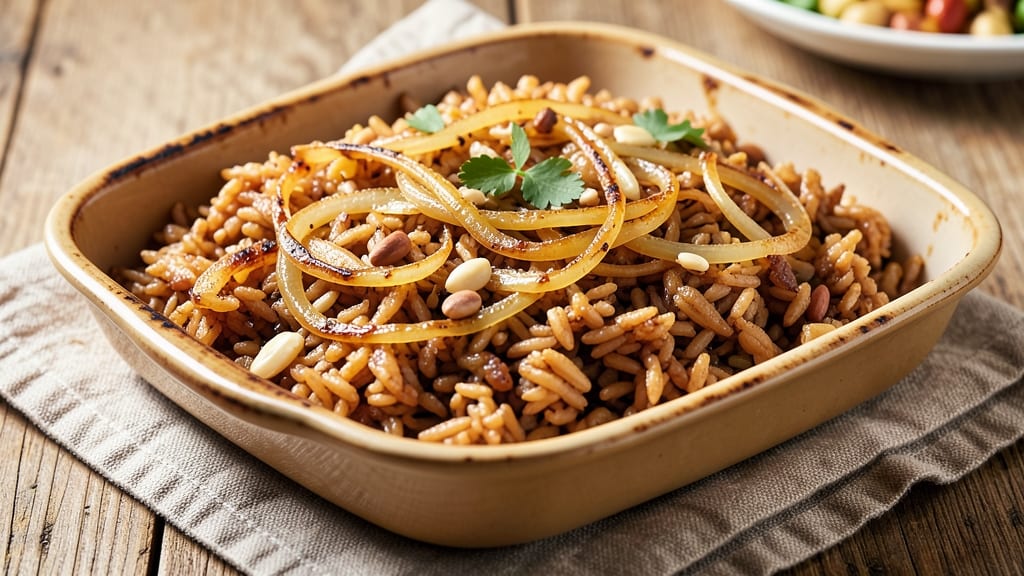
This brown rice pilaf with orzo delivers nutty, toasted grains with perfectly golden crispy edges—transforming a simple side into a flavorful centerpiece. The secret lies in toasting the grains separately before combining them with broth, which builds deep, caramelized flavor while maintaining that satisfying texture.
I developed this recipe after years of perfecting pilaf techniques, ensuring every bite offers both chew and crunch.
What makes this dish special is the balance—brown rice provides hearty texture and earthy nuttiness, while orzo adds delicate, toasted bite. The method is straightforward but precise: toast the grains until fragrant, then simmer in aromatic broth until tender yet firm.
A splash of lemon at the end brightens the dish, cutting through the richness while enhancing the natural flavors of the grains.
By the time you serve it, you'll have a pilaf with crispy edges that hold their shape, tender centers that melt in your mouth, and a golden hue that makes it look as good as it tastes.
It pairs beautifully with roasted meats, grilled fish, or even as a standalone vegetarian main. The best part? This recipe delivers restaurant-quality results with minimal effort.
For extra depth, stir in toasted almonds or fresh herbs before serving—simple additions that elevate the dish without complicating the process. Ready in about 45 minutes, this pilaf is perfect for weeknight dinners or meal prep. Let's get started!
Ingredients for brown rice pilaf recipe with orzo
Pantry staples plus a few fresh touches—this pilaf transforms simple grains into a showstopper side.
| Ingredient | Amount | Notes |
|---|---|---|
| Long-Grain Brown Rice 🌾 | 1 cup | Uncooked, rinsed well |
| Orzo Pasta 🍝 | ½ cup | Toasted until golden |
| Chicken Broth 💧 | 3 cups | Low-sodium preferred |
| Unsalted Butter 🧈 | 2 tbsp | Full-fat for richness |
| Yellow Onion 🧅 | 1 whole | Diced into small pieces |
| Garlic Cloves 🧄 | 3 cloves | Minced for aroma |
| Fresh Lemon Juice 🍋 | 1 tbsp | Brightens the dish |
| Dried Thyme 🌿 | ½ tsp | Or 1 tsp fresh thyme |
| Salt 🧂 | ¾ tsp | Adjust to taste |
| Black Pepper 🌶️ | ¼ tsp | Freshly ground |
| Toasted Sliced Almonds 🥜 | ¼ cup | For garnish (optional) |
| Fresh Parsley 🌿 | ⅛ cup | Chopped for garnish |
The brown rice and orzo are the stars here. Bob's Red Mill or Lundberg brown rice toasts up beautifully—look for whole grains, not pre-cut. Orzo should be the small, rice-shaped kind, not elbow macaroni. Toasting the grains separately is key: use a heavy-bottomed pan and watch closely. If you're short on time, Trader Joe's sells pre-toasted orzo that cuts prep by half. The butter matters too—full-fat gives that rich, nutty flavor you can't get with light versions. I always grab European-style butter from Whole Foods when I can, but regular unsalted works just fine.
No chicken broth? Vegetable broth works perfectly—just add a pinch of soy sauce for depth. Fresh thyme is ideal, but dried at half the amount gets the job done. The lemon juice can be swapped for white wine vinegar if you're out, but fresh is always better. Running low on almonds? Toasted pecans or walnuts add a similar crunch. For extra flavor, add a pinch of smoked paprika to the butter when toasting the grains. And if you're feeling fancy, swap the parsley for fresh dill or tarragon—just keep the same amount.
This pilaf tastes even better the next day—honestly, I make extra just for that reason. Store leftovers in an airtight container for up to 5 days in the fridge. For meal prep, portion into containers with a sprinkle of lemon juice on top to keep it fresh. Freezes beautifully for 3 months—just reheat with a splash of water or broth to restore moisture. The crispy edges soften when reheated, so I like to toast fresh orzo and mix it in right before serving to restore that satisfying crunch.
Why You'll Love This Recipe
- One-Pot Magic: I swear by this—just toss everything in one pot, stir once, and walk away. No measuring cups, no separate pans; the orzo and brown rice cook right alongside each other, soaking up that rich chicken broth until it’s tender and golden.
- Umami Bomb: That toasted onion and butter combo? It’s where the flavor lives. The orzo gets a little crispy at the edges while the brown rice stays chewy, and the broth reduces into a savory glue that makes every bite taste like it simmered all day.
- Lunchbox Hero: Between us, this is my go-to for meal prep. It reheats like a dream—no mushy rice here—and I can pack it with grilled chicken, roasted veggies, or even just a fried egg on top. Honestly, it’s the only side that survives my kids’ lunches intact.
- Budget Win: Brown rice and orzo are cheap, but they stretch into a full meal. A single batch feeds four, and leftovers taste just as good cold the next day. I’ll be real: I’ve made this for date nights, potlucks, and lazy Sundays—no excuses, just flavor.
Step-by-step instructions for brown rice pilaf with orzo
Here's how to create a perfectly nutty, toasted pilaf with crispy edges and tender grains.
Toast the Grains for Maximum Flavor
Heat a large skillet over medium-high heat and add the 2 tablespoons unsalted butter. Once melted and foaming, add the 1 cup long-grain brown rice and 0.5 cup orzo pasta all at once. Stir constantly for 3-4 minutes until the grains turn a beautiful golden brown color and you can smell that nutty aroma.
This toasting step is what gives your pilaf those crispy edges and deep flavor. Watch closely—if the grains start to burn, reduce the heat slightly. You want them golden, not blackened. Once they're toasted, remove the skillet from heat and set aside for now.
Sauté Onion and Garlic for Aromatic Base
In the same skillet (no need to clean it—the browned bits add flavor), add the 1 whole yellow onion that's been diced into small pieces. Cook over medium heat for 5-6 minutes until the onions soften and become translucent. Add the 3 cloves garlic cloves that have been minced and cook for another 30 seconds until fragrant.
Don't rush this step—the onions should be fully softened and the garlic should smell amazing. If the onions start to brown too quickly, reduce the heat slightly. This aromatic base forms the flavor foundation for your entire pilaf, so take your time here.
Combine with Broth and Seasonings
Return the toasted grains to the skillet and pour in the 3 cups chicken broth. Stir well to combine, then add the 0.5 teaspoon dried thyme, 0.75 teaspoon salt, and 0.25 teaspoon black pepper. Bring everything to a gentle boil, then immediately reduce heat to low and cover the skillet tightly with a lid.
Simmer for 35-40 minutes until the liquid has been completely absorbed and the rice is tender. You'll know it's done when the grains are plump and the bottom of the pan has a light crust. If you peek and see liquid remaining, cover and cook for another 5 minutes.
Finish with Bright Lemon and Garnish
Once the rice is tender, remove the skillet from heat and stir in the 1 tablespoon fresh lemon juice. This brightens the flavors and cuts through the richness of the butter. Let the pilaf sit covered for 5 minutes to allow the lemon to distribute evenly.
Garnish with the 0.25 cup toasted sliced almonds and 0.125 cup fresh parsley just before serving. The almonds add a delightful crunch while the parsley provides a fresh contrast. Serve immediately while still warm for the best texture and flavor combination.
Pro Tips For Making Brown Rice Pilaf Recipe With Orzo
- Toast the Orzo First: I learned this the hard way—skipping this step makes the orzo turn mushy. Sauté the orzo in butter for 2-3 minutes until it’s lightly golden before adding broth. That quick toast adds texture and prevents a gummy finish.
- Use Two Broth Batches: Brown rice needs more liquid than you think, but dumping it all at once risks soggy orzo. Start with half the broth, let it simmer until absorbed, then add the rest. This keeps the orzo from stealing all the moisture before the rice gets its turn.
- Don’t Drown the Onion: Finely chopped onion is great, but if it’s too wet from prep, it’ll turn to sludge. Pat it dry with a paper towel before cooking—this ensures it caramelizes instead of steaming into a sad, gray paste.
- Salt the Broth Early: Unsalted butter and broth need balancing, but adding salt at the end makes the rice taste flat. Taste the broth after it boils—season it before adding rice and orzo, then adjust again at the end. (Yes, even if you’re impatient like me.)
Essential equipment for great brown rice pilaf recipe with orzo
Skillet Essentials
Start with a 10-12 inch heavy-bottomed skillet—I swear by All-Clad stainless steel for even heat distribution, but a Lodge cast iron works beautifully too. The deep sides help prevent splattering when toasting grains, and the weight ensures consistent heat.
If you're short on time, a non-stick skillet works, but you'll lose that satisfying crust at the bottom. 🔥
Broth and Liquid Control
Use a liquid measuring cup with markings for the 3 cups chicken broth—this helps monitor absorption during simmering. For extra precision, I like OXO Good Grips measuring cups—they're durable and easy to read.
If you're making this ahead, a slow cooker (on low for 2 hours) works too, but I find the stovetop method gives better texture control.
Toasting Tools
A wooden spoon is perfect for stirring the grains during toasting—it prevents sticking better than metal. For garlic, a microplane gives you the finest minced texture without overpowering the dish.
And don't skip the fine-mesh strainer if rinsing your brown rice—it removes excess starch that can make your pilaf gummy. 💡
Garnish Prep
Toast your sliced almonds in a separate small skillet over medium heat for 2-3 minutes until fragrant. A toaster oven works too if you're toasting multiple batches. For parsley, a sharp chef's knife and cutting board make quick work of chopping—just keep the pieces uniform for even distribution.
I like to store pre-chopped parsley in the fridge for convenience.
Storage Containers
For leftovers, glass Pyrex containers with airtight lids are my go-to—they keep the pilaf fresh for up to 5 days in the fridge. If freezing, use quart-sized freezer bags with 1 inch headspace for expansion.
Label with the date to track freshness. A vacuum sealer extends shelf life to 4 months, but it's optional for this dish. ✨
Nutrition facts
Frequently asked questions
Can I substitute white rice for brown rice in this recipe?
While it's possible, I don't recommend it for this specific pilaf. Brown rice maintains its texture better during the long simmering process, giving you that satisfying chew. White rice would absorb liquid too quickly and risk becoming mushy. If you're short on time, consider using jasmine rice—it cooks faster while still holding up well. The flavor profile will be slightly different, but the technique remains the same.
How do I prevent my pilaf from turning out mushy?
The key is proper liquid management and not peeking! Use the exact 3 cups broth called for and resist the urge to add more—brown rice needs time to absorb liquid gradually. After simmering, let it sit covered for 5 minutes off the heat before fluffing. Also, make sure your lid fits tightly to trap steam. If it's still too moist, spread it on a baking sheet and bake at 350°F for 10 minutes to dry it out.
Can I make this pilaf in a rice cooker?
Use the same ratio of grains to broth (1 cup brown rice + 0.5 cup orzo to 3 cups broth) and follow the same toasting steps first. After adding everything to your rice cooker, cook on the white rice setting (about 30 minutes for brown rice). The texture will be slightly different—less crusty at the bottom—but still delicious. Just add the lemon juice at the end and garnish as directed.
What's the best way to reheat leftovers?
Reheat gently in a skillet over low heat with a splash of water or broth to restore moisture. Stir frequently to prevent drying. For extra crispiness, toast fresh orzo and mix it in at the end. Microwaving works too—cover with a damp paper towel and heat in 1-minute intervals until warmed through. The pilaf tastes even better the next day as flavors meld together!
Can I make this vegetarian?
Yes! Simply swap the chicken broth for vegetable broth and add 1 teaspoon soy sauce for depth. For extra flavor, sauté 1 diced carrot and 1 celery stalk with the onions. The dish will still be hearty and satisfying. You could also add 1 cup diced mushrooms to the skillet during the onion cooking step for a meaty texture.