
Main Courses
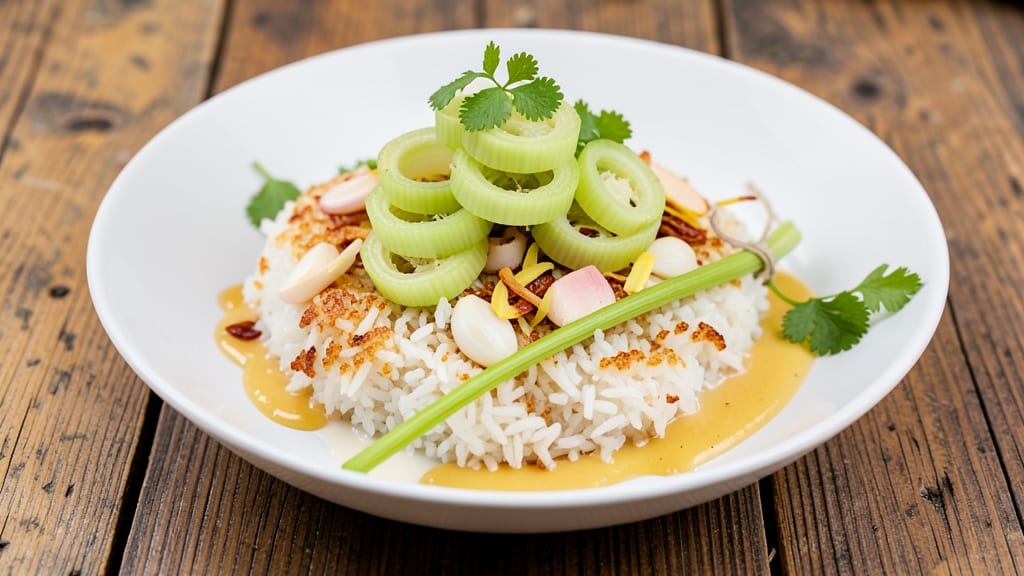
The buro rice recipe transforms simple jasmine rice into a legendary Filipino centerpiece, where crispy celery crowns frame tender, coconut-infused grains. This traditional dish—born from clay pot cooking—balances sweet, savory, and herbal notes in every bite.
The secret lies in layering ingredients just right: rice soaked overnight for perfect texture, coconut milk for richness, and a celery crown that crackles with caramelized perfection.
What sets buró rice apart is its cultural soul—slow-cooked in clay pots (or steamed over hot coals) until the celery crown achieves that signature crispy crunch while the rice beneath remains fluffy. The dish traditionally features pork or fish, but even vegetarian versions shine with garlic, ginger, and lemongrass.
This isn’t just rice; it’s a celebration of Filipino home cooking, where every component plays a role.
By the time you serve it, the table will smell of toasted coconut and herbs, the celery crown will shatter between bites, and the rice will be infused with just enough savory depth to make it unforgettable.
The dish pairs beautifully with atchara (pickled papaya) or grilled pork, but it’s so complete on its own that you might not need anything else. Let’s recreate this Filipino classic.
Authenticity matters here—no shortcuts will replace the slow-cooked layers of flavor. Whether you’re cooking for a family gathering or a quiet Sunday dinner, this recipe delivers restaurant-quality results with a touch of nostalgia. Ready to master buró rice?
Ingredients for buro rice
Jasmine rice, coconut milk, and celery crown combine for this iconic Filipino dish.
| Ingredient | Amount | Notes |
|---|---|---|
| Jasmine Rice 🍚 | 2 cups | Uncooked, long-grain preferred |
| Coconut Milk 🥥 | 13 ½ oz | Full-fat canned, no additives |
| Celery Stalk 🧅 | 1 whole | Thick, firm, organic preferred |
| Garlic Cloves 🧄 | 6 cloves | Fresh, peeled, minced |
| Fresh Ginger 🌿 | 2 tbsp | Grated, not powdered |
| Lemongrass Stalk 🌿 | 1 whole | Fresh, bruised, cut into 2-inch pieces |
| Bay Leaves 🌿 | 2 whole | Dried, crushed lightly |
| Salt 🧂 | 1 ½ tsp | Kosher or sea salt |
| Black Peppercorns 🌶️ | ½ tsp | Freshly cracked |
| Olive Oil 🫒 | 2 tbsp | Light or extra-virgin |
| Sugar 🍚 | 1 tbsp | Granulated, optional for balance |
| Pork Belly Slices 🥩 | 6 oz | Thinly sliced, optional for traditional version |
The celery stalk is non-negotiable—it needs to be thick and firm for that signature crispy crown. Organic celery from the produce section at Whole Foods or Trader Joe's works best, but any bright green stalk will do. The jasmine rice should be uncooked and long-grain—short-grain rice like sushi rice won't achieve the same fluffy texture. For coconut milk, full-fat canned versions like Aroy-D or Thai Kitchen deliver the richest flavor, but any brand without additives will work. The pork belly, if using, should be thinly sliced and marbled—ask your butcher for pre-sliced cuts if available.
No lemongrass? Substitute with 1 tbsp lemongrass paste or skip it entirely—the dish still shines. Fresh ginger is ideal, but powdered ginger at half the amount works in a pinch. The sugar is optional but recommended for balancing the savory notes—brown sugar adds depth. For a vegetarian version, omit the pork and increase the coconut milk by 2 oz. The garlic and ginger should be freshly grated or minced—pre-minced garlic loses flavor fast. If your celery stalk is too thin, use two smaller stalks tied together with kitchen twine for stability during cooking.
This dish requires patience—soak the rice overnight for optimal texture. Store leftover rice in an airtight container for 3-4 days, but the celery crown loses crispness after 1 day. For best results, reheat gently with a splash of water to restore moisture. The coconut milk can be stored in the pantry for up to 2 years once opened, but fresh is always better. If prepping ahead, assemble everything except the celery crown and cook the rice separately—add the celery crown just before serving to maintain crispness.
Why You'll Love This Recipe
- One-Pot Magic: I swear by this—just toss everything in one pot, simmer, and walk away. The jasmine rice soaks up the coconut milk while the garlic and ginger meld into this warm, aromatic base. No fancy layers, no stress.
- Creamy-Garlicky Bliss: That first bite? Rich coconut milk clinging to perfectly fluffy rice, with garlic so tender it’s practically melting. The ginger adds this bright, zesty kick that cuts through the richness—like a hug in a bowl.
- Lunchbox Hero: Between us, this is my go-to for meal prep. The leftovers reheat beautifully, and the flavors only get better the next day. Pack it cold for work or heat it up for a lazy Sunday—it’s always a win.
- Budget Bistro: Jasmine rice and coconut milk stretch this into a full meal without breaking the bank. A single celery stalk and a few garlic cloves stretch the flavor further than you’d think. Honestly, it’s my cheap-eats secret.
Step-by-step instructions for crispy celery crown over savory herb rice
Master this technique and you'll achieve the perfect balance of crispy celery crown and fragrant herb rice every time.
Prepare the Celery Crown
Begin by trimming the ends off the whole celery stalk to create a flat surface. Using a sharp chef's knife, carefully slice the stalk into ¼-inch thick rounds, keeping them whole like crowns. You should have about 8-10 slices from one stalk. Set these aside on a paper towel-lined plate.
In a small bowl, whisk together 2 tablespoons olive oil, 1 tablespoon sugar, 1.5 teaspoons salt, and 0.5 teaspoon cracked black peppercorns. Brush this mixture generously over both sides of each celery crown. The sugar will help caramelize the edges, creating that signature crispy texture. Let them sit for 10 minutes while you prepare the rice base.
Cook the Pork Belly and Aromatics
Heat a large skillet over medium-high heat and add the 6 ounces pork belly slices. Cook undisturbed for 3-4 minutes per side until golden brown and crispy. Remove the pork and set aside on a paper towel-lined plate to drain excess fat. Keep the rendered fat in the skillet—this is packed with flavor.
In the same skillet, add 2 tablespoons olive oil if needed to coat the bottom. Add the 6 cloves minced garlic, 2 tablespoons grated ginger, and 2-inch pieces of lemongrass. Sauté for 1-2 minutes until fragrant but not browned. Add the 2 crushed bay leaves and stir for 30 seconds to infuse the aromatics into the oil.
Toast the Jasmine Rice
In a medium saucepan, combine the 2 cups jasmine rice and 13.5 ounces coconut milk. Bring to a boil over medium-high heat, then reduce heat to low and simmer uncovered for 5 minutes, stirring occasionally. This toasting step develops the nutty flavor of the rice and prevents mushiness.
After 5 minutes, add the 1.5 teaspoons salt and 0.5 teaspoon cracked black peppercorns to the rice mixture. Stir well to distribute the seasoning evenly. Cover the saucepan with a tight-fitting lid and reduce heat to lowest setting. Cook for 15 minutes without disturbing it. This gentle cooking method ensures perfectly fluffy rice with each grain distinct.
Crisp the Celery Crowns
While the rice cooks, return the skillet with pork belly fat to medium-high heat. Arrange the celery crowns in a single layer, cut-side down. Cook for 4-5 minutes until the edges are deep golden brown and crispy, and the centers are tender when pierced with a knife. Flip each crown and cook for another 2-3 minutes on the other side until evenly browned.
Remove the celery crowns and place them on a wire rack set over a plate to keep them crispy. The residual heat will continue cooking them slightly while they drain. Keep the pork belly warm in a 200°F oven while you finish the rice.
Assemble and Serve
After the 15 minutes of covered cooking, remove the rice from heat and let it sit covered for 5 minutes. Fluff the rice gently with a fork, being careful not to mash the grains. Taste and adjust seasoning if needed—you may want to add a pinch more salt or a squeeze of lime for brightness.
To serve, spoon the herb rice onto plates, arranging it in an even layer. Place 2-3 crispy celery crowns on top of each serving, fanning them slightly for presentation. Add the warm pork belly slices alongside and drizzle any remaining pork fat from the skillet over the top. The contrast of crispy celery, tender rice, and rich pork belly creates the perfect balance of textures and flavors.
Pro Tips For Making Buro Rice
- TOAST THE GINGER: I learned this the hard way—raw ginger in buru rice tastes like a wet sock. Grate it fine, then dry-toast in a hot pan for 30 seconds until fragrant. The color will darken, and the flavor will explode when it hits the coconut milk.
- SIMMER THE COCONUT MILK: Don’t just dump it in cold. Heat the coconut milk with the garlic and celery until tiny bubbles form at the edges—about 5 minutes. This removes the soapy taste and lets the garlic soften properly. (Yes, even if you’re impatient like me.)
- RINSE THE RICE WELL: Jasmine rice needs a good scrubbing—rinse it in a fine-mesh strainer until the water runs almost clear. Starchy water makes buru rice gummy, and no one wants that. Trust me, the extra 30 seconds saves you from mushy disappointment.
- USE HALF THE COCONUT MILK: The recipe might call for a full can, but start with 2/3 and add more later. Too much liquid drowns the rice, and you’ll end up with porridge. Taste as you go—it’s the only way to guarantee perfect texture. (Your future self will thank you.)
Serving suggestions for buro rice
Traditional Filipino Sides
Serve your buró rice with atchara, a tangy Filipino pickled papaya salad, to cut through the richness. I love using Trader Joe’s pickled papaya for convenience, but homemade versions with carrots, daikon, and vinegar elevate the dish further.
Another classic pairing is grilled pork belly slices—the smoky char complements the coconut-infused rice beautifully. 🌶️
For a vegetarian twist, add kinilaw (Filipino ceviche) made with raw shrimp or tuna, lime juice, and calamansi for brightness. The acidity balances the creamy rice perfectly. If you’re serving a crowd, lumpia (spring rolls) or adobo fried chicken make excellent accompaniments.
Modern Twists
Swap the pork belly for grilled shrimp skewers tossed in calamansi-chili sauce for a lighter option. The citrusy heat pairs wonderfully with the coconut rice. I’ve also experimented with crispy tofu marinated in soy sauce and garlic, which adds a satisfying crunch to the plate. 🍤
For a fusion approach, serve alongside mango salsa (diced mango, red onion, and lime) to introduce a sweet-tangy contrast. The tropical flavors remind me of summer gatherings in the Philippines. Garnish with cilantro or mint for an extra pop of freshness.
Beverage Pairings
A cool glass of calamansi juice—made with fresh calamansi, water, and sugar—is the ultimate Filipino pairing. Its tartness cleanses the palate between bites. For a non-alcoholic option, yogurt-based banana drink (like banana lassi) adds creaminess without overpowering the dish. 🥤
If you’re serving alcohol, a light Filipino beer like San Miguel Pale Pilsen or a gin-based cocktail with calamansi and soda works beautifully. Avoid heavy wines—they’ll clash with the coconut and celery flavors. For a refreshing finish, serve iced coffee with a dash of condensed milk on the side.
Presentation Tips
Arrange the rice in a low, wide bowl to showcase the crispy celery crowns fanned on top. Drizzle any remaining pork fat or toasted coconut flakes over the rice for extra visual appeal.
Use banana leaves for a traditional touch—simply line the plate and let the natural aroma enhance the dish. 🌿
For a modern touch, serve family-style in a clay pot (or a cast-iron skillet) with the celery crowns stacked in the center. Add edible flowers like hibiscus or pansies for a vibrant garnish. The key is balance—let the crispy, savory, and creamy elements shine without overwhelming the plate.
Nutrition facts
Frequently asked questions
Why does buró rice need to soak overnight?
The overnight soak is key to achieving that signature fluffy texture. When jasmine rice absorbs water gradually, it develops evenly cooked grains that stay distinct rather than turning mushy. This traditional method also helps the rice better absorb the coconut milk's richness during cooking. Pro tip: Use twice the volume of water as rice for soaking (e.g., 4 cups water for 2 cups rice).
Can I make buró rice without a clay pot?
While traditional clay pots create that authentic smoky aroma, you can replicate the effect using a heavy-bottomed pot or even a cast-iron skillet on the stove. For extra authenticity, try steaming the rice over a pot of boiling water (like a bain-marie) to mimic the slow-cooked clay pot method. The key is gentle heat and covered cooking to maintain moisture.
What's the secret to perfectly crispy celery crowns?
Three things: thick, firm celery, hot fat, and patience. Use the thickest stalk you can find, slice it ¼-inch thick, and brush both sides with a mix of olive oil, sugar, salt, and pepper. Cook in hot pork fat or oil until edges are deep golden brown—about 4-5 minutes per side. The sugar caramelizes for that signature crunch!
How do I store leftover buró rice?
Store the rice and celery crowns separately to maintain texture. Keep the rice in an airtight container for 3-4 days at room temperature, or refrigerate for up to 5 days. The celery crowns will lose crispness after 1 day—reheat them in a dry skillet for 1-2 minutes to restore crunch. For best flavor, consume within 2 days of making.
What's the best substitute for lemongrass?
If you can't find lemongrass, try these substitutes: 1 tbsp lemongrass paste (found in Asian markets), ½ tsp citronella oil, or a mix of ½ tsp lime zest + ½ tsp grated ginger. For a simpler approach, skip it entirely—the dish will still be delicious, just with slightly less aromatic depth. The garlic and ginger will still provide plenty of flavor!