
Side Dishes
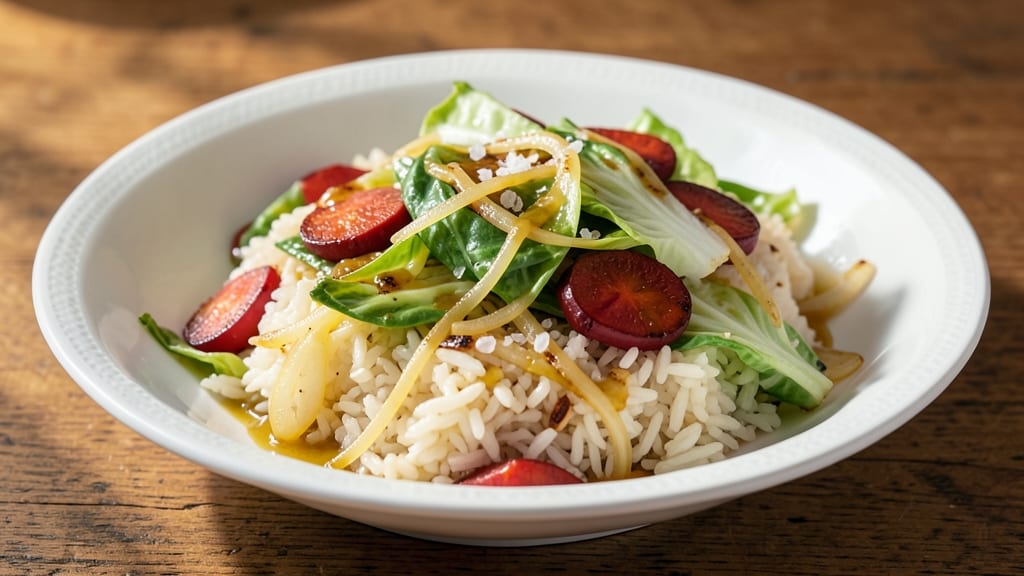
This cabbage carrot rice recipe transforms simple pantry staples into a vibrant, one-pan dish that’s packed with texture and flavor. The crispy rice topping adds a satisfying crunch, while tender shredded cabbage and sweet carrots create a balanced bite.
Perfect for weeknight dinners or meal prep, this dish is quick, nutritious, and foolproof—no fancy techniques required.
The secret lies in sautéing the vegetables until they soften just enough to absorb the rice’s savory aromas, then toasting the rice with a sprinkle of seasoning for that irresistible crisp.
Whether you’re serving it alongside grilled chicken or as a standalone vegetarian meal, this pilaf delivers restaurant-quality results with minimal effort. Ready in under 30 minutes, it’s the kind of side dish that turns ordinary meals into something special.
Ingredients for cabbage carrot rice
Simple vegetables and rice create a vibrant, restaurant-quality pilaf with crispy texture and balanced flavors.
| Ingredient | Amount | Notes |
|---|---|---|
| Long-Grain White Rice 🍚 | 1 cup | Uncooked, rinsed thoroughly |
| Green Cabbage 🥬 | 4 cups | Shredded, thinly sliced |
| Carrots 🥕 | 2 medium | Shredded, uniform strips |
| Yellow Onion 🧅 | 1 medium | Diced, finely chopped |
| Extra-Virgin Olive Oil 🫒 | ¼ cup | For sautéing vegetables |
| Vegetable Broth 💧 | 1 ½ cups | Low-sodium preferred |
| Fresh Thyme Leaves 🌿 | ½ tsp | Or 0.25 tsp dried thyme |
| Garlic Cloves 🧄 | 3 cloves | Minced, finely chopped |
| Diamond Crystal Kosher Salt 🧂 | ¾ tsp | Adjust to taste |
| Ground Black Pepper 🌶️ | ¼ tsp | Freshly ground preferred |
| Toasted Sesame Seeds 🌰 | 1 tbsp | For garnish (optional) |
| Fresh Parsley 🌿 | ¼ cup | Chopped, for garnish |
The cabbage and carrots are the foundation—look for firm heads of green cabbage with crisp leaves and bright orange carrots without blemishes. Pre-shredding at home ensures even cooking, but store-bought bags work too. For the rice, jasmine or basmati adds subtle aroma, though long-grain white is perfectly fine. The onion should be yellow, not red or white, for milder sweetness that caramelizes beautifully. Whole Foods or Trader Joe's carry pre-shredded cabbage and carrots in the produce section, saving prep time without sacrificing quality.
No fresh thyme? Dried thyme works at half the amount, but the flavor won't be as bright. Substitute 1/4 tsp dried oregano if needed, though it lacks thyme's earthy depth. Short on vegetable broth? Water plus 1 tbsp soy sauce mimics umami without sodium overload. The sesame seeds are optional but add nutty crunch—toast them in a dry pan for 1 minute to deepen flavor. For extra crisp, sprinkle 1 tbsp panko breadcrumbs over the rice before broiling. The parsley is purely decorative unless you're serving this as a standalone dish—skip it if pairing with protein.
Rice keeps best in an airtight container for 4-5 days in the fridge, though flavor peaks within the first 2 days. For longer storage, freeze portions for up to 3 months—reheat gently in the microwave with a splash of water to restore moisture. The vegetables soften further upon reheating, so undercook slightly if serving cold. This pilaf reheats beautifully, making it ideal for meal prep. Portion into individual containers with a sprinkle of sesame seeds on top for a restaurant-worthy presentation.
Why You'll Love This Recipe
- One-Pot Magic: I swear by this recipe when I’m too tired to wash pots. Toss everything—rice, chopped cabbage, carrots, onion—into one pot, add water and olive oil, and let it simmer. No straining, no fuss, just done.
- Sweet-Savory Balance: Between us, the caramelized onions and tender cabbage create this perfect harmony. The carrots add a subtle sweetness that makes every bite feel like a little celebration—no fancy seasoning needed.
- Lunchbox Hero: Honestly, this is my go-to for meal prep. The rice stays firm, the veggies hold their crunch, and it reheats like a dream. Pack it cold for work or warm it up for a lazy dinner—it’s always a win.
- Budget Meal Stretch: A whole head of cabbage and a bag of carrots go far here. I’ve fed four people for under $8, and the leftovers? They’re just as good the next day. Minimal cost, maximum satisfaction.
Step-by-step instructions for crisp-topped veggie pilaf
Here's the method for a perfectly balanced one-pan dish with tender rice and crispy vegetable topping.
Sauté the Aromatic Base
Heat the 0.25 cup extra-virgin olive oil in a large skillet over medium heat until shimmering. Add the 1 medium yellow onion and cook for 5-6 minutes until softened and translucent. The onions should release their sweetness and begin to caramelize slightly at the edges.
Add the 3 minced garlic cloves and 0.5 tsp fresh thyme leaves, stirring for 30 seconds until fragrant. You'll notice the thyme releases its earthy aroma and the garlic transforms from raw to mellow. This aromatic foundation will carry through the entire dish.
Cook the Vegetables Until Tender-Crispy
Push the onion mixture to one side of the pan and add the 2 medium shredded carrots and 4 cups shredded green cabbage to the empty space. Cook for 8-10 minutes over medium-high heat until the carrots soften and the cabbage begins to wilt down. Stir occasionally to prevent burning.
You want the vegetables to develop some texture contrast - the carrots should be tender but still hold their shape, while the cabbage should be just slightly charred at the edges. This balance creates the perfect crispy topping we're aiming for. Season with 0.75 tsp kosher salt and 0.25 tsp black pepper during the last 2 minutes of cooking.
Layer and Cook the Rice
Create a well in the center of the pan and add the 1 cup rinsed long-grain white rice. Pour the 1.5 cups vegetable broth over the rice, then gently stir to combine. The rice should be evenly distributed with vegetables surrounding it.
Bring to a gentle simmer, then reduce heat to low. Cover the pan with a tight-fitting lid and cook for 15 minutes without disturbing. The rice will absorb the broth and begin steaming, while the vegetables above will soften further. This layered approach creates our signature crispy topping effect.
Develop the Crispy Topping
After the initial 15 minutes, remove the lid and increase heat to medium-high. Cook uncovered for 5-7 minutes until the top layer of vegetables becomes golden brown and crispy. You'll see the edges begin to brown and the cabbage develop a slight char.
This crispy layer is what makes this pilaf special. The contrast between the tender rice and crispy vegetables creates an exciting textural experience. If the top isn't browning quickly enough, you can use a metal spatula to gently press down on the vegetables to help them crisp up faster.
Rest and Serve with Garnishes
Remove from heat and let the pilaf rest for 5 minutes covered with the lid. This resting period allows the rice to finish steaming and the flavors to meld together. The residual heat will continue to develop that crispy texture we worked so hard to achieve.
Before serving, garnish with 1 tbsp toasted sesame seeds and 0.25 cup chopped fresh parsley. The sesame seeds add a nutty contrast while the parsley brings freshness to balance the rich vegetables. Serve immediately while the crispy topping is at its best - the texture will soften as it cools.
Pro Tips For Making Cabbage Carrot Rice
- SOAK THE CABBAGE: I used to skip this, but slicing the cabbage into ¼-inch wedges and letting them sit in cold water for 10 minutes before cooking removes that bitter edge—especially important for tougher outer leaves. Drain well, or your rice will turn soggy. (Yes, even if you're impatient like me.)
- SWEAT THE ONIONS LOW: After chopping the onion into ½-inch pieces, cook them in olive oil over medium-low heat until they’re translucent but not brown—about 5 minutes. Rushing this step makes the whole dish taste raw. If they start to color, you’ve gone too far.
- CHOP CARROTS UNIFORM: Cut the carrots into matchsticks (about ¼-inch thick) so they cook at the same rate as the cabbage. Larger chunks stay crunchy while the rice gets mushy—no one wants that texture clash. A mandoline makes this faster, but a sharp knife works too.
- COOK RICE SEPARATELY: I learned this the hard way—adding rice directly to the veggie mix turns it into a gluey mess. Instead, cook the rice first (or use a rice cooker), then fold in the sautéed cabbage, carrots, and onions at the very end. The texture stays perfect, and cleanup’s easier.
Troubleshooting this recipe
Mushy Vegetables
If your cabbage and carrots turn out too soft, you likely overcooked them before adding the rice. The key is to cook them just until they begin to wilt—about 8-10 minutes—while keeping some firmness.
For next time, reduce the cooking time by 2 minutes and stir more frequently to prevent uneven browning. 🥬
Undercooked Rice
Rice that’s still crunchy or uncooked means it didn’t absorb enough liquid. Always use 1.5 cups vegetable broth for 1 cup uncooked rice—this ratio ensures proper hydration. If your rice is undercooked, add 2-3 tablespoons water, cover, and cook for an additional 5 minutes on low heat.
Dry or Grainy Texture
A grainy texture usually means the rice didn’t steam evenly. After adding the broth, stir the rice gently to distribute it evenly among the vegetables. Cover tightly with a lid and cook on low heat—never high—to prevent moisture from evaporating too quickly.
If the rice is still dry after cooking, sprinkle 1 tablespoon warm water over the top and let it steam for 2 more minutes.
Uneven Crispy Topping
If the crispy layer is spotty, the vegetables weren’t cooked long enough or the heat wasn’t distributed evenly. After removing the lid, increase the heat to medium-high and use a metal spatula to gently press down on the vegetables, encouraging even browning.
For extra crispiness, broil for 1-2 minutes at the end, watching closely to avoid burning.
Broth Absorbed Too Quickly
If the broth disappears before the rice is fully cooked, your pan might be too hot or the heat too intense. Reduce the heat to low immediately and add 2-3 tablespoons more broth or water.
Cover and cook for an additional 5 minutes. To prevent this in the future, use a heavy-bottomed pan like a Lodge cast iron skillet, which distributes heat more evenly.
Seasoning Too Mild
If your pilaf lacks flavor, seasoning was likely added too late or not enough. Always season the vegetables with salt and pepper during the last 2 minutes of cooking before adding the rice.
For extra depth, add a pinch of smoked paprika or 1/4 teaspoon soy sauce to the broth. Taste as you go—adjusting seasoning gradually is key to balancing flavors. 💫
Nutrition facts
Frequently asked questions
Can I make this cabbage-carrot rice dish ahead of time?
Yes, this pilaf actually tastes better the next day! Store in an airtight container in the fridge for up to 4-5 days. The flavors meld beautifully, though the crispy topping will soften slightly. Reheat gently in the microwave with a splash of water to restore moisture. For the crispy texture, broil for 2-3 minutes after reheating.
What if I don't have fresh thyme?
No problem! Use ¼ teaspoon dried thyme instead, but reduce the cooking time by 1 minute since dried herbs are more concentrated. For extra depth, add ½ teaspoon dried oregano or a pinch of smoked paprika to the vegetable broth. The dish will still taste delicious with these substitutions.
How can I make this dish more flavorful?
Boost the flavor with a few simple upgrades: Add 1 tablespoon soy sauce to the broth for umami depth, or stir in ½ teaspoon curry powder with the vegetables. For freshness, finish with 1 tablespoon lemon juice and extra parsley. If you love heat, sprinkle ¼ teaspoon red pepper flakes before serving.
Can I use brown rice or quinoa instead?
Brown rice will take 5-7 minutes longer to cook, so increase the broth to 2 cups and simmer uncovered for 25 minutes after adding the rice. Quinoa cooks in 12-15 minutes with 2 cups broth—use the same method but reduce the final crispy phase to 3-4 minutes to avoid burning. Both work well but require adjusted cooking times.
Is this dish suitable for meal prep?
Perfect for meal prep! Divide into 4 portions in airtight containers with parchment paper between layers to maintain crispiness. Reheat in the microwave for 2-3 minutes, then broil for 1-2 minutes to restore the crispy topping. Store for up to 5 days in the fridge or freeze for 3 months. The flavors actually improve over time!