
Main Courses
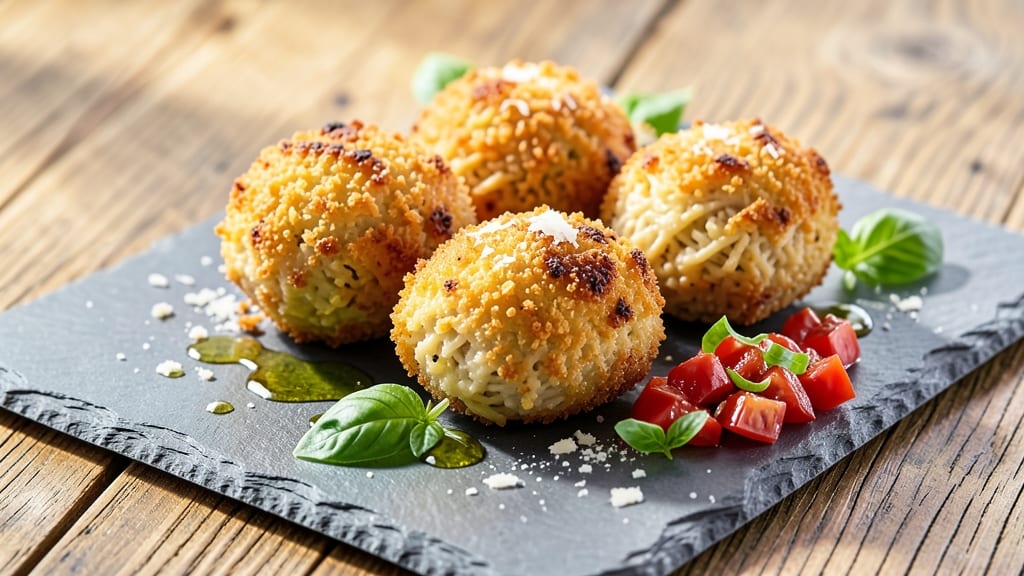
This Calabrese rice croquettes recipe delivers the perfect balance of crispy golden shells and rich, cheesy Italian filling—every bite is a taste of Roman comfort food.
The secret lies in a foolproof rice mixture with Parmesan, herbs, and just enough moisture to hold its shape, then transformed into golden, shatteringly crisp croquettes through a precise breading technique.
What sets these apart is the authentic Calabrese method: slow-cooked Arborio rice with a touch of butter and white wine creates a tender yet structured filling, while the double breading ensures that signature crunch.
Unlike many recipes, this version includes a fail-safe frying technique that guarantees even cooking every time—no soggy centers here.
The result is a dish that looks impressive but comes together with simple ingredients and straightforward steps. Each bite offers a satisfying contrast between the crispy exterior and creamy, herby interior, making these perfect for appetizers, main courses, or even a hearty snack.
Serve with marinara or a tangy aioli for the full experience.
Whether you're hosting a dinner party or craving a comforting weeknight meal, these croquettes deliver restaurant-quality results with minimal effort. The technique works equally well for frying or air-frying, so you can adapt it to your preferred cooking method while keeping that golden, crispy perfection intact.
Ingredients for calabrese rice croquettes
Authentic Calabrese rice croquettes start with slow-cooked Arborio rice and transform into crispy golden bites through precise breading.
| Ingredient | Amount | Notes |
|---|---|---|
| Arborio Rice 🍚 | 1 ½ cups | Uncooked, long-grain preferred |
| Unsalted Butter 🧈 | 2 tbsp | European-style preferred |
| Dry White Wine 🍷 | ½ cup | Pinot Grigio or Sauvignon Blanc |
| Vegetable Stock 💧 | 1 ½ cups | Low-sodium preferred |
| Parmesan Cheese 🧀 | 1 cup | Freshly grated, aged minimum 24 months |
| Fresh Basil Leaves 🌿 | ¼ cup | Chopped, stems removed |
| Fresh Parsley Leaves 🌿 | ⅛ cup | Chopped, for garnish |
| Garlic Cloves 🧄 | 2 cloves | Minced, for rice mixture |
| All-Purpose Flour 🌾 | 1 ½ cups | For breading, sifted |
| Panko Breadcrumbs 🍞 | 1 ½ cups | Japanese-style preferred |
| Large Eggs 🥚 | 2 whole | Beaten for egg wash |
| Vegetable Oil 🫒 | 3 cups | For frying, peanut oil works best |
| Diamond Crystal Kosher Salt 🧂 | 1 ½ tsp | For seasoning, adjust to taste |
| Ground Black Pepper 🌶️ | ½ tsp | Freshly ground preferred |
| Lemon Zest 🍋 | 1 tsp | Fresh lemon preferred |
The Arborio rice is non-negotiable—its high starch content creates the perfect tender yet structured filling. Whole Foods or specialty Italian markets carry the best quality, but any reputable grocery store's Arborio works fine. For the Parmesan, Parmigiano-Reggiano aged 24 months or longer delivers the deepest flavor; pre-grated versions lack the same intensity. The white wine should be dry and crisp—Pinot Grigio or Sauvignon Blanc are ideal, but any dry white will work. Fresh herbs are essential here: basil and parsley from the grocery store's produce section should be vibrant green with no wilting—these are your quality indicators for freshness.
No Arborio rice? Carnaroli or Vialone Nano are excellent substitutes, though Arborio remains the gold standard. Short on white wine? Dry vermouth or extra chicken stock works in a pinch, though the flavor profile shifts slightly. For the breading, Japanese-style panko creates the crispiest exterior—Trader Joe's or Costco sell high-quality panko in bulk. If you're air-frying, reduce the oil by half and increase the temperature to 400°F for 12-15 minutes, flipping halfway. The lemon zest adds a bright contrast to the rich filling—organic lemons from the store's produce section yield the most vibrant zest.
Pre-cooked rice can be refrigerated for up to 3 days before shaping into croquettes. The breaded croquettes hold well in the fridge for 24 hours before frying, but they're best made fresh for optimal crispiness. For make-ahead convenience, prepare the rice mixture and store it in an airtight container for up to 2 days—reheat gently before shaping. Once fried, these croquettes stay crispy for 30 minutes at room temperature if kept in a 200°F oven while you finish serving. Serve immediately for the ultimate texture contrast.
Why You'll Love This Recipe
- One-Pot Magic: I swear by this recipe because it’s actually one-pot—no extra pans, no fuss. Toss Arborio rice with butter, wine, and stock, then let it simmer until creamy. The Parmesan folds in at the end, and boom: zero cleanup.
- Wine-Infused Luxury: That splash of dry white wine? It’s not just flavor—it’s a shortcut to restaurant-quality depth. The rice soaks up the acidity, balancing the richness of the butter and Parmesan. (Yes, even the cheap stuff works.)
- Leftover Reinvention: Make a double batch and freeze half. These croquettes reheat like a dream—crispy outside, creamy inside—whether you’re craving a snack or feeding a crowd. My kids beg for them cold too, no joke.
- Budget-Friendly Fancy: Arborio rice and Parmesan might sound fancy, but this recipe stretches them far. A single batch feeds four, and the ingredients won’t break the bank. It’s the kind of dish that makes you feel special without the grocery shock.
Step-by-step instructions for Calabrese rice croquettes
Master the art of crispy, golden croquettes with this method—perfect texture every time.
Cook the Arborio Rice to Al Dente Perfection
In a medium saucepan, melt the 2 tbsp unsalted butter over medium heat. Add the 1.5 cups arborio rice and toast for 2 minutes, stirring constantly, until the grains become translucent at the edges. This step develops the rice's natural starches for that creamy texture.
Deglaze the pan immediately with the 0.5 cup dry white wine, scraping up any browned bits from the bottom. Let the wine reduce by half before adding the 1.5 cups vegetable stock, 1 tsp lemon zest, and 2 minced garlic cloves. Bring to a simmer, then reduce heat to low and cover. Cook for 18-20 minutes, stirring once halfway through, until the rice is al dente—just tender with a slight bite in the center.
Once cooked, remove from heat and stir in the 1 cup freshly grated parmesan cheese, 0.25 cup chopped fresh basil leaves, and 0.5 tsp freshly ground black pepper. Let the mixture cool completely before shaping—this prevents the filling from getting too soft when breaded.
Shape and Chill the Croquette Mixture
Transfer the cooled rice mixture to a clean work surface and gently fold in the 1.5 tsp diamond crystal kosher salt. Using slightly damp hands, shape the mixture into 4 equal logs (about 3 inches long and 1 inch thick), then cut each log into 4 pieces, yielding 16 total croquette mounds. Roll each mound into a smooth, teardrop shape—this ensures even cooking and presentation.
Place the shaped croquettes on a parchment-lined tray and refrigerate for at least 1 hour (or up to 24 hours). Chilling firms up the filling, preventing it from leaking during frying and ensuring a clean, crispy exterior. If the mixture feels too soft, return it to the fridge for an additional 30 minutes—patience here is key to that signature crunch.
Create the Breading Station
Set up three shallow bowls: one with the 1.5 cups all-purpose flour mixed with 0.25 tsp diamond crystal kosher salt, one with the 2 beaten large eggs, and one with the 1.5 cups panko breadcrumbs. The flour bowl should be sifted to avoid lumps, and the panko should be lightly toasted in a dry pan for 2 minutes over low heat before using—this adds extra crunch to the final coating.
Working in batches, roll each chilled croquette in the flour first, pressing gently to adhere. Dip into the egg wash, allowing excess to drip off, then coat thoroughly in the panko breadcrumbs, pressing firmly to create an even, ¼-inch thick crust. Place the breaded croquettes on a wire rack set over a baking sheet—this allows air to circulate and prevents sogginess.
Fry to Golden Perfection
Heat 3 cups vegetable oil in a deep skillet or Dutch oven over medium heat until it reaches 350°F—use a thermometer for accuracy. Fry 4 croquettes at a time, turning occasionally, for 3-4 minutes until they turn a deep golden brown and float to the surface. If they brown too quickly, reduce the heat slightly to 325°F—this prevents burning while maintaining crispiness.
Transfer the fried croquettes to a paper towel-lined plate to drain excess oil. Repeat with the remaining croquettes, maintaining the 350°F oil temperature between batches. The croquettes are done when they achieve a crispy, caramelized exterior with no trace of raw breading. For extra flavor, sprinkle with 0.125 cup chopped fresh parsley leaves immediately after frying.
Serve Immediately for Maximum Crunch
Serve the croquettes immediately while still hot and crispy. Arrange them on a platter and garnish with additional chopped parsley and a sprinkle of freshly cracked black pepper for a pop of color. For dipping, offer a side of marinara sauce or aioli—the contrast of creamy filling and crispy shell is what makes these croquettes irresistible.
If you must store them, place the croquettes in a single layer on a baking sheet and refrigerate for up to 2 hours. Reheat in a 375°F oven for 5-7 minutes to restore crispiness, or air-fry at 390°F for 3 minutes. However, nothing beats the first bite straight out of the fryer—crispy, cheesy, and utterly satisfying.
Pro Tips For Making Calabrese Rice Croquettes
- STIR CONSTANTLY FOR 18 MINUTES: I learned this the hard way—skipping the stir after the wine evaporates means uneven cooking and gummy rice. Keep that heat medium-high and move that spoon like you’re conducting an orchestra, especially in the first 18 minutes when the rice is absorbing the most liquid.
- GRATE PARMESAN FRESH: Pre-shredded cheese packs like a brick and absorbs moisture, turning your croquettes into a sad, crumbly mess. Grab a box grater and work fast—you only need about ½ cup finely grated Parmesan (yes, even if the label says "for 2 cups"). The texture makes all the difference.
- DON’T OVERMIX THE FILLING: Once the rice is al dente and creamy, fold in just enough Parmesan and stock to bind it—about ¼ cup liquid max. Overmixing turns the filling into glue, and your croquettes will either fall apart or taste like a sad, dense rice ball. Keep it loose and rustic.
- USE COLD RICE FOR CRISP CRUST: Let the cooked rice cool completely before shaping—about 15 minutes—then chill it another 10 in the fridge. Cold rice holds together better, and the croquettes brown beautifully instead of steaming into a pale, sad blob. (Trust me, I’ve cried over soggy croquettes.)
Essential equipment for great calabrese rice croquettes
Deep Fryer Essentials
For authentic Calabrese-style croquettes, a deep fryer is my go-to tool—it maintains consistent oil temperature and handles multiple batches effortlessly. I recommend the Ninja Foodi Deep Fryer for its precise temperature control and safety features.
If you prefer a budget option, the Cuisinart Deep Fryer delivers reliable results. Always use peanut oil for its high smoke point (450°F) and neutral flavor—it won’t overpower the delicate rice filling. 🔥
Thermometer Accuracy
Never guess your oil temperature—instant-read thermometers are non-negotiable. I swear by the ThermoWorks Thermapen One for its lightning-fast readings and durability. For deep fryers, the oil should maintain a steady 350°F throughout cooking.
If your thermometer lacks a probe, the Taylor Precision Products digital model works perfectly. Pro tip: Place the thermometer in the oil for 30 seconds before checking—surface temps can be misleading.
Breading Tools
Precision matters when breading—wire mesh racks and silicone spatulas are my kitchen staples. The OXO Good Grips Silicone Spatula gently lifts breaded croquettes without tearing the coating. For even coating, I use a fine-mesh sieve to sift the flour, eliminating lumps that could create weak spots.
A small offset spatula helps press panko firmly onto each croquette. Don’t skip the wire cooling rack—it prevents soggy bottoms by allowing air circulation.
Air Fryer Adaptation
For a lighter alternative, an air fryer works surprisingly well with these croquettes. I use my Ninja Foodi DualZone at 390°F for 12-15 minutes, flipping halfway through. The key is reducing oil—brush croquettes lightly with 1 tsp vegetable oil before air-frying.
For extra crispiness, spray with cooking spray after breading. Just watch closely after 8 minutes—air fryers can dry out breading faster than oil.
Oil Management
Reuse oil up to 3 times for these croquettes, but strain it thoroughly after each batch using a fine-mesh strainer or cheesecloth. Store used oil in an airtight container in a cool, dark place for up to 1 week.
For deep fryers, I keep a dedicated oil container with a spout lid—like the OXO Good Grips Oil Bottle—to make pouring easier. Never overfill your fryer; oil should cover croquettes by 1 inch to ensure even cooking.
Safety First
Safety can’t be an afterthought—heat-resistant gloves and a fire extinguisher (or baking soda) should always be nearby. I use Silvertown Heat-Resistant Oven Mitts for handling hot fryers. Keep a metal spatula handy to gently separate croquettes if they stick.
For deep fryers, never leave unattended—these croquettes cook fast, and oil temps can rise quickly. A timer (even your phone works) ensures you don’t overcook a batch. 💡
Nutrition facts
Frequently asked questions
Can I make these rice croquettes without frying?
For a lighter version, bake the breaded croquettes at 400°F for 18-20 minutes on a wire rack over a baking sheet. Brush with 1 tablespoon oil first for crispiness. The texture will be slightly different but still delicious—just avoid overcrowding the pan to maintain even browning.
What's the best way to store leftover croquettes?
Store them in an airtight container at room temperature for up to 2 hours to maintain crispiness. For longer storage, refrigerate for up to 2 days. Reheat in a 375°F oven for 5-7 minutes or air-fry at 390°F for 3 minutes to restore crispness. Never microwave—they'll turn soggy!
Can I add other ingredients to the rice filling?
Yes! For extra flavor, try adding ½ cup finely diced pancetta (cooked until crispy) or ½ cup sautéed mushrooms to the rice. You could also mix in ¼ cup finely chopped sun-dried tomatoes or 1 beaten egg for extra binding. Just be mindful not to overfill the croquettes—keep portions similar to the original recipe.
Why did my croquettes turn out greasy?
Greasy croquettes usually mean the oil was too hot (over 375°F) or the breading wasn't pressed firmly enough. Use a thermometer to maintain 350°F oil and press panko firmly during breading. Another tip: Let croquettes drain on a wire rack for 2-3 minutes before serving to absorb excess oil.
How do I make these gluten-free?
Replace the flour with 1.5 cups gluten-free all-purpose flour blend and use 1.5 cups gluten-free panko. For the egg wash, ensure your eggs are fresh (they help bind the coating). Test the breading consistency—you may need to add 1 tablespoon cornstarch to help the coating adhere better.