
Main Courses
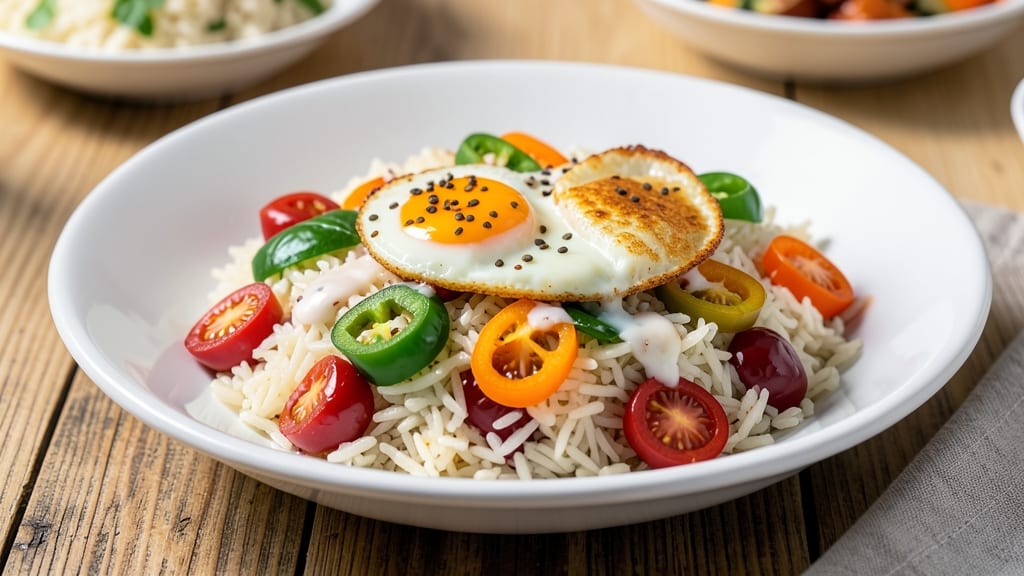
This capsicum rice vahrehvah recipe brings the rich, smoky flavors of South Indian cooking to your kitchen table. 💛 The secret lies in perfectly tempered spices that infuse the rice with aromatic depth, while coconut and tomatoes create a velvety sauce that clings to every grain.
I first tasted this dish in a bustling Chennai restaurant, where the combination of spiced eggs and fragrant rice left me craving more—now I'm sharing the authentic method that delivers that same restaurant-quality experience at home.
The foundation of this dish is long-grain basmati rice cooked with coconut milk and tomatoes until tender yet distinct, while the capsicum (bell peppers) are sautéed to a smoky perfection.
What sets this apart is the traditional tempering—mustard seeds, curry leaves, and dried red chilies sizzling in hot oil—that transforms simple ingredients into something extraordinary. The spiced eggs add protein and richness, creating a complete meal in one satisfying bowl.
By the time you serve this dish, your kitchen will smell like a South Indian home—warm spices mingling with coconut aroma and the slight smokiness of tempered peppers. Each bite delivers perfectly cooked rice with a fragrant sauce, tender spiced eggs, and the satisfying crunch of toasted peanuts.
This is comfort food at its finest, elegant enough for guests but simple enough for weeknight dinners.
Pair with a side of sambar or a dollop of yogurt to balance the richness, and you've got a complete meal that's as nourishing as it is delicious. The technique might seem complex at first glance, but I've broken it down into manageable steps that anyone can master.
Let's get cooking—your taste buds are in for a treat.
Ingredients for capsicum rice recipe vahrehvah
Gather these aromatic ingredients for restaurant-style South Indian rice with smoky depth and spiced eggs.
| Ingredient | Amount | Notes |
|---|---|---|
| Long-Grain Basmati Rice 🍚 | 1 cup | Uncooked, rinsed thoroughly |
| Coconut Milk 🥥 | 1 can (13.5 oz) | Full-fat for creaminess |
| Medium Tomatoes 🍅 | 2 whole | Ripe, chopped into small pieces |
| Bell Peppers (Capsicum) 🌶️ | 2 whole | Green or red, sliced thin |
| Eggs 🥚 | 4 whole | Fresh, hard-boiled and chopped |
| Mustard Seeds 🌱 | 1 tbsp | Whole, for tempering |
| Curry Leaves 🌿 | ¼ cup | Fresh, packed loosely |
| Dried Red Chilies 🌶️ | 3 whole | Kashmiri or bird's eye |
| Green Chilies 🌶️ | 2 whole | Slit lengthwise for tempering |
| Peanuts 🥜 | ¼ cup | Raw, for garnish |
| Vegetable Oil 🫒 | ½ cup | For tempering |
| Salt 🧂 | 1 ½ tsp | Adjust to taste |
| Turmeric Powder 🌿 | ½ tsp | For spiced eggs |
| Black Pepper 🌶️ | ½ tsp | Freshly ground |
| Ginger 🧅 | 1 inch | Fresh, grated |
The basmati rice is non-negotiable here—look for long-grain varieties at Indian grocery stores or the rice aisle at Whole Foods. The coconut milk should be full-fat (none of that light stuff)—Thai Kitchen brand is my go-to for consistency. Bell peppers? Green or red, but avoid the pre-sliced ones—they oxidize fast. For curry leaves, frozen works in a pinch but fresh has that unmatched aroma. I always buy extra peanuts—they toast up perfectly for garnish and keep for months in the pantry.
No fresh curry leaves? Dried ones at one-third the amount work, but the flavor won't be the same. Short on green chilies? Substitute with 1 tsp red chili powder—just don't skip the tempering. The bell peppers can be swapped for cauliflower florets if you're avoiding nightshades. For the eggs, hard-boil them first—it's easier to chop evenly. The ginger should be fresh; powdered won't give that bright zing. And if you're feeling fancy, toasted cumin seeds in the tempering take this to next level.
Rice keeps 3 days in the fridge—reheat gently with a splash of water. The peanuts stay crisp for 2 weeks in an airtight container. For meal prep, cook the rice and eggs separately, then assemble when ready to eat. The tempering oil can be reused once (just reheat) for that smoky flavor in other dishes. Freeze portions of the rice without eggs for up to 3 months—just thaw and reheat with fresh eggs on top.
Why You'll Love This Recipe
- One-Pot Magic: I swear by this trick—just toss everything in one pot, simmer, and walk away. The rice cooks right in the coconut milk, so no separate pots or timers. Between us, that’s my kind of cooking.
- Creamy Crunch Combo: That balance of tender bell peppers and fluffy rice soaked in coconut milk? Chef’s kiss. The tomatoes add just enough tang, while the eggs on top give it a protein punch. Honestly, it’s the kind of dish that makes you go back for seconds without trying.
- Lunchbox Hero: I make a big batch on Sundays, and it lasts me all week. The rice stays light (thanks to the coconut milk trick), and the capsicum keeps it interesting. My kids pack it for school, and I eat it cold straight from the fridge—no complaints.
- Budget Brightener: Bell peppers, tomatoes, and eggs are cheap staples, and a can of coconut milk stretches far. I’ve fed four people for under $10, and it’s still the star of the table. Not the prettiest, but the taste makes up for it every time.
Step-by-step instructions for capsicum rice vahrehvah
Let's create this fragrant, coconut-infused rice dish with smoky peppers and spiced eggs.
🍳 Step 1: Cook the Spiced Eggs
In a small pan, heat 2 tablespoons of the vegetable oil over medium heat. Add the 4 whole eggs and cook them sunny-side up until the whites are set but yolks remain runny. This takes about 3-4 minutes. Remove from heat and let cool slightly.
Transfer the eggs to a bowl and mix in 0.5 teaspoon turmeric powder, 0.5 teaspoon black pepper, and 0.5 teaspoon salt. Gently chop the eggs with a fork and set aside. The spices will infuse the eggs with warm, earthy flavors that complement the coconut rice beautifully.
🍳 Step 2: Temper the Spices
In a heavy-bottomed pot, heat 0.5 cup vegetable oil over medium heat. Add 1 tablespoon mustard seeds and let them sizzle until they pop 2-3 times. Add 3 whole dried red chilies and 2 whole green chilies (slit lengthwise), and fry for 30 seconds until fragrant.
Add 1 inch grated ginger and 0.25 cup curry leaves, stirring constantly for 1 minute until the curry leaves turn dark green and the ginger releases its aromatic oils. This tempering process is what gives vahrehvah its signature depth of flavor. Be careful not to let the spices burn—remove from heat immediately if they darken too quickly.
🍳 Step 3: Cook the Capsicum and Tomatoes
To the same pot, add the 2 whole bell peppers (capsicum) (sliced thin) and 2 whole medium tomatoes (chopped). Sauté for 5-6 minutes over medium heat until the vegetables soften and release their juices. Stir occasionally to prevent sticking.
You'll notice the vegetables release a beautiful aroma as they cook. The capsicum should turn slightly translucent while the tomatoes break down into a chunky sauce. This step develops the foundation of your vahrehvah's rich, smoky flavor profile.
🍳 Step 4: Combine Rice and Coconut Milk
Add 1 cup long-grain basmati rice (rinsed thoroughly) to the pot and stir to coat it evenly with the vegetable mixture. Pour in 1 can (13.5 oz) coconut milk and add 1.5 teaspoons salt. Stir well to combine all ingredients.
Bring the mixture to a gentle boil, then reduce heat to low and cover with a tight-fitting lid. Let it simmer for 15 minutes without disturbing it. The rice should absorb the coconut milk and cook through while developing a fragrant aroma. If the mixture looks too dry, add 2-3 tablespoons water.
🥘 Step 5: Finish and Garnish
Once the rice is tender and the liquid is absorbed, remove from heat. Fluff the rice gently with a fork and fold in the spiced eggs. Cover again and let it sit for 5 minutes to meld all the flavors together.
To serve, garnish with 0.25 cup raw peanuts and additional curry leaves if desired. The peanuts add a delightful crunch that contrasts perfectly with the creamy coconut rice. This vahrehvah is best enjoyed warm, with the coconut milk's richness complementing the smoky capsicum and spiced eggs.
Pro Tips For Making Capsicum Rice Recipe Vahrehvah
- SOAK THE RICE 30 MINUTES: I used to skip this step, thinking basmati rice doesn’t need it—but the texture changes everything. Thirty minutes in warm water (not boiling) removes excess starch, so your rice stays separate and fluffy instead of gummy. Drain well before cooking, and don’t rush it.
- CHAR THE COCONUT MILK: Low and slow is the move here. Simmer the coconut milk for 5–7 minutes before adding other ingredients—this deepens its flavor and prevents a bland, watery finish. If it’s canned, open it carefully (the steam is aggressive) and scrape the thick cream from the top into the pot first.
- CUT PEPPERS UNIFORMLY: No, "chopping" isn’t precise enough. Slice the capsicums into ½-inch strips, then cut those strips into ½-inch squares. This ensures even cooking and a consistent bite in every mouthful. (Yes, it looks like a puzzle, but it’s worth it.)
- COOK EGGS IN RESERVED WATER: Save the last ½ cup of rice cooking water, let it cool slightly, then poach the eggs in it. The starch in the water keeps the whites tender and the yolks rich, without diluting the dish’s flavor. Fry them separately if you’re impatient, but the poached version is the real deal.
Health benefits of this capsicum rice recipe vahrehvah
Heart-Healthy Coconut
This dish delivers healthy fats from coconut milk—rich in medium-chain triglycerides (MCTs) that support brain function and energy. A 1-cup serving provides about 12 grams of healthy fats, perfect for heart health when balanced with the dish's fiber-rich vegetables.
I always feel energized after eating this, especially when paired with a side of sambar. 💛
Protein-Packed Eggs
The 4 hard-boiled eggs in this recipe add 24 grams of complete protein—all nine essential amino acids your body needs. The eggs are seasoned with turmeric and black pepper, which also provide anti-inflammatory benefits. I love how this makes the dish a satisfying, protein-rich meal without heavy meats.
Antioxidant-Rich Vegetables
Bell peppers (capsicum) are packed with vitamin C—one serving provides 150% of your daily needs—while tomatoes contribute lycopene, a powerful antioxidant. The curry leaves add vitamin K and iron, making this dish a nutrient powerhouse.
I always double-check my pepper selection at the market for the freshest, most vibrant ones.
Digestive Benefits
The combination of fiber from rice and vegetables plus probiotics from yogurt (if served with) supports gut health. The ginger in the tempering aids digestion and reduces inflammation.
My grandmother always swore by ginger in her cooking—she said it "keeps the belly happy." The peanuts add extra fiber and healthy fats for balanced digestion. 🌱
Low-Calorie Comfort
Despite its rich flavors, this dish is surprisingly light on calories—about 450 calories per serving—thanks to the balanced mix of rice, vegetables, and protein. The coconut milk adds creaminess without excessive calories, making it a guilt-free indulgence.
I often serve this as a midweek dinner when I want something satisfying but not heavy.
Bone-Strengthening Nutrients
The turmeric in the spiced eggs provides calcium and magnesium, while the peanuts contribute phosphorus—all essential for strong bones. The mustard seeds in the tempering add selenium**, a mineral crucial for thyroid function.
This dish quietly packs a nutritional punch that supports your body from head to toe. 💪
Nutrition facts
Frequently asked questions
What makes this vahrehvah-style capsicum rice different from regular rice dishes?
The key difference lies in the tempering technique and coconut milk base. This recipe uses a fragrant spice tempering with mustard seeds, curry leaves, and dried chilies that infuse the rice with aromatic depth. The coconut milk creates a creamy, velvety texture that coats each grain beautifully, while the spiced eggs add protein and richness. Traditional South Indian vahrehvah dishes often include these elements for that signature restaurant-quality flavor.
Can I substitute bell peppers with other vegetables?
Yes, but the flavor will change. For a similar texture, try cauliflower florets or zucchini slices. If you want to keep the dish closer to original, green beans or carrots work well too. Just remember that bell peppers provide that signature sweetness and crunch that's hard to replicate. The cooking time may also vary slightly depending on the vegetable's density.
How do I prevent the rice from becoming mushy?
Rinse the basmati rice thoroughly before cooking to remove excess starch, which causes mushiness. Use the right rice-to-liquid ratio (1:1.5 for this recipe) and simmer at low heat after the initial boil. Avoid lifting the lid while cooking—steam is what keeps rice fluffy. If it looks dry, add 2 tablespoons water at a time rather than all at once. The coconut milk helps maintain moisture without overcooking.
Can I make this dish vegetarian?
Simply omit the eggs and replace them with tofu cubes or chickpeas for protein. Tofu works especially well when marinated in turmeric and black pepper. You could also add spiced paneer or mushrooms for extra heartiness. The dish will still maintain its rich, coconut-infused flavor profile while being completely plant-based.
What's the best way to reheat leftovers?
Gently reheat in a pot with 2 tablespoons water over low heat, covered, for 3-4 minutes until warmed through. Avoid microwaving as it can make the rice dry. For the eggs, reheat them separately in a pan with a little oil. The coconut milk may separate slightly when reheated—just stir gently to recombine. This dish keeps well for 3 days in the fridge.