
Main Courses
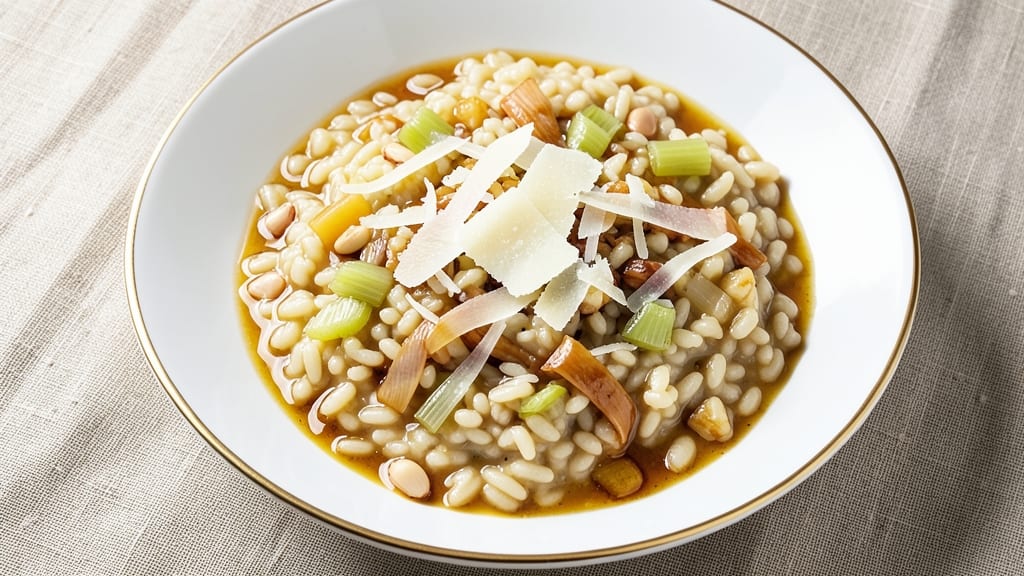
This Carnaroli rice risotto recipe delivers velvety, luxurious texture without the endless stirring—perfect for weeknight dinners that feel like a restaurant meal. The secret lies in the rice's high starch content, which creates that signature creaminess while absorbing flavors like a sponge.
I've refined this method over years to balance authenticity with approachable techniques, so you get restaurant-quality results without the fuss.
What sets this recipe apart is the soffritto base—sautéed onions, garlic, and celery—that forms the flavor foundation, followed by the risotto method of gradual broth additions. The final touch? A mantecatura (finishing with butter and cheese) that transforms the dish into something truly indulgent.
Whether you stick to classic Parmesan or experiment with truffle oil and mushrooms, the result is always creamy, rich, and deeply satisfying.
Ingredients for carnaroli rice risotto
These premium ingredients transform simple pantry staples into restaurant-worthy risotto with minimal effort.
| Ingredient | Amount | Notes |
|---|---|---|
| Carnaroli Rice 🍚 | 1 ½ cups | Unrinsed, high starch content |
| Yellow Onion 🧅 | 1 whole | Finely diced, about 1.5 cups |
| Celery Stalks 🥬 | 2 whole | Finely diced, about 0.5 cup |
| Garlic Cloves 🧄 | 4 cloves | Minced, about 1 tbsp |
| Dry White Wine 🍷 | ½ cup | Bold, dry variety like Sauvignon Blanc |
| Chicken or Vegetable Broth 💧 | 4 cups | Hot, homemade preferred |
| Unsalted Butter 🧈 | 4 tbsp | Cold, cut into small cubes |
| Parmesan Cheese 🧀 | ½ cup | Freshly grated, fine grade |
| Extra-Virgin Olive Oil 🫒 | 2 tbsp | For initial sauté |
| Salt 🧂 | 1 ½ tsp | Diamond Crystal preferred |
| Ground Black Pepper 🌶️ | ½ tsp | Freshly cracked |
| Fresh Thyme Leaves 🌿 | ¼ cup | Chopped, about 6 sprigs |
| Shallot 🧅 | 1 whole | Optional, finely minced |
The Carnaroli rice is non-negotiable here—its high starch content delivers that signature creamy texture without excessive stirring. Whole Foods or specialty Italian markets carry it in bulk, but Amazon delivers if you're short on time. For the soffritto base, freshly diced onions and celery (about 1.5 cups total) create depth, while minced garlic adds aromatic punch. Trader Joe's often has pre-minced garlic in jars, but fresh is ideal. The white wine should be bold and dry—anything with noticeable acidity, like a Sauvignon Blanc, works perfectly. Costco sells affordable bottles by the case if you're making this often.
No dry white wine? Substitute extra broth with a splash of lemon juice for brightness. The broth can be homemade or high-quality store-bought—just ensure it's hot and seasoned before adding. Diamond Crystal kosher salt dissolves more easily than table salt, so use it if you have it. For the mantecatura (finishing touch), unsalted butter and freshly grated Parmesan are essential—pre-grated cheese lacks the same richness. Short on thyme? Dried works at one-third the amount, but fresh is worth the effort. The shallot is optional but adds subtle sweetness—skip it if you're in a rush.
Risotto reheats beautifully, but the texture suffers if overcooked. Portion into airtight containers and store in the fridge for up to 3 days, or freeze for up to 2 months. For best results, reheat gently with a splash of broth—microwaving makes it gummy. The soffritto base can be prepped ahead and stored in the fridge for 2 days, saving you time on cooking day. Double the recipe if you're feeding a crowd—it's even more impressive when made in batches.
Why You'll Love This Recipe
- Same recipe, different vibes: toss in mushrooms for a cozy Tuesday or add saffron and Parmesan for a fancy crowd. The Carnaroli’s creamy texture holds up everywhere—no stress, just satisfaction.
- No-Fuss Technique: I swear by this method—just toast the onion and celery until soft (no need to cry over chopping), then stir in the Carnaroli as it blooms. The rice practically cooks itself while you sip your wine.
- Wine-Infused Magic: That splash of dry white wine? It’s not just for show—it brightens the whole dish, cutting through the richness while the garlic lingers like a warm hug. Honestly, the first bite makes me pause.
- Weeknight to Dinner Party: Same recipe, different vibes: toss in mushrooms for a cozy Tuesday or add saffron and Parmesan for a fancy crowd. The Carnaroli’s creamy texture holds up everywhere—no stress, just satisfaction.
Step-by-step instructions for perfect Carnaroli risotto
Master this technique once and you'll achieve velvety risotto without constant stirring.
Sauté Aromatics Until Translucent
Heat the 2 tablespoons extra-virgin olive oil in a wide, heavy-bottomed pot over medium heat. Add the finely diced yellow onion and finely diced celery stalks (about 1.5 cups total), stirring occasionally for 8-10 minutes until softened and translucent.
Here's the thing—Carnaroli rice needs space to absorb liquid properly, so don't crowd the pot. You'll want about 2-3 inches of clearance between the rice and pot edge when added. If using the optional shallot, add it now with the onions and celery.
Toast the Rice and Add Wine
Add the 1.5 cups Carnaroli Rice and stir for 2 minutes until the grains become slightly translucent at the edges. This toasting step develops the rice's natural nutty flavor and prevents gumminess.
Pour in the 0.5 cup dry white wine and increase heat to medium-high. Let it simmer until completely evaporated—you'll see the liquid disappear and the rice begin to release starch. This typically takes 2-3 minutes. Real talk: Don't rush this step. The wine's acidity helps break down the rice's outer layer for better texture.
Add Broth Gradually and Maintain Temperature
Begin adding the 4 cups hot chicken or vegetable broth in ½-cup increments, stirring only after each addition. The key is maintaining a gentle simmer—you should see small bubbles at the edges but no vigorous boiling.
I've found that using a thermometer helps here. The ideal temperature is 170-180°F—hot enough to cook the rice but not so hot it turns mushy. Between additions, let the rice absorb the liquid for 3-4 minutes before stirring again. This layered approach creates that signature creamy texture without constant attention.
Incorporate Butter and Cheese at the End
When the rice is al dente (after about 18-20 minutes total cooking time), remove from heat. Add the 4 tablespoons cold unsalted butter and 0.5 cup freshly grated Parmesan Cheese, stirring vigorously until fully incorporated and the mixture becomes luxuriously creamy.
The butter and cheese work together to create that signature risotto finish. Here's the moment that matters: The sauce should coat the back of a spoon but still be loose enough to flow. If it's too thick, add 1-2 tablespoons hot broth to loosen. Season with 1.5 teaspoons salt and 0.5 teaspoon freshly cracked black pepper, plus the 0.25 cup chopped fresh thyme leaves for bright aroma.
Rest and Serve Immediately
Cover the pot and let the risotto rest for 2-3 minutes—this allows the starches to fully set and creates that perfect mouthfeel. Serve family-style in the pot with additional Parmesan Cheese and freshly cracked black pepper on the table.
Each bite should deliver that signature creamy texture with distinct rice grains visible. The risotto should be rich but not greasy, with bright thyme notes and nutty undertones from the Carnaroli. Leftovers? Toss them with a little extra broth and reheat gently—they won't be quite as creamy but still delicious.
Pro Tips For Making Carnaroli Rice Risotto
- Toast the Rice First: Before adding liquid, dry-toast the Carnaroli in olive oil over medium-high heat for 2-3 minutes until it’s just starting to smell nutty. I used to skip this, and my risotto always felt underdeveloped—this step builds flavor and prevents gummy rice.
- Dice Onion Like Dice: Cut the yellow onion into 1/4-inch cubes, not thin slices. Thin onions burn before they sweeten, and you’ll end up with a bitter base. Aim for uniform pieces so they cook evenly with the celery and garlic.
- Deglaze with Wine Immediately: As soon as you add the white wine, let it simmer for 2 full minutes until fully evaporated. Rushing to add broth next traps alcohol in the rice, making it taste sharp and unfinished. Patience here makes all the difference.
- Stir Like You Mean It: Use a wooden spoon and stir vigorously in quick, circular motions—especially when adding broth. The goal is to break up starches and create a creamy texture, not just stir lazily. I learned this the hard way when my risotto turned out gluey instead of velvety.
Troubleshooting great carnaroli rice risotto
Rice Too Dry?
If your risotto ends up dry and gritty, you likely added too much rice or didn't use enough broth. Carnaroli rice absorbs 1.5 cups broth per 1 cup rice, so stick to the 4 cups broth for 1.5 cups rice.
If using a different pot size, adjust liquid by ¼ cup increments. I've found that underestimating the broth is the #1 mistake—always have extra on hand. 💧
Mushy Texture?
Overcooking turns risotto mushy by breaking down the starches too much. Remove it from heat as soon as grains are al dente (about 18-20 minutes total). The residual heat will finish cooking it.
If it's still firm after resting, add 1-2 tablespoons hot broth to loosen. Never let it boil vigorously—keep it at a gentle simmer (170-180°F). 🌡️
Sauce Too Thin?
Thin risotto usually means you stirred too aggressively or didn't toast the rice enough. The toasting step (2 minutes) is critical—it releases starches that thicken the sauce. If it's still runny, remove from heat and let it rest 5 minutes uncovered to evaporate excess moisture.
For extra creaminess, add 1 tbsp cold butter and stir vigorously. 🧈
Grainy or Undercooked?
Undercooked rice happens when broth isn't hot enough or rice isn't toasting properly. Always use hot broth (170-180°F) and toast rice until slightly translucent. If grains are still hard after 20 minutes, add ½ cup hot broth and cook 2-3 more minutes.
A meat thermometer helps track internal temp—aim for 195-200°F. 🌡️
Wine Not Evaporating?
If wine lingers instead of evaporating, your heat is too low. Increase to medium-high and let it bubble vigorously for 2-3 minutes until completely gone. The wine's acidity is key for breaking down the rice's outer layer—don't skip this step!
If using a shallow pot, cover with a lid to speed evaporation. 🍷
Burnt Aromatics?
Burnt onions or celery mean your heat is too high. Sauté over medium heat and stir frequently—aim for 8-10 minutes until softened but not browned. If they darken, remove from heat and start over with fresh aromatics. A wide, heavy-bottomed pot distributes heat evenly, preventing hot spots. 🥬
Nutrition facts
Frequently asked questions
Why does Carnaroli rice make better risotto than other varieties?
Carnaroli's high starch content absorbs liquid beautifully while maintaining distinct grains, creating that signature creamy texture without turning mushy. Its thick outer layer prevents overcooking, while the low amylose content makes it creamy without constant stirring. Think of it as nature's perfect risotto rice!
Can I make this risotto ahead of time?
Fresh risotto is best served immediately, but you can prep the soffritto base (onions, celery, garlic) up to 2 days ahead and store it in the fridge. For leftovers, reheat gently with 1-2 tablespoons hot broth per cup of risotto—it won't be as creamy but still delicious. Never reheat in the microwave!
What's the best wine to use if I don't have dry white?
Use a bold, dry red wine like Cabernet Sauvignon (reduce to ¼ cup) or substitute with lemon juice + broth (1 tbsp lemon per ½ cup broth). The key is acidity—avoid sweet wines like Moscato. For non-alcoholic versions, use apple cider vinegar (1 tbsp) + extra broth.
How do I know when the risotto is perfectly cooked?
Test with the "squeeze test": Press a grain between your fingers—it should be al dente (slightly firm but tender) with a tiny bit of resistance. The total cooking time is 18-20 minutes, but timing varies by stove. Look for visible grains with creamy sauce coating them, not a mushy mass.
Can I make this vegetarian or vegan?
Use vegetable broth and replace the butter with olive oil or vegan butter. For the mantecatura, use nutritional yeast (¼ cup) + vegan Parmesan (½ cup) or cashew cream. Skip the wine or use grape juice for acidity. The texture stays creamy—just adjust seasoning to taste!