
Main Courses
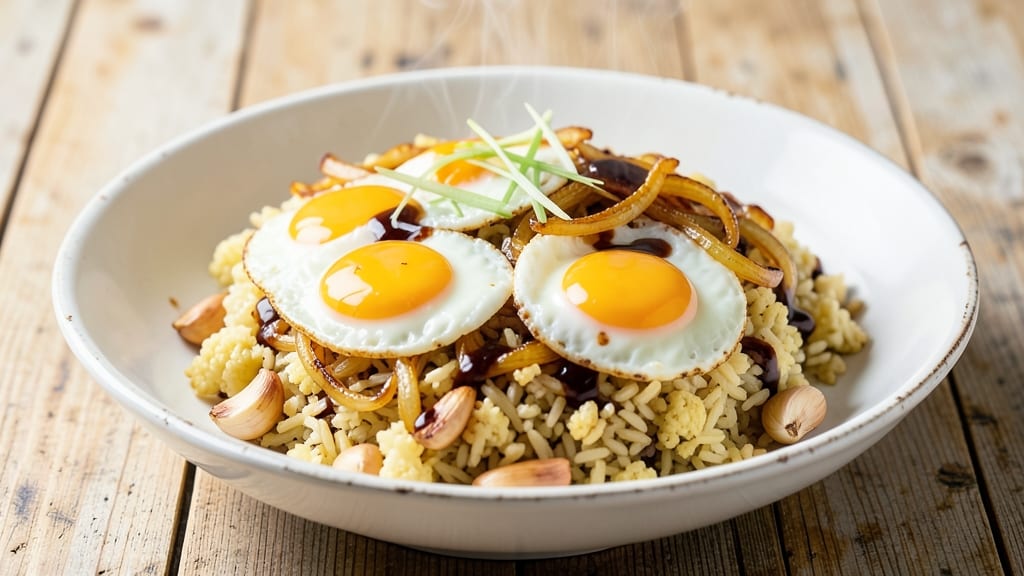
This cauliflower Chinese fried rice delivers all the wok-tossed crunch and eggy richness of classic fried rice—but without a single grain of rice. The secret lies in perfectly prepped cauliflower rice that stays crisp as it absorbs the savory-sweet sauce, while high-heat stir-frying unlocks that signature "wok hei" aroma.
I've refined this vegetarian version to mimic the texture and depth of traditional fried rice, using umami-packed soy sauce, fresh ginger, and a touch of sesame oil for that authentic wokhouse flavor.
The result is a dish that's crispy at the edges, tender in the center, and packed with the bright, garlicky notes of traditional Chinese fried rice. The cauliflower rice soaks up the sauce beautifully, creating a satisfying bite that holds its shape even after the wok toss.
Serve it as a standalone meal with a fried egg on top or alongside egg rolls for a complete takeout-style experience—without the guilt of refined carbs.
Ingredients for cauliflower chinese fried rice
Pantry staples meet wokhouse magic—no rice required for this crispy, umami-packed fried cauliflower.
| Ingredient | Amount | Notes |
|---|---|---|
| Fresh Cauliflower Florets 🥬 | 6 cups | Riced finely for texture |
| Large Eggs 🥚 | 4 whole | Freshly beaten for richness |
| Yellow Onion 🧅 | 1 whole | Diced small for even cooking |
| Garlic Cloves 🧄 | 6 cloves | Minced finely for aroma |
| Fresh Ginger 🌿 | 1 tbsp | Grated finely for zing |
| Low-Sodium Soy Sauce 🍶 | ½ cup | Kikkoman preferred for balance |
| Sesame Oil 🫒 | 1 tbsp | Toasted for authentic flavor |
| Carrots 🥕 | 1 cup | Shredded fine for texture |
| Green Onions 🌱 | ¼ cup | Sliced thin for garnish |
| Vegetable Oil 🫒 | ½ cup | High smoke point preferred |
| White Rice Vinegar 🍶 | 1 tbsp | Balances flavors beautifully |
| Sesame Seeds 🌾 | 1 tbsp | Toasted for crunch |
| Salt 🧂 | 1 tsp | Adjust to taste |
| Black Pepper 🌶️ | ½ tsp | Freshly ground preferred |
The cauliflower is non-negotiable here—fresh florets make all the difference. Trader Joe's carries pre-riced cauliflower, but I always buy whole heads and pulse them myself for that perfect texture. Look for vibrant, firm florets with no yellowing. The carrots should be bright orange and crisp—no soggy supermarket rejects. Fresh ginger and garlic? Asian markets usually have the freshest, but the regular produce section works too. Toast your sesame seeds in a dry pan for 30 seconds before adding—they'll sing with flavor.
No soy sauce? Coconut aminos works in a pinch, though it's less umami. Fresh ginger too pungent? Ground ginger at half the amount gets you close. The eggs are key—room temperature for perfect scramble. Swap the green onions for scallions or chives if that's what you've got. For extra crunch, add crushed peanuts or fried shallots at the end. If you're short on time, pre-shredded carrots save minutes (just rinse them first).
This reheats like a dream—microwave 2 minutes with a splash of water for crispiness. Keeps 4 days in the fridge, 3 months frozen. I always double the batch because it's that good. Store in airtight containers with parchment paper between layers to keep everything crisp. The sauce gets better overnight—trust me on this.
Why You'll Love This Recipe
- One-Pan Magic: I swear by this recipe for nights when I’m too tired to scrub a million dishes—just chop the cauliflower into even florets (no riced nonsense), toss them in a screaming-hot wok with the onions and garlic, and let the ginger’s sharp kick wake up the whole kitchen. The eggs scramble right in, soaking up all that savory aroma like sponges.
- Crispy-Creamy Textures: Here’s what sold me—the cauliflower gets that just-right char around the edges while staying tender inside, and the eggs? Silky, not rubbery. That little burst of garlic and ginger? It’s like a warm hug in your mouth, especially when you add a splash of soy sauce and let it mingle.
- Leftover Hero: Between us, this dish improves overnight. The flavors meld even better after resting, and reheating it? Just a quick stir-fry in a dry pan—no soggy rice vibes here. I pack it for lunches all week, and my coworkers keep asking for the recipe.
- Budget Meal Prep: Honestly, this is my secret weapon for stretching groceries. Cauliflower’s the star, but the eggs and onion bulk it up for pennies. Double the batch, freeze half, and boom—you’ve got a low-effort, high-reward meal for whenever. (Yes, even on a Tuesday night.)
Step-by-step instructions for wok-tossed cauliflower fried rice
Here's how to make restaurant-style cauliflower fried rice with perfect texture and bold flavors.
Prep All Ingredients for Even Cooking
Start by ricing the 6 cups fresh cauliflower florets using a food processor fitted with the grating disk—this creates that signature grainy texture. Pulse until you achieve rice-sized pieces, about ¼-inch in diameter. Transfer to a colander and rinse under cold water to remove excess starch, then drain thoroughly and pat dry with a clean kitchen towel.
While the cauliflower drains, dice the 1 whole yellow onion into small, even pieces—about ⅛-inch cubes. Shred the 1 cup carrots finely using a box grater or mandoline, and mince the 6 cloves garlic and 1 tablespoon fresh ginger until you can barely see the individual pieces. Thinly slice the ¼ cup green onions, separating the white and green parts for garnish. Have all prepped ingredients ready in separate bowls—this keeps your cooking process efficient and prevents overcrowding in the wok.
Scramble the Eggs to Perfect Texture
Crack the 4 whole large eggs into a bowl and whisk vigorously with ½ teaspoon black pepper until the yolks and whites are fully combined and frothy. Heat 1 tablespoon vegetable oil in your wok or large skillet over medium-high heat until shimmering. Pour in the egg mixture and let it sit undisturbed for 5-7 seconds—this creates a firm, slightly runny center. Using a spatula, gently push the eggs from one side to the other, folding them into soft, curdled ribbons. Remove from the wok and set aside on a plate.
Here's the thing—overcooked eggs turn rubbery, while undercooked ones stay too wet. You want that classic "cloudy" texture with just a hint of set in the center. If your eggs cook too fast, reduce the heat slightly next time. The eggs will finish cooking when tossed with the cauliflower later.
Stir-Fry Aromatics and Vegetables
Add the remaining ¼ cup vegetable oil to the same wok and heat over medium-high heat until the oil is hot but not smoking. Add the minced garlic and ginger, stirring constantly for 20-30 seconds until fragrant but not browned—burnt ginger and garlic turn bitter. Add the diced onion and shredded carrots, stirring for 2-3 minutes until the onions soften and the carrots lose their raw edge. You're looking for vibrant colors and just-beginning tenderness here.
Don't rush this step. Properly cooking the aromatics builds the flavor foundation. If your wok isn't hot enough, the onions will steam instead of caramelize. Watch the edges of the vegetables—they should start to turn slightly translucent before you move to the next ingredient.
Combine Everything for the Perfect Toss
Add the drained 6 cups riced cauliflower to the wok, breaking up any large clumps with your spatula. Stir-fry for 4-5 minutes until the cauliflower is tender but still holds its shape. Pour in the ½ cup low-sodium soy sauce and 1 tablespoon white rice vinegar, tossing everything together for another 2 minutes until the cauliflower absorbs the flavors and becomes glossy. Return the scrambled eggs to the wok and mix gently to combine.
This is where the magic happens. The cauliflower should be tender-crisp with just a slight bite, not mushy. If it's still too firm, cook for another minute. If it's getting too soft, remove it from the heat immediately. The rice vinegar adds brightness that cuts through the richness of the eggs and soy sauce.
Finish with Crunch and Serve Immediately
Remove the wok from heat and stir in the 1 tablespoon toasted sesame oil and 1 teaspoon salt. Taste and adjust seasoning—you might need a splash more soy sauce or a pinch of salt depending on your cauliflower's natural saltiness. Transfer to serving plates and garnish with the sliced green onions and 1 tablespoon toasted sesame seeds for that authentic restaurant finish.
Serve immediately while hot—fried rice loses its texture and flavor as it cools. The perfect plate should have vibrant colors, tender cauliflower, creamy eggs, and that irresistible wok-hei (breath of the wok) aroma. Each bite should deliver a perfect balance of crunch, chew, and umami richness. Leftovers? Toss them in the fridge and reheat in a dry skillet for 2-3 minutes to restore that wok-tossed texture.
Pro Tips For Making Cauliflower Chinese Fried Rice
- Blanch Cauliflower First: Toss florets in boiling water for 2 minutes before frying—this keeps them crisp-tender instead of soggy. I learned this the hard way after making mushy cauliflower that turned my fried rice into a sad, watery dish. Drain well and pat dry with a towel—no shortcuts here.
- Scramble Eggs Separately: Cook eggs in a clean pan first, then set aside. Stir-frying everything together just makes the eggs rubbery and the rice gummy. A 3-minute scramble on medium-low gives you fluffy, separate curds that stay intact when you toss them in later.
- Slice Onions Thinly: Use a sharp knife and cut onions into paper-thin strips—no half-moons. Thick slices burn before they soften, leaving you with chewy bits instead of sweet, translucent strands. If you’re impatient, pulse them in a food processor for 2 seconds, but don’t overdo it.
- Add Ginger Last: Save the ginger until the very end—just 10 seconds of tossing. Raw ginger burns faster than you’d think, turning bitter and overpowering. A quick minced pulse (no need to grate) right before serving keeps its bright, fresh kick without the harsh edge.
Troubleshooting perfect results
Mushy Cauliflower Fix
If your cauliflower turns mushy, it's likely overcooked or absorbed too much moisture. Start by draining excess liquid after rinsing—pat it thoroughly dry with paper towels. When stir-frying, work in small batches if needed, and cook over high heat for just 3-4 minutes until tender-crisp.
Add the soy sauce and vinegar after removing from heat to prevent further breakdown. 💫
Eggs Too Dry or Wet
For eggs that turn out dry, reduce heat to medium and cook them slightly longer (up to 10 seconds undisturbed) to set the edges. If they're too wet, increase heat to medium-high and fold them faster into ribbons.
A trick I use: whisk eggs with 1 teaspoon cold water per egg to help them hold together better during tossing.
Flat or Bland Flavor
Flat flavor usually means under-seasoned aromatics or insufficient wok hei. Boost flavor by toasting sesame oil in the wok for 10 seconds before adding garlic and ginger. Use dark soy sauce (like Lee Kum Kee) for deeper color and richer taste.
For extra umami, add 1 teaspoon fish sauce (vegan option: 1 tsp mushroom sauce) to the soy sauce mixture.
Sticky or Gummy Texture
Sticky texture happens when too much liquid is released during cooking. To prevent this, rinse cauliflower rice thoroughly after grating to remove starch, and drain well before cooking.
If it gets sticky mid-cook, remove from heat, spread on a plate, and let it cool slightly to evaporate excess moisture before finishing. 🔥
Uneven Cooking
Uneven cooking is often due to overcrowding the wok. Work in two batches if needed—start with onions and carrots, then remove them before adding cauliflower. Use a carbon steel wok (like Made In) for even heat distribution.
If using a nonstick pan, keep heat at medium-high to avoid steaming instead of searing.
Burnt Garlic or Ginger
Burnt aromatics ruin the dish's foundation. Cook garlic and ginger over medium heat for no more than 30 seconds, stirring constantly. Remove them from the wok as soon as they're fragrant—they should smell amazing but not smell burnt.
For extra safety, add them after the onions and carrots have softened slightly to reduce direct heat exposure.
Nutrition facts
Frequently asked questions
Can I use pre-riced cauliflower for this recipe?
Yes, but fresh riced cauliflower gives the best texture! Store-bought riced cauliflower often contains added starches that make it soggy. If using pre-riced, rinse it thoroughly and pat completely dry to remove excess moisture. For extra crunch, pulse fresh florets in a food processor for 2-3 seconds instead of continuous grinding.
How do I get that smoky wok hei flavor without a wok?
Use a heavy-bottomed skillet or cast-iron pan on high heat—it mimics wok heat retention. For extra smokiness, add ½ teaspoon smoked paprika or ¼ teaspoon gochugaru (Korean chili flakes) at the end. The key is keeping the pan hot and tossing continuously to create steam and aroma. A blowtorch over the finished dish adds dramatic wok hei!
What's the best way to store leftovers?
Store in an airtight container with parchment paper between layers to prevent sticking. Keeps 4 days in the fridge or 3 months frozen. To reheat: spread cold leftovers on a dry skillet over medium heat for 3-4 minutes, stirring constantly, until crispy. Microwave reheating makes it soggy—always use dry heat!
Can I make this gluten-free?
Swap soy sauce for tamari or coconut aminos (use ½ cup for best flavor). For extra umami, add 1 teaspoon gluten-free fish sauce or 1 teaspoon mushroom powder. Check labels on sesame oil and vinegar too—some contain hidden gluten. The texture and technique remain identical!
Why does my cauliflower rice turn out mushy?
Mushy texture usually means overcooking or excess moisture. Always pat cauliflower rice completely dry after rinsing, and cook in small batches over high heat for just 3-4 minutes. Add sauce after removing from heat to prevent steaming. For extra insurance, spread cooked cauliflower on a plate to cool slightly before adding sauce.