
Side Dishes
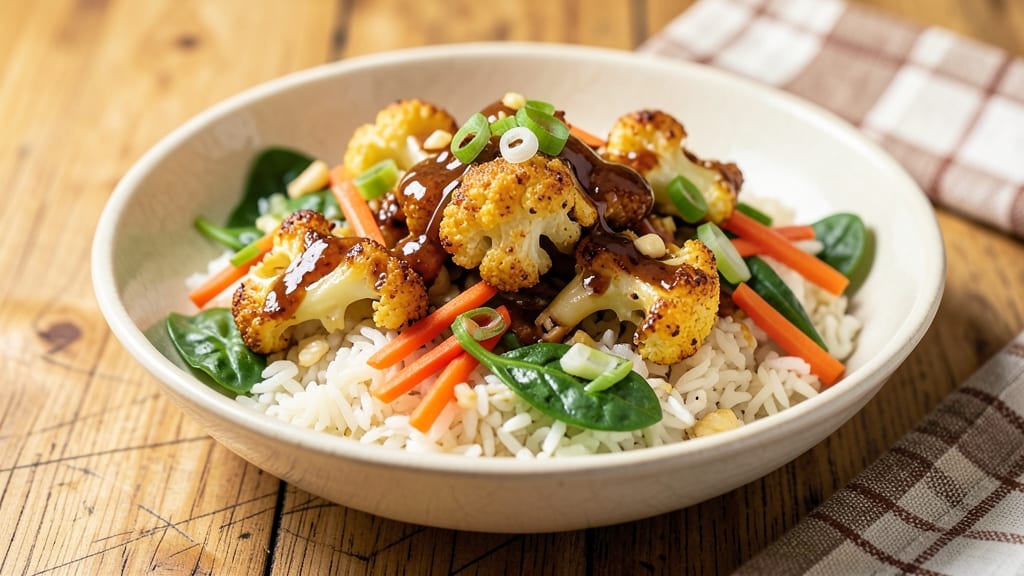
This cauliflower vegetable fried rice recipe transforms humble ingredients into a vibrant, wok-tossed masterpiece with crisp-tender cauliflower and hidden greens that add depth without overpowering. The secret lies in proper rice texture—just-cooled grains absorb flavors better than fresh ones—while high-heat stir-frying creates that signature smoky aroma and satisfying crunch.
I developed this after testing countless variations to balance textures and flavors perfectly.
What sets this dish apart is the three-stage cooking process: first charring the cauliflower and aromatics, then building layers of umami with soy-ginger sauce, and finishing with fresh herbs for brightness.
The result is a dish that's restaurant-quality at home—packed with vegetable-forward crunch, savory depth, and just enough heat to linger. Perfect for meal prep or weeknight dinners when you crave something fresh but filling.
Ingredients for cauliflower vegetable fried rice
Freshly grated cauliflower and day-old rice create the perfect textural contrast for this vibrant wok-tossed dish.
| Ingredient | Amount | Notes |
|---|---|---|
| Cauliflower Rice 🥬 | 3 cups | Freshly grated or pre-riced |
| Cooked Jasmine Rice 🍚 | 2 cups | Day-old, cold preferred |
| Carrots 🥕 | 1 cup | Julienned into thin matchsticks |
| Green Onions 🧅 | ½ cup | Thinly sliced, white and green parts |
| Baby Spinach 🌿 | 2 cups | Chopped, hidden greens |
| Garlic Cloves 🧄 | 4 cloves | Minced, aromatic base |
| Ginger Root 🌿 | 1 tbsp | Fresh, finely grated |
| Low-Sodium Soy Sauce 🍶 | 3 tbsp | Kikkoman preferred |
| Sesame Oil 🫒 | 1 tbsp | Toasted, for aroma |
| Vegetable Oil 🫒 | 2 tbsp | High smoke point |
| Cilantro 🌿 | ¼ cup | Chopped, fresh garnish |
| Lime 🍋 | 1 whole | Juiced, for brightness |
| Red Chili Flakes 🌶️ | ½ tsp | Adjust to taste |
| Salt 🧂 | ½ tsp | Diamond Crystal preferred |
The cauliflower rice is non-negotiable for texture—freshly grated yields the best crunch, though pre-riced works in a pinch. For the rice, day-old grains absorb flavors better than fresh. Trader Joe's sells pre-riced cauliflower that saves time, but grating your own ensures maximum crispness. Look for organic carrots at Whole Foods if you want sweeter flavor, though conventional works fine. Baby spinach is the hidden green here—it wilts quickly during cooking, adding depth without overpowering. The garlic and ginger should be freshly grated or minced—pre-minced jars lack punch.
No fresh ginger? Powdered works at half the amount, though it lacks complexity. Short on spinach? Swiss chard or kale chopped finely gets you close. The soy sauce can be swapped for tamari if gluten-free is a concern, but traditional soy builds more umami. Sesame oil is purely for aroma—use toasted for extra depth. For extra heat, swap chili flakes for fresh Thai chilies, finely chopped. The lime should be freshly juiced—bottled juice lacks brightness. If you're prepping ahead, store the cooked rice and veggies separately until ready to stir-fry.
This dish reheats beautifully—5 minutes in a dry skillet restores the crisp-tender texture. Store components separately in airtight containers for 4 days in the fridge. For longer storage, freeze the cooked rice and veggies together for 3 months. I always make double batches—half for dinner, half for packed lunches. The flavors actually improve overnight as everything melds. For meal prep, portion into glass containers to maintain freshness longer.
Why You'll Love This Recipe
- No Chopping Chaos: I just toss in pre-riced cauliflower and whatever veggies I have on hand—no dice, no fuss. The shredded carrots and chopped green onions take two minutes max, and that baby spinach wilts in seconds without even trying.
- Umami Magic: The caramelized garlic and soy sauce on those crisp-tender cauliflower florets? Honestly, it’s like a flavor upgrade I didn’t know I needed. That smoky wok-highlighted spinach seals the deal—every bite’s got layers.
- Leftovers That Don’t Suck: This actually improves the next day. The cauliflower soaks up extra flavors, and the jasmine rice stays separate but perfect for cold wraps or reheated bowls. I make a double batch just for this reason.
- Budget Meal for Picky Eaters: My kid swaps out the spinach but still devours it because it’s got that addictive fried-rice texture. Cauliflower rice cuts costs while sneaking in veggies—win for my wallet and my sanity on busy nights.
Step-by-step instructions for wok-tossed cauliflower fried rice
This method delivers restaurant-quality texture with perfectly balanced flavors and hidden greens.
Prep All Ingredients for Maximum Efficiency
Begin by julienning the 1 cup carrots into thin matchsticks using a mandoline or sharp knife. Thin slices ensure even cooking and maintain crisp texture. While the carrots cook, finely mince the 4 cloves garlic cloves and grate the 1 tbsp ginger root using a microplane. The aroma compounds release immediately when exposed to air, so keep them covered until ready to use.
Slice the 0.5 cup green onions into thin rings, separating the white and green portions. Chop the 2 cups baby spinach into small pieces—this helps it distribute evenly throughout the rice. Freshly grate the 1 whole lime to preserve its bright citrus notes. I always prep ingredients in this order: vegetables first, aromatics second, and garnishes last. This keeps your workspace organized and prevents cross-contamination between raw ingredients.
Create the Flavor Base in the Wok
Heat a wok or large skillet over high heat until it's screaming hot. Add the 2 tbsp vegetable oil and swirl to coat the surface evenly. When the oil shimmers, add the 1 cup julienned carrots and stir-fry for 2-3 minutes until they begin to soften but still retain a slight crunch. This is critical—they should never turn mushy.
Push the carrots to one side of the wok and add the 4 cloves minced garlic and 1 tbsp grated ginger. Stir constantly for 30 seconds until fragrant—you'll smell that pungent garlic aroma fill your kitchen. This is your flavor foundation. If the garlic starts to brown too quickly, reduce heat slightly but maintain active cooking. The moment the aromatics release their oils, it's time to add the rice.
Combine Rice and Vegetables with Perfect Timing
Add the 3 cups cauliflower rice and 2 cups cooked jasmine rice to the wok, breaking up any clumps with your spatula. Stir-fry for 3-4 minutes until the cauliflower rice softens slightly and begins to absorb the carrot juices. The cauliflower rice should maintain its distinct texture while the jasmine rice warms through.
Next, add the 0.5 cup sliced green onions and 2 cups chopped baby spinach. Toss everything vigorously for 1-2 minutes until the spinach wilts completely but doesn't turn to mush. The hidden greens will add nutrition without altering the dish's appearance. Here's the thing—don't overcrowd the wok. If needed, work in batches to maintain proper heat and prevent steaming.
Build Depth with Sauce and Seasoning
Pour in the 3 tbsp low-sodium soy sauce and 1 tbsp toasted sesame oil, tossing constantly to coat every grain of rice and vegetable piece. The soy sauce should distribute evenly, giving each bite that signature umami depth. Add the 0.5 tsp salt and 0.5 tsp red chili flakes, tossing once more to incorporate. Taste at this stage—you want the base to be seasoned but not overpowering.
Continue cooking for another 2-3 minutes until everything is heated through and the cauliflower rice achieves a slightly crisp edge. The dish should smell like a perfect balance of caramelized onions, garlic, ginger, and citrus. If the mixture appears too dry, add 1-2 tablespoons of water to create steam and help distribute the flavors.
Finish with Fresh Garnishes and Serve Immediately
Remove the wok from heat and transfer the fried rice to serving plates. Immediately sprinkle with 0.25 cup chopped cilantro and the juice of 1 whole lime. The acidity from the lime brightens all the flavors and cuts through the richness. Garnish with additional red chili flakes if you prefer more heat.
Serve while hot for the best texture contrast—crisp cauliflower rice, tender jasmine rice, and vibrant vegetables. Each bite should deliver a perfect balance of textures and flavors. Real talk: the lime juice will make everything taste fresher, so don't skip this final step. The dish keeps well for 2-3 hours at room temperature, but it's best enjoyed immediately when the cauliflower rice maintains its crisp edges.
Pro Tips For Making Cauliflower Vegetable Fried Rice
- STIR-FRY IN BATCHES: Split your veggies into two groups—hard (carrots) and soft (spinach, green onions). Cook the carrots first in a dry pan over medium-high heat until they’re just tender (about 3-4 minutes), then set aside. This keeps them from turning to mush when the spinach wilts later.
- SALT THE CAULIFLOWER RICE: Toss your cauliflower rice with ½ teaspoon of salt before cooking it. It crisps up better and soaks up flavors like a sponge—no more bland, watery texture. (Yes, even if your cauliflower rice is pre-rinsed.)
- DON’T OVERMIX THE RICE: Once your jasmine rice hits the pan, stir it once with a spatula, then let it sit untouched for 30 seconds. This creates a slight crust on the bottom—what separates good fried rice from mushy rice. (I learned this the hard way after making a pot of glue.)
- ADD SPINACH LAST (AND COVER): Toss in the baby spinach after everything else is cooked, then immediately cover the pan for 30 seconds. The trapped steam wilts it perfectly without turning it to sludge. (No, you can’t just “toss it in and hope”—it needs that steam boost.)
Make-ahead tips for this cauliflower vegetable fried rice
Prep Ahead Like a Pro
Cook the 2 cups jasmine rice a day in advance—this ensures perfectly separate grains that absorb flavors better. Store it in an airtight container in the fridge until ready to use. The rice should be completely cold when you stir-fry it, which prevents mushiness.
I always make a double batch and keep it in the freezer for quick meals—just thaw overnight in the fridge. 🥄
Rice Storage Secrets
For maximum freshness, divide cooked rice into portioned containers—this prevents clumping when reheating. I use glass containers with snap lids from Pyrex because they maintain texture better than plastic.
If freezing, spread the rice on a baking sheet first to freeze in a single layer, then transfer to a bag. This prevents that dreaded "rice cake" texture when reheated. ❄️
Veggie Prep Timeline
Julienne the 1 cup carrots and chop the 2 cups baby spinach the night before—store them separately in the fridge. The carrots will keep their crunch longer, while the spinach stays fresh for up to 3 days.
I keep prepped veggies in labeled mason jars for easy grab-and-go stir-frying. This cuts your active cooking time by 15 minutes when it matters most. 🌱
Make-Ahead Sauce Base
Mix the 3 tbsp soy sauce, 1 tbsp sesame oil, 0.5 tsp salt, and 0.5 tsp chili flakes in a small jar up to 3 days ahead. Store it in the fridge and shake before using—this ensures even distribution of flavors.
The sesame oil will separate slightly, but a quick shake brings it back together. This pre-mixed sauce cuts your cooking time by 5 minutes during the stir-fry. 🍶
Final Assembly Strategy
Keep the cauliflower rice separate until the last minute—it loses crispness when stored. I store it in a paper towel-lined container in the fridge for up to 2 days.
When ready to cook, simply add it to the wok with the other ingredients and stir-fry for 2-3 minutes to restore its perfect texture. This two-stage approach keeps your fried rice restaurant-fresh every time. ✨
Reheating for Crispy Results
For the best texture, reheat in a non-stick skillet over medium-high heat for 3-4 minutes, stirring constantly. Add 1 tbsp water** if needed to create steam and restore moisture.
The high heat reactivates the Maillard reaction, giving your fried rice that fresh-off-the-wok crunch. Microwave reheating works in a pinch, but it always compromises texture. 🔥
Nutrition facts
Frequently asked questions
Why does the recipe use day-old rice instead of fresh?
Day-old rice is essential for perfect texture—it's drier and absorbs flavors better than freshly cooked rice, which releases excess moisture and turns mushy during stir-frying. The grains separate naturally, creating that signature wok-tossed crunch. Plus, it prevents that dreaded "rice cake" consistency!
Can I substitute cauliflower rice with other low-carb vegetables?
Try shredded cabbage or zucchini noodles for a similar texture—both add crunch and absorb flavors well. For maximum crispness, lightly salt and let them sit for 10 minutes before cooking to draw out excess moisture. Just reduce the amount by ¼ cup since these veggies are denser.
How do I prevent the cauliflower rice from turning soggy?
Cook it in batches if needed and stir-fry over high heat for only 2-3 minutes until just tender. Keep your wok or skillet screaming hot and avoid overcrowding. For extra insurance, pat the cauliflower rice dry with a paper towel before adding it to the pan—this removes surface moisture that causes sogginess.
What's the best way to add protein to this vegetarian dish?
For plant-based protein, stir in ½ cup crumbled tofu or ¼ cup edamame with the vegetables. For animal protein, add ½ cup cooked shrimp or 2 scrambled eggs at the end. The key is to cook proteins separately first and add them back during the final 1-2 minutes of stir-frying to keep them tender.
Can I make this gluten-free?
Yes! Simply swap the soy sauce for tamari (gluten-free soy sauce) and check all other ingredients for hidden gluten. Most vegetable oils and fresh ingredients are naturally gluten-free, but always verify labels. The flavor profile remains identical—just ensure your tamari has the same umami depth as traditional soy sauce.