
Main Courses
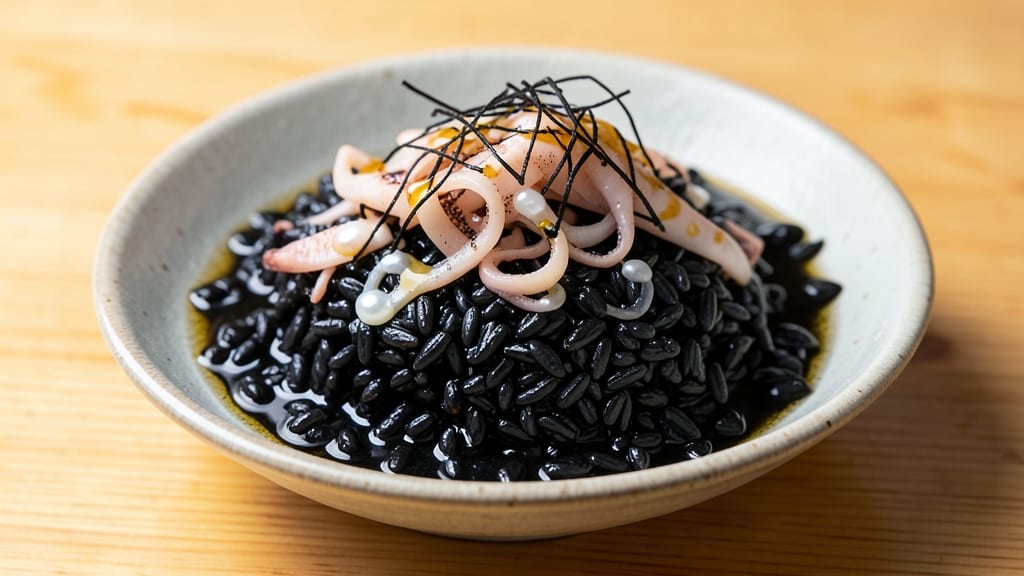
This black rice with squid ink recipe transforms ordinary rice into a dramatic, velvety base that pairs perfectly with seared squid. The squid ink infuses the grains with deep, luxurious color while enhancing their natural nutty flavor, creating a dish that looks as impressive as it tastes.
For the squid, we'll clean and sear it quickly to preserve its delicate texture, then simmer it in a light broth to develop rich umami notes that complement the rice's earthy depth.
The contrast between the glossy black rice and the tender, caramelized squid creates a visually stunning plate that's equally satisfying on the palate. This recipe balances technique with simplicity—soaking the rice ensures even absorption of the ink, while precise cooking times guarantee perfectly tender squid.
The result is a dish that feels both elegant and approachable, perfect for special occasions or when you want to elevate everyday dining.
Ingredients for black rice with squid ink
Transform ordinary rice with squid ink into a luxurious, velvety base for this dramatic dish.
| Ingredient | Amount | Notes |
|---|---|---|
| Black Rice 🍚 | 1 cup | Uncooked, rinsed thoroughly |
| Squid Ink Sacs 🐙 | 2 whole | Fresh, from cleaned squid |
| Squid Tubes 🐙 | 1 ½ lb | Cleaned, bodies only |
| Dashi Broth 💧 | 2 cups | Homemade or quality store-bought |
| White Rice Vinegar 🍶 | 2 tbsp | Rice vinegar preferred |
| Sesame Oil 🫒 | 1 tbsp | Toasted sesame oil |
| Soy Sauce 🍶 | 1 tbsp | Light soy preferred |
| Mirin 🍶 | 1 tbsp | Sweet cooking wine |
| Fresh Ginger 🧄 | 1 tbsp | Finely grated, fresh |
| Garlic Cloves 🧄 | 3 cloves | Minced, fresh |
| Vegetable Oil 🫒 | 2 tbsp | High smoke point |
| Salt 🧂 | 1 tsp | Kosher or sea salt |
| Black Pepper 🌶️ | ¼ tsp | Freshly ground |
The squid ink is what elevates this dish—fresh ink sacs from cleaned squid give the most vibrant color. Whole Foods or Asian markets are your best bets for quality ink sacs, though some specialty grocers carry them too. If you can't find fresh ink, powdered squid ink works in a pinch (use half the amount). For the squid tubes, look for fresh, cleaned squid—the bodies should be plump and firm. If you're not comfortable cleaning squid yourself, many seafood markets will do it for you. The black rice itself is a specialty item—Asian grocery stores or online retailers carry it in bulk.
No squid ink? Activated charcoal powder can mimic the color (use sparingly—it's potent), though it won't have the same depth of flavor. Running low on mirin? Substitute with equal parts dry sherry and sugar. Fresh ginger and garlic are ideal, but dried works at half the amount if needed. For the dashi broth, homemade is best—simmer kombu and bonito flakes in water for 10 minutes—but instant dashi granules work in a bind. The squid bodies can be swapped for cleaned octopus or cuttlefish if you're feeling adventurous, though cooking times may vary slightly.
Store uncooked black rice in an airtight container in a cool, dark place for up to 6 months. Once cooked, the rice keeps for 3-4 days in the fridge, though the color may fade slightly. For the squid ink, freeze any unused ink sacs in an airtight bag for up to 3 months. Leftover cooked rice reheats beautifully—just add a splash of water and steam gently. This dish is best served fresh, but the components can be prepped ahead: cook the rice and store separately, then infuse with ink just before serving. The squid can be seared and chilled for up to 1 day before plating.
Why You'll Love This Recipe
- One-Pot Magic: I swear by this recipe—just toss the black rice, squid tubes, and dashi broth into one pot. The squid ink sacs dissolve effortlessly, turning the whole thing into a dramatic, velvety black dish with zero extra cleanup. (Yes, even on a Tuesday night.)
- Umami Bomb: That first bite? The dashi broth and squid ink create this deep, oceanic richness that’s ridiculously satisfying. Honestly, the contrast of the chewy black rice against the tender squid is next-level comfort food—like a fancy sushi bowl but way easier.
- Date Night Ready: Between us, this dish looks way more impressive than it is. The deep black color makes it feel special, so it’s perfect for when you want to impress without slaving away. Just add a sprinkle of sesame seeds, and boom—you’ve got restaurant vibes.
- Budget-Friendly Luxury: Black rice might sound fancy, but it’s actually affordable, and squid ink sacs stretch the flavor like crazy. I make a big batch on Sundays, and it lasts all week—whether I’m reheating it for lunch or serving it cold in bento boxes. (My wallet thanks me.)
Step-by-step instructions for black rice with squid ink
Here's the precise method to create this striking black caviar rice with perfect texture and deep flavor.
Prepare the Squid Ink and Cook the Rice
Begin by rinsing the 1 cup black rice thoroughly under cold water until the water runs clear. This removes excess starch that can make the rice gummy. In a medium saucepan, combine the black rice with 2 cups dashi broth and bring to a boil over medium-high heat. Once boiling, reduce heat to low and simmer for 30 minutes without stirring.
While the rice cooks, carefully extract the ink from the 2 whole squid ink sacs. Gently squeeze the sacs to release the ink into a small bowl—you should have about 1 tablespoon of thick, dark liquid. Set aside. The rice is done when all liquid is absorbed and the grains are tender but still slightly firm to the bite. Remove from heat and cover with a damp towel to steam for 10 minutes.
Sear the Squid Tubes
Pat the 1.5 lb squid tubes dry with paper towels and cut each tube into 1-inch rings. Heat 2 tablespoons vegetable oil in a large skillet over medium-high heat until shimmering. Add the squid rings in a single layer and sear for 1-2 minutes per side until they turn opaque and develop a light golden color. Remove from pan and set aside on a paper towel-lined plate.
This quick sear preserves the squid's delicate texture while building flavor. Don't overcrowd the pan or the squid will steam instead of sear. The rings should release easily when ready to flip. Season lightly with 0.25 tsp black pepper while still warm.
Infuse the Rice with Squid Ink
Return the cooked rice to the saucepan and gently fold in the 1 tablespoon squid ink using a wooden spoon. The rice should take on a deep, velvety black color. Add 1 tablespoon sesame oil, 1 tablespoon soy sauce, and 1 tablespoon mirin, stirring gently to distribute evenly. The mixture should coat the rice grains without making them sticky.
For the aromatic base, heat 1 tablespoon vegetable oil in a small pan over medium heat. Add 3 minced garlic cloves and 1 tablespoon finely grated fresh ginger, cooking for 30 seconds until fragrant but not browned. Immediately pour this mixture over the rice and stir gently to combine. The rice should now have a rich, umami depth with subtle sweetness from the mirin.
Finish with Vinegar and Garnish
Transfer the black rice to a serving platter and drizzle evenly with 2 tablespoons white rice vinegar. Use a fork to gently fluff the rice, creating separation between grains while maintaining the ink's velvety coating. The vinegar brightens the flavors and balances the richness of the squid.
Arrange the seared squid rings artfully on top of the rice, fanning them out slightly. The contrast between the deep black rice and the pale squid creates a visually stunning presentation. Serve immediately while the squid is still warm and the rice maintains its perfect texture.
Pro Tips For Making Black Rice With Squid Ink
- Rinse Black Rice Twice: I learned this the hard way—skipping the second rinse leaves a gritty texture that ruins the dish. Use cold water and swirl vigorously both times, then soak for 30 minutes. The extra effort guarantees that velvety mouthfeel you’re after.
- Dissolve Ink First: Squid ink sacs are stubborn. Instead of tossing them in whole, tear them open and whisk into warm (not boiling) dashi broth first—this breaks them down completely. If you add them later, you’ll end up with clumps that look like you forgot to strain.
- Boil Squid Tubes Fast: High heat for 10 seconds per side—yes, even if they look undercooked. They’ll finish cooking in the broth and stay tender. I used to simmer them too long, and they turned rubbery. Trust the initial shock, then let the broth do the rest.
- Acidify at the End: White rice vinegar brightens the dish, but add it last—after the rice is off heat but still steaming. If you mix it in early, the acid will break down the squid ink prematurely, turning your beautiful black broth into a murky gray. Wait 2 minutes before serving.
Creative variations of black rice with squid ink
Asian Fusion Twist
Transform this dish into a Japanese-inspired sushi bowl by adding 1 cup sushi rice cooked separately with 2 tbsp rice vinegar and 1 tsp sugar.
Mix the black rice with the sushi rice in a 1:2 ratio, then top with thinly sliced avocado, cucumber ribbons, and pickled ginger. Garnish with toasted sesame seeds and a drizzle of spicy mayo made with 1 tbsp mayo and ½ tsp sriracha. 🌸
Mediterranean Seafood Upgrade
Swap the squid for cleaned octopus or cuttlefish and infuse the rice with 1 tsp lemon zest instead of mirin. Add ½ cup cherry tomatoes, halved, and ¼ cup Kalamata olives to the rice before serving.
Top with seared octopus rings and a sprinkle of dried oregano for a Greek-inspired twist. Pair with a side of tzatziki sauce for dipping. 🍋
Spicy Thai-Inspired
Kick up the heat by adding 1 tbsp red curry paste to the rice while infusing with squid ink. Stir in 1 tbsp fish sauce and 1 tsp palm sugar for balance. Top the rice with sliced Thai chili peppers and fresh cilantro.
Serve with a side of mango salad—toss 1 cup diced mango with 1 tbsp lime juice and ½ tsp chili powder. The sweet-spicy contrast is pure magic. 🌶️
Vegetarian Adaptation
Skip the squid entirely and make this a vegan centerpiece by using 1 cup marinated tofu or shitake mushrooms instead. Marinate 1 block extra-firm tofu in 2 tbsp soy sauce, 1 tbsp sesame oil, and 1 tsp grated ginger for 30 minutes, then pan-fry until crispy.
Serve over the black rice with a side of quick-pickled vegetables—slice ½ cup daikon radish and ½ cup carrot into matchsticks, then soak in 2 tbsp rice vinegar and ½ tsp sugar for 20 minutes. ✨
Umami Bomb Boost
Elevate the depth of flavor by adding 1 tbsp miso paste to the rice while cooking, along with an extra ½ cup dashi broth. For the squid, marinate the rings in 1 tbsp white miso and 1 tsp mirin for 15 minutes before searing.
Finish with a sprinkle of furikake seasoning (a Japanese rice seasoning blend) for an extra layer of savory crunch. This version is a restaurant-worthy** upgrade. 💫
Nutrition facts
Frequently asked questions
How do I find squid ink sacs for this recipe?
Look for them in the seafood section of Asian grocery stores or specialty markets that sell fresh squid. The ink sacs are usually attached to cleaned squid bodies—ask the fishmonger to point them out. If you can't find fresh ink, powdered squid ink works as a substitute (use half the amount).
Can I use black rice from a can instead of cooking it fresh?
Canned black rice won't give you the same velvety texture or color depth since it's pre-cooked and often contains preservatives. For the best results, always start with uncooked black rice and follow the soaking/cooking method in the recipe. The ink infusion works best with freshly cooked grains.
What if my squid turns rubbery when cooking?
Overcooking is the most common cause. Squid should cook for only 1-2 minutes per side—it's done when it turns opaque and releases easily from the pan. For extra tenderness, try poaching the squid rings in the dashi broth instead of searing, or serve them slightly undercooked in the center (they'll finish cooking from residual heat).
How can I make this dish vegetarian?
Swap the squid for marinated tofu or shitake mushrooms—both work beautifully with the black rice. For tofu, press and slice it into rings, then marinate in soy sauce, sesame oil, and ginger before pan-frying. Serve with quick-pickled vegetables for acidity to balance the rich rice.
Will the rice stay black after cooking?
The squid ink gives the rice its deep color, but it may fade slightly if stored too long. For best results, infuse the ink just before serving. If the color seems too intense, reduce the ink to ½ tablespoon—the flavor will still shine through beautifully.