
Main Courses
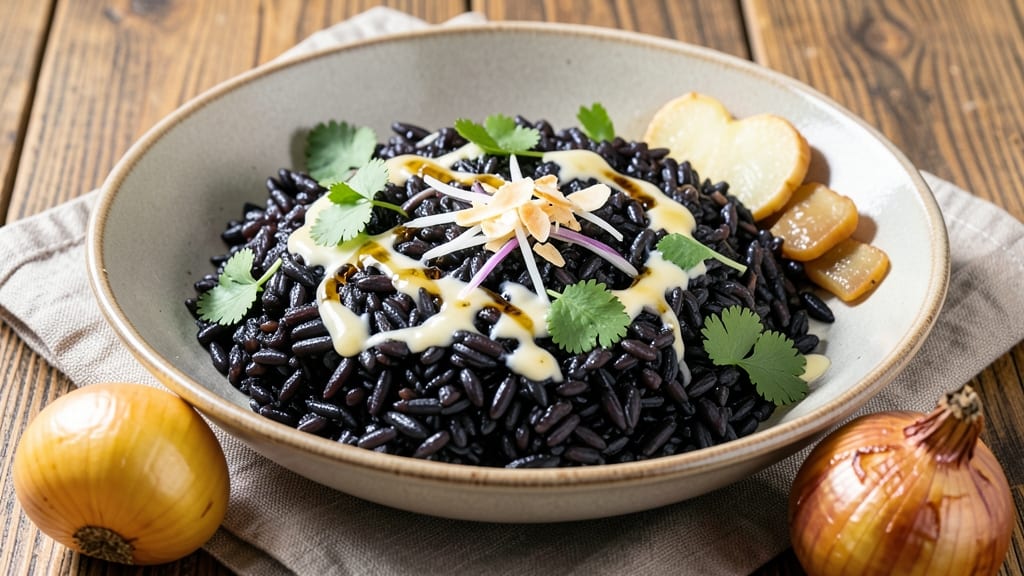
This Brazilian black rice recipe unlocks the earthy, nutty depth of a dish once considered sacred in Amazonian cuisine. The secret lies in proper soaking and slow cooking with coconut milk, transforming simple grains into a forbidden forest of flavor that pairs perfectly with grilled fish or stews.
What sets this version apart is the balance of traditional techniques with modern convenience—just one pot, minimal effort, and maximum impact.
The grains develop their signature deep purple hue and creamy texture when cooked low and slow, absorbing the rich coconut milk while retaining their natural earthiness. This method preserves the dish's nutritional powerhouse status—packed with antioxidants and fiber—while delivering restaurant-quality results at home.
Serve it alongside your favorite Brazilian proteins for an authentic taste of the Amazon.
Ingredients for brazilian black rice
Earthy grains meet Amazonian tradition—just twelve ingredients for forbidden forest flavor.
| Ingredient | Amount | Notes |
|---|---|---|
| Brazilian Black Rice 🌾 | 1 cup | Uncooked, rinsed thoroughly |
| Full-Fat Coconut Milk 🥥 | 13 ½ oz | Can, full-fat preferred |
| Fresh Cilantro 🌿 | ¼ cup | Chopped, stems removed |
| Garlic Cloves 🧄 | 3 cloves | Minced for aromatic base |
| Fresh Ginger 🌿 | 1 tbsp | Grated, fresh preferred |
| Yellow Onion 🧅 | 1 whole | Diced, medium size |
| Olive Oil 🫒 | 2 tbsp | Extra-virgin for richness |
| Bay Leaves 🌿 | 2 whole | Dried, for subtle flavor |
| Salt 🧂 | 1 tsp | Diamond Crystal preferred |
| Black Peppercorns 🌶️ | ½ tsp | Freshly cracked preferred |
| Lime Juice 🍋 | 1 tbsp | Freshly squeezed |
| Fresh Coconut (optional) 🥥 | ½ cup | Shredded, for garnish |
The Brazilian black rice is the star, and finding high-quality grains matters. Amazon Fresh or specialty Latin markets carry the best varieties, but any well-rinsed black rice will work. Look for grains that hold their shape—cheap brands turn mushy. The full-fat coconut milk is non-negotiable; reduced-fat versions won't deliver that creamy texture. Thai Kitchen or Goya cans are reliable, but check for no additives. Fresh ginger and garlic should smell vibrant—no musty aromas. If you're using dried bay leaves, crush them lightly between your palms to release their oils before adding to the pot.
No fresh cilantro? Dried cilantro works at half the amount, though it lacks the bright freshness. Substitute lime juice with lemon juice at equal parts, but the flavor shifts slightly. Running short on coconut milk? Light coconut milk plus 1 tbsp cream mimics the richness. For the onion, any color works—yellow, red, or white—but avoid sweet onions like Vidalia. The optional coconut garnish can be swapped for toasted coconut flakes if you prefer texture over freshness. Always toast your spices: dry-toast the peppercorns in a pan for 30 seconds before grinding for deeper flavor.
Store cooked rice in an airtight container with a layer of olive oil on top to preserve its deep purple hue. Keeps for 4-5 days in the fridge or 3 months frozen. For best texture, reheat gently on low heat with a splash of water. The dish tastes even better the next day as flavors meld. Portion into meal prep containers with a sprinkle of lime juice to maintain freshness. If making ahead, freeze the sauce separately and combine when reheating for optimal creaminess.
Why You'll Love This Recipe
- No-Fuss Simmer: I swear by this—just toss in the rice, coconut milk, and a few whole garlic cloves (no mincing needed). The ginger and cilantro wilt into the broth while you’re chopping veggies for the rest of dinner. That’s what I call efficient.
- Earthy Creamy Magic: That deep, nutty black rice soaks up the coconut milk like a dream, turning it into something rich and velvety. The garlic and ginger? They bloom into this warm, aromatic punch that makes every bite feel like a hug.
- Lunchbox Hero: Between us, this keeps perfectly for days—cool, flavorful, and no soggy sides. Pack it in jars for work or school lunches, and it’s still the star of the meal. (My kid’s favorite, honestly.)
- Budget Stretch: Black rice is pricey, but a single batch stretches to four meals with leftovers. Use the coconut milk sparingly—it’s the secret to making it feel luxurious without breaking the bank. Plus, garlic and ginger are always cheap. Win.
Step-by-step instructions for Brazilian black rice
Transform humble black rice into a fragrant, one-pot masterpiece with this authentic technique.
Prepare the Aromatic Base
Heat the 2 tablespoons olive oil in a heavy-bottomed pot over medium heat. Add the 1 whole yellow onion and cook for 5 minutes until softened and translucent. This foundational step builds flavor depth.
Add the 3 cloves garlic cloves and 1 tablespoon fresh ginger to the pot. Cook for 2 minutes until fragrant—this releases their essential oils. Here's where it matters: don't let them brown or they'll turn bitter. Stir constantly to prevent burning while developing that aromatic base.
Add the 2 whole bay leaves, 1 teaspoon salt, and 0.5 teaspoon black peppercorns to the pot. Stir everything together for 30 seconds to combine the spices evenly. The bay leaves will infuse subtle earthy notes while the peppercorns add subtle heat.
Toast the Black Rice
Add the 1 cup Brazilian black rice to the pot and stir to coat it completely with the aromatic oil. Toast the rice for 3 minutes over medium heat, stirring frequently. This crucial step enhances the nutty flavor and prevents the rice from becoming mushy.
Watch closely as the rice begins to take on a slightly darker color. You're looking for a visual cue of tiny brown specks forming on the grains—this indicates proper toasting. If you smell a toasty aroma, that's your signal to proceed to the next step.
Real talk: Don't rush this step. Proper toasting creates the foundation for that distinctive forbidden forest flavor. If you skip it, you'll miss out on the depth of flavor this rice is capable of delivering.
Simmer in Coconut Milk
Pour in the 13.5 ounces full-fat coconut milk and bring the mixture to a gentle boil over medium-high heat. Once boiling, reduce the heat to low and cover the pot with a tight-fitting lid.
Simmer for 40-45 minutes until the rice is tender and all the liquid has been absorbed. This is where patience pays off—the rice needs time to hydrate completely and develop its characteristic creamy texture. Don't peek at the rice during cooking; each time you lift the lid, you release steam and potentially extend the cooking time.
You'll know it's done when the rice is fork-tender and the liquid has been completely absorbed. The rice should have a glossy appearance and maintain its individual grains rather than becoming a single mass. If any liquid remains, continue cooking uncovered for 2-3 minutes to evaporate it.
Finish with Fresh Herbs and Lime
Remove the pot from heat and let it sit covered for 5 minutes. This resting period allows the rice to finish absorbing any remaining moisture and develop its final texture.
Stir in the 0.25 cup fresh cilantro and 1 tablespoon lime juice to brighten the dish with fresh, citrusy notes. The cilantro adds a vibrant green color and fresh herbal aroma that complements the rich coconut milk. The lime juice cuts through the richness and adds a bright, tangy finish.
Taste the rice and adjust seasoning if needed. You might need an additional pinch of salt or a squeeze of lime to achieve the perfect balance of flavors. The rice should be rich, slightly sweet from the coconut, and have a subtle earthy depth from the black rice itself.
Garnish and Serve
Transfer the rice to a serving dish and garnish with the 0.5 cup fresh coconut (optional) if using. The coconut adds a beautiful visual contrast and a subtle sweetness that complements the dish.
Serve immediately while hot, accompanied by grilled meats or as a standalone vegetarian dish. The rice should be tender yet maintain some bite, with a creamy texture from the coconut milk and a rich, earthy flavor from the black rice. Each bite should deliver a complex interplay of flavors that makes this dish truly special.
Pro Tips For Making Brazilian Black Rice
- SOAK THE RICE LONGER: Black rice needs at least 4 hours—overnight is ideal—so it absorbs the coconut milk’s richness instead of turning mushy. I learned this the hard way when my first batch turned into a gluey mess because I skipped this step.
- TOAST THE GINGER FIRST: Grating raw ginger into hot coconut milk makes it bitter. Instead, lightly toast 2-inch slices in a dry pan for 2 minutes until fragrant, then grate. This brings out its sweetness and cuts the sharpness that ruins the dish.
- DON’T BOIL THE COCONUT MILK: Simmer it gently over medium-low heat—full-fat coconut milk burns faster than you think. If you rush it, you’ll end up with a split pot of scorched milk and raw rice. Keep it at a bare simmer, and stir often.
- RESERVE HALF THE COCONUT MILK: After cooking, the rice will drink up every last drop. Save half the coconut milk before adding rice, then stir it in at the end for a glossy finish. Works like a slurry—no lumps, just velvety texture.
Essential equipment for this recipe
Heavy-Bottomed Pot
Your 5-7 quart heavy-bottomed pot is non-negotiable for even heat distribution—prevents hot spots that ruin texture. I swear by All-Clad's 5-quart stainless steel for its durability and responsive heat control. For budget options, Cuisinart's MultiClad delivers similar results without the premium price.
The pot needs to handle 40-45 minutes of simmering without burning the coconut milk or sticking the rice. 🔥
Wooden Spoon
A long-handled wooden spoon (8-10 inches) is essential for stirring the rice without scratching your pot. I prefer Oxo's bamboo spoon—it's sturdy, heat-resistant, and won't leach flavors.
Avoid metal utensils during toasting—they can cause uneven browning. The spoon's flexibility helps gently fold the rice while releasing trapped steam during simmering.
Fine-Mesh Strainer
Rinsing 1 cup black rice thoroughly requires a fine-mesh strainer to remove excess starch that causes mushiness. My go-to is OXO's Good Grips colander—its wide rim and durable mesh handle 2 cups at a time without clogging.
Rinse until water runs clear (about 3-4 minutes). Pro tip: Soak the rice for 15 minutes before cooking to reduce cooking time by 10-15 minutes.
Timer & Thermometer
Precision matters here: Use a digital kitchen timer (like TimerTyme's 24-hour model) to track the 40-45 minute simmer without overcooking. For temperature control, a instant-read thermometer (I use Thermoworks' ThermoPop) ensures the coconut milk stays at 195-200°F—critical for creamy texture.
Set a reminder to avoid peeking, which releases steam and extends cooking time.
Chef's Knife & Cutting Board
Sharp tools make prep effortless. A 8-inch chef's knife (like Wüsthof's Ikon) and non-slip cutting board (my favorite is Teakhaus' bamboo) are perfect for dicing 1 yellow onion and mincing 3 garlic cloves.
Dull knives crush garlic, releasing bitter compounds. Keep your knife sharp—it's the difference between fragrant aromatics and burnt bits. 💡
Lid with Handle
A tight-fitting lid with a handle (preferably glass or stainless steel) traps steam for even cooking. I use All-Clad's matching lid for my pot—it locks in moisture while allowing slight condensation to form, which helps break down the rice's tough outer layer.
Avoid plastic lids; they can melt under prolonged heat. If your lid doesn't fit snugly, line the rim with aluminum foil to create a seal.
Nutrition facts
Frequently asked questions
Why does Brazilian black rice turn purple when cooked?
The deep purple hue comes from anthocyanins, powerful antioxidants in the grains that react with the coconut milk and lime juice. This natural pigment also gives the rice its earthy, slightly sweet flavor profile. The longer it cooks, the more vibrant the color becomes—proof of its nutritional richness!
Can I substitute coconut milk with another liquid?
While coconut milk is traditional, you can use full-fat chicken or vegetable broth for a lighter version. For creaminess, add 1 tablespoon olive oil per cup of broth. However, coconut milk's natural sweetness and fat content create the signature texture—substitutes may yield a less rich result. The rice will still be flavorful but less decadent.
How do I prevent my black rice from turning mushy?
Three key steps: rinse thoroughly (until water runs clear), toast the rice for 3 minutes before adding liquid, and use a heavy-bottomed pot for even heat. Also, never stir the rice after adding liquid—just fold gently with a wooden spoon. The steam should do the work!
What's the best way to serve this rice?
This dish pairs beautifully with grilled fish (like mahi-mahi or salmon), black beans, or roasted vegetables. For a complete Brazilian meal, serve with farofa (toasted cassava flour) and a side of moqueca (Brazilian seafood stew). The creamy rice also works as a standalone vegetarian dish with a squeeze of lime and fresh cilantro.
Can I make this recipe in a rice cooker?
Yes, but with adjustments: Toast the rice first in a separate pan, then transfer to the rice cooker with coconut milk. Use the white rice setting (about 45 minutes). Add fresh herbs and lime after cooking. The texture may be slightly less creamy, but it's still delicious! For best results, use a rice cooker with a steam release function to control moisture.