
Side Dishes
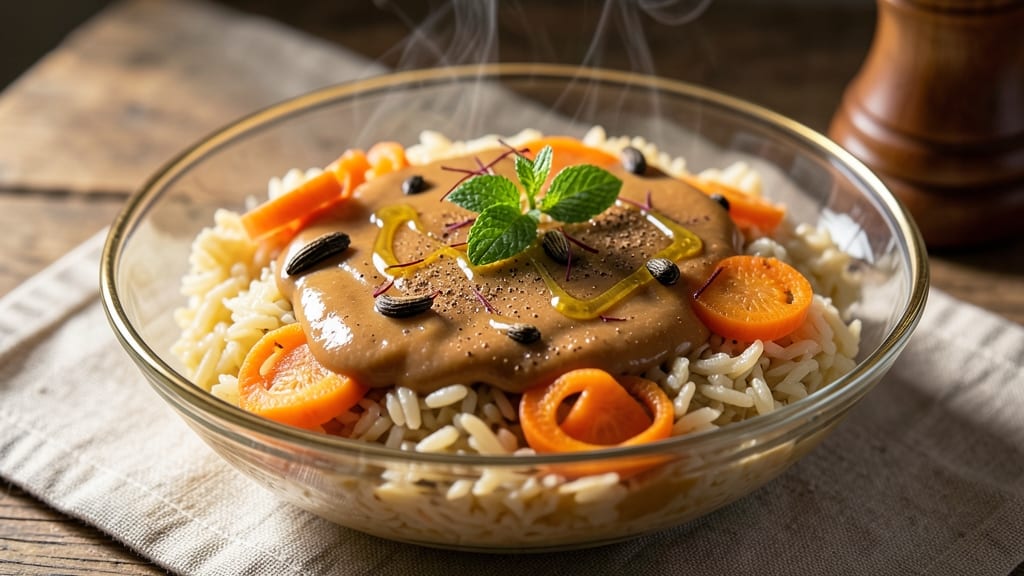
This carrot and rice kheer recipe transforms humble ingredients into a velvety, cardamom-infused dessert that feels like a warm embrace. 🌟 The secret lies in slow simmering—carrots soften into silky threads while basmati rice absorbs fragrant milk, creating a texture that's both comforting and elegant.
Perfect for festive occasions or as a soothing end to a meal, this traditional South Asian sweet balances natural sweetness with aromatic spices like saffron and cardamom.
What makes this recipe special is its simplicity paired with depth—no special equipment needed, just patience as the flavors meld over time. The final result is a dish that's rich yet light, with caramelized carrot strands and toasted nuts adding subtle crunch.
Serve warm or chilled, garnished with a sprinkle of pistachios for that extra touch of luxury. Let's create something truly special.
Ingredients for carrot and rice kheer
Simple ingredients, extraordinary textures—this kheer balances earthy carrots with fragrant cardamom and creamy milk.
| Ingredient | Amount | Notes |
|---|---|---|
| Basmati Rice 🍚 | ½ cup | Uncooked, long-grain preferred |
| Carrots 🥕 | 1 ½ lb | Medium, peeled and sliced thin |
| Whole Milk 🥛 | 4 cups | Full-fat for creaminess |
| Sugar 🍚 | 1 cup | Granulated, adjust to taste |
| Ghee 🧈 | ½ cup | Clarified butter, for richness |
| Cardamom Pods 🌿 | 8 whole | Green, lightly crushed |
| Saffron Threads 🌼 | ¼ tsp | High-quality, soaked in 1 tsp warm milk |
| Pistachios 🥜 | ¼ cup | Shelled, roughly chopped |
| Cashews 🥜 | ¼ cup | Whole, toasted lightly |
| Raisins 🍇 | ¼ cup | Plump, soaked in warm water |
| Ground Cinnamon 🌿 | ½ tsp | Freshly ground preferred |
| Vanilla Extract 🌸 | ½ tsp | Pure, high-quality |
| Sea Salt 🧂 | ¼ tsp | Fine grain, for balancing sweetness |
| Rose Water 🌸 | ½ tsp | Optional, for floral aroma |
The basmati rice makes all the difference—look for long-grain varieties at Indian grocery stores like Patel Brothers or Whole Foods. If using short-grain rice, soak it twice as long to avoid mushiness. Carrots should be bright orange and firm; avoid woody or soft ones. Ghee is non-negotiable here—it adds that luxurious richness that separates homemade from store-bought. For cardamom, green pods are traditional, but if only powder is available, use half the amount (it's much stronger).
No saffron? Turmeric at 1/4 tsp gives color, though it lacks saffron's floral depth. Pistachios and cashews can be swapped for almonds or walnuts, but toast them first—nutritional yeast adds a cheesy note if you're feeling experimental. The raisins should be plump; if they're dry, soak them in warm water for 10 minutes. For extra richness, coconut milk can replace half the whole milk, though the texture will be slightly lighter. Rose water is optional but adds that signature floral touch—Trader Joe's carries a great affordable version if you're new to it.
Store the kheer in an airtight glass container in the fridge for up to 5 days, though it tastes best within 2-3 days as flavors meld. Reheat gently on low heat, stirring occasionally, or microwave for 1-2 minutes with a splash of milk to restore creaminess. Portion into small jars for individual servings—great for meal prep or gifting. The nuts and raisins can be added fresh before serving to maintain crunch. Freezes well for up to 3 months, though texture may change slightly upon thawing.
Why You'll Love This Recipe
- No Chopping Chaos: I swear by pre-cut carrots here—just grate them while the rice soaks. The milk and ghee do all the work after that, so you’re stirring, not stressing.
- Sweet & Earthy Magic: That first bite? Warm basmati, creamy milk, and carrot’s natural sweetness—it’s like dessert sneaked into breakfast. Honestly, the ghee ties it all together in the best way.
- Breakfast or Dessert: Serve it cold with nuts for a quick morning bowl, or warm it up with saffron for weekend brunch. My kids ask for it both ways—no judgment here.
- Leftovers Feel Like a Treat: This keeps for days, honestly. Reheat with a splash of milk, and it’s just as good. Plus, the rice stretches far, so I’m always saving half for later. Budget win.
Step-by-step instructions for carrot and rice kheer
Transform simple ingredients into a velvety, spiced dessert with perfect texture and balance.
🍳 Step 1: Cook the Carrots and Rice Together
In a heavy-bottomed pot, combine the 1.5 lb peeled and thinly sliced carrots and 0.5 cup basmati rice with 2 cups of the whole milk. Bring to a gentle boil over medium heat, then reduce to a simmer. You want small bubbles breaking the surface—this ensures even cooking without scorching.
Cook uncovered for 20-25 minutes, stirring occasionally, until the carrots are tender and the rice is fully cooked. The mixture should look like a thick, vibrant orange purée. If it gets too dry, add 1-2 tablespoons of milk at a time. The texture should be creamy but not soupy—this forms the base for your kheer.
🔥 Step 2: Infuse the Milk with Spices and Saffron
While the carrot-rice mixture cooks, heat the remaining 2 cups whole milk in a separate saucepan over low heat. Add the 8 lightly crushed cardamom pods, 0.5 tsp ground cinnamon, and 0.25 tsp saffron threads soaked in 1 tsp warm milk. Stir gently and let it simmer for 5-7 minutes until fragrant—you should smell warm, earthy cardamom and a subtle floral note from the saffron.
Strain the spiced milk through a fine-mesh sieve to remove the cardamom pods, then return it to the saucepan. Keep it warm over low heat—you'll be adding it gradually to the carrot-rice mixture to control the texture.
🥘 Step 3: Combine and Sweeten the Kheer
Add the warm spiced milk to the cooked carrot-rice mixture in a slow, steady stream while stirring continuously. This gradual addition prevents lumps and ensures a silky texture. Then, whisk in the 1 cup sugar, 0.5 cup ghee, 0.5 tsp vanilla extract, 0.5 tsp rose water, and 0.25 tsp sea salt. The salt may seem counterintuitive, but it balances the sweetness and enhances the flavors.
Cook the mixture over low heat for 10-12 minutes, stirring frequently, until it thickens to a pudding-like consistency. You want it to coat the back of a spoon but still be pourable—not dry or grainy. If it thickens too quickly, add 1-2 tablespoons of warm milk to adjust the texture.
🍽️ Step 4: Add Nuts and Raisins for Texture
Remove the pot from heat and let the kheer cool slightly for 5 minutes. Stir in the 0.25 cup toasted cashews, 0.25 cup roughly chopped pistachios, and 0.25 cup drained raisins. The nuts add crunch, while the raisins provide chewy contrast—this is where the kheer gets its delightful texture play.
Transfer the kheer to a serving dish and let it cool to room temperature. The flavors will meld beautifully as it sits, and the ghee will rise to the top, creating a luxurious sheen. For the best results, refrigerate for at least 2 hours before serving—this allows the spices to infuse fully and the texture to set perfectly.
⏰ Step 5: Serve Warm or Chilled
Serve the kheer warm or chilled, garnished with an extra sprinkle of chopped pistachios and a drizzle of ghee. The contrast of warm, spiced kheer with cool nuts is what makes this dessert truly special. Each spoonful should deliver a harmonious blend of sweet, spiced, and nutty flavors with a velvety-smooth texture.
For an extra touch, heat the 0.5 tsp rose water with 1 tablespoon sugar in a small saucepan until the sugar dissolves, then drizzle over the top just before serving. This adds a delicate floral aroma that complements the warm spices perfectly.
Pro Tips For Making Carrot And Rice Kheer
- SOAK RICE SEPARATELY: I learned this the hard way—mixing rice with carrots in the soaking water turns them mushy. Instead, soak the basmati rice alone for 30 minutes in warm water, then drain and set aside before cooking the carrots separately. The grains stay distinct and fluffy, which is half the battle in kheer.
- GRATE CARROTS FINE: Skip the dicing—grate carrots on the smallest hole of a box grater or pulse them in a food processor until they’re almost paste-like. This ensures they blend smoothly into the rice later without clumping or sinking to the bottom. (Yes, it’s extra work, but trust me, it’s worth it.)
- LOW-HEAT SIMMERING: After adding milk and sugar, resist the urge to boil vigorously. Keep the heat at a whisper-low simmer—just enough to see tiny bubbles at the edges—so the rice doesn’t turn to mush. I used to rush this, and the texture suffered. Patience here makes all the difference.
- GHEE AT THE END: Add the ghee in the last 5 minutes of cooking, not at the start. This prevents it from burning and lets it coat the rice and carrots evenly, adding richness without a bitter aftertaste. Stir gently—you’re not frying, just infusing flavor.
Common mistakes when making this recipe
Overcooking the Carrots
Carrots are delicate when simmered—they can turn mushy and lose their natural sweetness if cooked too long. I’ve seen this happen when people rush the 20-25 minute simmering time, especially if they don’t stir occasionally.
The goal is to soften them just enough to blend into the rice while keeping their structure intact. If your carrots start looking like a purée before the rice is done, reduce the heat slightly and cover the pot to trap steam. 🥕
Ignoring the Milk Temperature
Adding cold milk directly to your hot carrot-rice mixture can cause the spices to clump or the ghee to separate, ruining the silky texture. Always use warm milk when combining—heat it to about 160°F (just below a simmer) before gradually mixing it in.
This ensures everything blends smoothly and the flavors meld properly. A quick way to check: the milk should feel warm to the touch but not hot.
Skipping the Gradual Spice Infusion
Some home cooks dump all the spices into the pot at once, which can lead to uneven flavor distribution and a bitter taste from over-extracted cardamom. Instead, infuse the milk separately for 5-7 minutes before straining and combining.
This step is what gives kheer its signature aromatic depth. Pro tip: Lightly crush the cardamom pods—this releases more flavor without the harshness of powdered spice.
Underestimating the Sugar Adjustment
Carrots and rice naturally absorb liquid, which can make the kheer seem less sweet than expected. If your mixture tastes under-sweet after cooling, don’t panic—simmer it uncovered for another 5 minutes to evaporate excess liquid, then add 1-2 tablespoons of sugar at a time until it reaches your desired sweetness.
Taste as you go, since the flavors intensify as the kheer cools. Remember, the 0.25 tsp sea salt balances the sweetness, so don’t skip it!
Adding Nuts Too Early
Stirring in the nuts and raisins while the kheer is still hot can make them soggy, turning the intended crunch into mush. Always let the mixture cool for 5 minutes before adding them—this ensures they stay crisp and add the perfect textural contrast.
For extra crunch, toast the nuts separately in a dry pan over medium heat for 2-3 minutes until fragrant, then sprinkle them in just before serving.
Rushing the Resting Time
Kheer needs time to set and for the flavors to fully develop, which is why refrigerating it for at least 2 hours is non-negotiable. Skipping this step can leave the texture grainy and the spices underdeveloped.
If you’re short on time, chill it for 1 hour in the fridge, then let it sit at room temperature for 30 minutes before serving. Patience here makes all the difference—trust me, your taste buds will thank you! ⏰
Nutrition facts
Frequently asked questions
Can I make this kheer without ghee?
Yes, but the texture and richness will change. Substitute ghee with an equal amount of unsalted butter or coconut oil, though ghee's caramelized flavor is irreplaceable. For a dairy-free version, use coconut cream (reduce other milk by 1/4 cup) and omit the saffron—it's traditionally paired with dairy.
How do I adjust the sweetness for kids?
Reduce the sugar by 2-3 tablespoons and add 1 extra tablespoon of raisins for natural sweetness. For picky eaters, blend the kheer briefly for a smoother texture, but this will reduce the carrot's natural sweetness. Always taste as you go—flavors intensify when cooled.
What if my kheer turns out too thick?
Stir in 2-3 tablespoons of warm milk while heating gently, mixing until smooth. If it's still too thick, add another tablespoon. The key is gradual addition—never dump all the milk at once. For prevention, simmer the carrot-rice mixture uncovered for the last 5 minutes to evaporate excess moisture.
Can I use instant rice for this recipe?
Not recommended—it lacks the delicate texture needed for kheer. Instant rice absorbs too much liquid and becomes gummy. If you must, use half the amount of long-grain basmati and soak it for 30 minutes before cooking. The result won't be as authentic, but it'll still be edible.
How can I make this gluten-free?
This recipe is naturally gluten-free, but check your ingredients: Use certified gluten-free basmati rice (some brands process with wheat), ensure your ghee is pure (no additives), and verify spices for cross-contamination. The carrot and rice base remains safe, but always double-check packaging labels.