
Main Courses
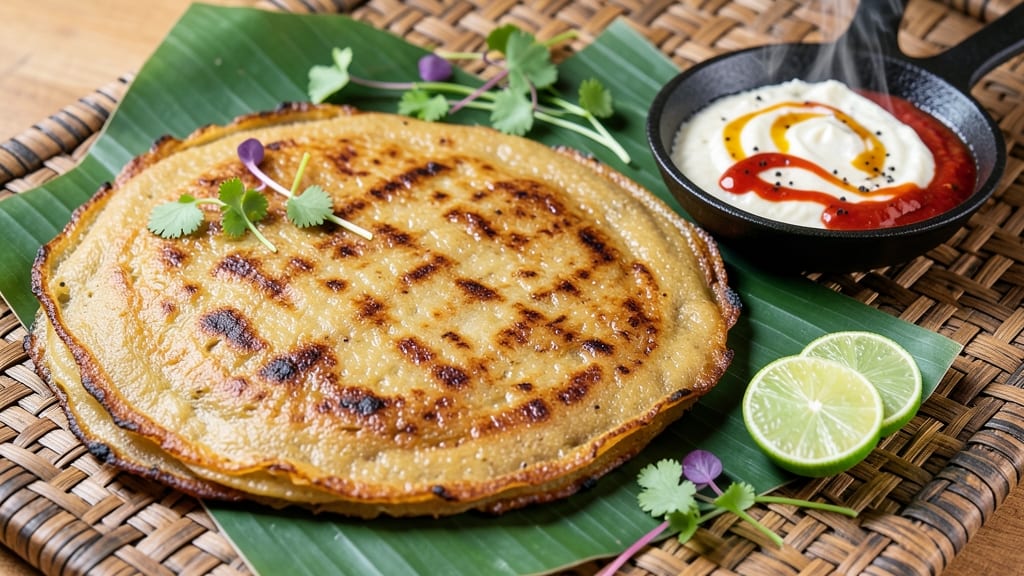
This brown rice dosa recipe transforms traditional dosas into crispy, nutty layers packed with fiber and protein—without sacrificing the signature crunch. Fermentation unlocks a light, fluffy interior while toasting on a hot griddle creates that coveted golden crust.
The secret lies in soaking the rice properly and letting the batter ferment just long enough for tangy depth without over-fermenting.
What sets these apart is the nutty depth from brown rice, which adds earthy flavor and chewy texture compared to white rice versions. Once you master the fermentation window (8-12 hours at room temperature), you'll achieve perfectly crisp edges and tender centers every time.
Serve with coconut chutney or sambar for an authentic South Indian experience that's both healthy and satisfying.
Ingredients for brown rice dosa
The foundation of crispy, nutty dosas with fiber-rich brown rice and fermented urad dal.
| Ingredient | Amount | Notes |
|---|---|---|
| Brown Rice 🌾 | 1 cup | Uncooked, short-grain preferred |
| Urad Dal (Black Gram) 🌱 | ½ cup | Split, rinsed thoroughly |
| Rice Flour 🌾 | ¼ cup | For crispier texture |
| Water 💧 | 1 ½ cups | Filtered or spring water |
| Salt 🧂 | ½ tsp | Adjust to taste |
| Vegetable Oil 🫒 | 2 tbsp | For cooking dosas |
| Coconut Oil 🥥 | 1 tbsp | For griddle coating |
| Fresh Curry Leaves 🌿 | 10 whole | Crushed lightly |
| Green Chilies 🌶️ | 2 whole | Slit lengthwise |
| Asafoetida (Hing) 🌿 | ⅛ tsp | Pinch for aroma |
| Coconut Chutney (optional) 🥥 | ½ cup | Store-bought or homemade |
| Sambar (optional) 🍲 | 1 cup | Lentil-based stew |
Brown rice is the star here—short-grain varieties like basmati or jasmine work best for that chewy texture. Bob’s Red Mill or Lundberg are reliable brands for quality grains. The urad dal needs thorough rinsing to remove bitterness, which also helps the batter ferment faster. For the rice flour, Bob’s Red Mill or King Arthur are good choices—just ensure it's 100% rice flour, no additives. Curry leaves and green chilies should be fresh; Indian grocery stores or specialty markets carry them year-round, while regular supermarkets may have limited options. Asafoetida (hing) is non-negotiable for that authentic aroma—M.P. Birla or Everest brands are widely available.
No urad dal? Substitute with idli rice (parboiled paddy rice) at double the amount, but fermentation times will vary. Short on rice flour? Oat flour or gluten-free 1:1 baking flour works in a pinch, though texture may differ slightly. Fresh curry leaves unavailable? Dried curry powder at half the amount can mimic the flavor, but it won’t be the same. For the coconut chutney or sambar, homemade is ideal, but store-bought Annie’s or Sri Sri brands are solid shortcuts. The green chilies can be swapped for red chilies or jalapeños if you prefer milder heat. Asafoetida is tricky to substitute—garlic powder or onion powder can add depth, but nothing replicates its umami punch.
Soaked rice and dal keep for 3 days in the fridge before fermentation starts, but use within 5 days for best results. The batter ferments best at 80-85°F—if your kitchen is cooler, place the bowl in a warm oven with the light on. Once fermented, use within 24 hours for optimal crispiness. Leftover batter can be frozen for 1 month, but texture may soften slightly. For storage, parchment paper between dosas prevents sticking. Reheat on a griddle or skillet for 2-3 minutes to restore crispiness.
Why You'll Love This Recipe
- No-Soak Necessary: I’ll be real—soaking rice overnight used to stress me out. This version skips it entirely, letting the urad dal and rice flour blend into a smooth batter in under 10 minutes. Just mix, rest for 20, and cook. That’s it.
- Nutty, Crispy Magic: The brown rice brings a subtle earthiness that white rice dosas miss, while the urad dal adds that signature chew. When you get the heat right, the edges turn golden and shatter like glass—crispy outside, pillowy inside. Honestly, it’s the kind of texture you’ll want to eat with your hands.
- Lunchbox Hero: Between us, these dosas reheat like a dream—wrap two with coconut chutney and a banana in a tortilla wrap, and you’ve got a packed lunch that holds up for hours. My kids actually eat them cold (no complaints), and they’re way better than sad, soggy sandwiches.
- Pantry Staple Power: You’re already buying urad dal and rice flour for other recipes, right? This uses scraps of both, plus brown rice that’s cheaper than white. Make a big batch—leftovers reheat in seconds, and the batter keeps for days. Budget-friendly doesn’t get much better than this.
Step-by-step instructions for brown rice dosa
Transform simple ingredients into crispy, nutty dosas with these precise fermentation and cooking techniques.
Soak and Grind the Batter Base
Begin by rinsing the 1 cup brown rice and 0.5 cup urad dal (black gram) thoroughly under cold water until the water runs clear. Soak them together in 1.5 cups water for at least 6 hours or overnight. The rice should absorb water and soften completely—this is crucial for proper fermentation.
After soaking, drain any excess water and transfer the mixture to a wet grinder or blender. Add the 0.25 cup rice flour, 0.5 tsp salt, 10 whole fresh curry leaves, 2 whole green chilies, and 0.125 tsp asafoetida (hing). Grind into a smooth, thin batter with a consistency similar to heavy cream. The batter should flow freely when poured—this ensures crispy layers rather than thick dosas. If needed, add a splash of water to achieve the right texture.
Ferment the Batter for Optimal Rise
Transfer the ground batter to a clean, wide-mouthed bowl. Cover with a damp cloth or plastic wrap and let it ferment at room temperature for 8-10 hours (or overnight in a warm place). You'll know it's ready when the batter develops a slightly tangy aroma and rises noticeably—this fermentation creates the signature crispy texture and nutty flavor.
I recommend fermenting in a slightly warm environment (around 75-80°F) to speed up the process. Avoid refrigerating during fermentation, as cold temperatures slow down the natural yeast activity. The batter should puff up and develop small bubbles on the surface—this indicates active fermentation and readiness for cooking.
Prepare the Griddle for Perfect Crispiness
Heat a non-stick or cast-iron griddle over medium-high heat. Lightly coat the surface with 1 tbsp coconut oil, spreading it evenly with a paper towel. The oil should shimmer but not smoke—this prevents sticking and creates the signature crispy layers. Let the griddle heat for 2-3 minutes until it's hot enough to sizzle when you flick a drop of batter onto it.
Once the griddle is ready, pour a ladleful of the fermented batter (about ¼ cup) onto the center. Immediately spread it into a 6-inch circle using a spatula, tilting the griddle slightly to help the batter flow to the edges. The key here is to create an even, thin layer—this ensures crispiness throughout rather than a thick, soggy center.
Cook to Golden Perfection
Drizzle 1 tsp vegetable oil around the edges of the dosa, then cover with a lid or aluminum foil. Cook for 2-3 minutes until the bottom turns golden brown and crispy. You'll see the edges curl slightly at the corners—this is your signal to flip. Carefully lift the dosa and flip it over, pressing down gently with a spatula to ensure even cooking.
Cook the second side for another 1-2 minutes until golden brown spots appear. The dosa should be crispy on the outside with a soft, slightly chewy interior. Serve immediately with 0.5 cup coconut chutney and 1 cup sambar for the full South Indian experience. The contrast of crispy dosas with the tangy chutney and savory sambar makes every bite unforgettable.
Pro Tips For Making Brown Rice Dosa
- SOAK DAL SEPARATELY: Brown rice takes forever to soften, but urad dal needs just 4-5 hours—sometimes less. Skip the full-night soak and split them: soak the dal alone for 4 hours, then add rice to the same water for the remaining 8-10. The dal stays tender without turning mushy, and you won’t wake up to a soggy mess.
- GRIND IN BATCHES: I learned this the hard way—dumping everything into the grinder at once turns your batter into glue. For 2 cups brown rice + 1 cup urad dal, grind them separately first: rice until coarse (like semolina), then dal until smooth. Mix only after cooling slightly—this keeps the batter light and prevents a gummy, uncooperative pile.
- PRESS THIN, COOK FAST: Brown rice dosas need heat more than pressure. Spread the batter thinner than you think—about ¼-inch thick—and cook on medium-high until edges crisp (1-2 minutes). Then flip immediately and finish on medium-low. Rushing the first side leads to raw centers; dragging your foot makes them chewy instead of crisp.
- SALT THE BATTER LAST: Urad dal absorbs salt like a sponge, and adding it early makes the batter taste bland by the time you cook. Mix salt just before pouring onto the tawa—about 1 tsp per 2 cups batter—and let it sit for 5 minutes. This balances flavor without overpowering the nutty brown rice taste. (Yes, even if you’re impatient like me.)
Flavor customization for brown rice dosa
Spicy Kick Boost
For an extra heat punch, blend in 1 tbsp red chili powder or ½ tsp cayenne pepper directly into the batter before fermentation. I love adding 1 tsp sambar powder for depth—it brings a smoky, savory note that pairs perfectly with the nutty brown rice.
If you prefer fresh heat, finely chop 1 extra green chili and mix it in with the curry leaves before grinding. 🌶️
Herbaceous Twist
Swap out curry leaves for cilantro stems or fresh mint leaves (about ¼ cup chopped) for a brighter, herbaceous flavor. I find that 2 tbsp finely chopped cilantro mixed with the batter adds freshness while keeping the dosa's signature taste.
For a more complex profile, add ½ tsp grated ginger or 1 minced garlic clove to the batter for aromatic depth.
Sweet & Tangy Fusion
Balance the earthy brown rice with a touch of sweetness by adding 1 tbsp grated coconut or ½ tsp sugar to the batter. I often mix in 1 tsp tamarind paste for a tangy twist that brightens the flavor.
This works especially well when paired with coconut chutney—it creates a harmonious sweet-savory contrast that feels indulgent yet balanced.
Cheesy Crispy Crunch
For a modern twist, sprinkle 2 tbsp grated paneer or mozzarella over the dosa just before flipping. The cheese melts slightly, adding a creamy element that contrasts beautifully with the crispy exterior. I recommend using low-moisture mozzarella to prevent sogginess. This variation works especially well for breakfast or brunch servings.
Savory Potato Stuffing
Create a stuffed dosa by adding ½ cup mashed potatoes mixed with 1 tsp mustard seeds, 1 tsp cumin seeds, and 1 tbsp chopped onions to the center before folding.
The potatoes soak up the tangy batter while adding a hearty, satisfying texture. This version feels heartier and is perfect for a filling meal.
Nutrition facts
Frequently asked questions
Why does my brown rice dosa batter not ferment properly?
Fermentation fails most often due to temperature or time issues. Keep the batter in a warm spot (75-80°F)—a turned-off oven with the light on works well. If your kitchen is cold, fermentation may take 12-16 hours. Also, ensure your urad dal is fresh (old dal ferments poorly) and the batter is thin enough to breathe. Never refrigerate during fermentation!
Can I make brown rice dosas without a griddle?
Use a non-stick skillet or even a cast-iron pan. The key is medium-high heat and proper oil coating. A well-seasoned cast-iron skillet works beautifully—just ensure it's hot enough to create those crispy layers. For extra crispiness, press down gently with a spatula while cooking.
How do I store leftover brown rice dosa batter?
Store fermented batter in an airtight container in the fridge for up to 24 hours. For longer storage (up to 1 month), freeze in portions. Thaw overnight in the fridge before cooking. Pro tip: Spread batter on parchment paper before freezing to prevent sticking. Reheat on a griddle for 1-2 minutes to restore crispiness.
What's the secret to extra crispy dosas?
Three things: thin batter, hot griddle, and proper oil. Use coconut oil for coating—it has a high smoke point and adds flavor. Spread the batter paper-thin and cook on medium-high heat until edges curl. Cover with a lid for the last minute to trap steam and create crispy layers.
Can I make brown rice dosas gluten-free?
Yes! This recipe is naturally gluten-free as long as you use certified gluten-free rice flour. The urad dal and brown rice are both gluten-free. Just ensure all other ingredients (like spices) are also gluten-free. The texture will be slightly different but still delicious with that nutty brown rice flavor.