
Main Courses
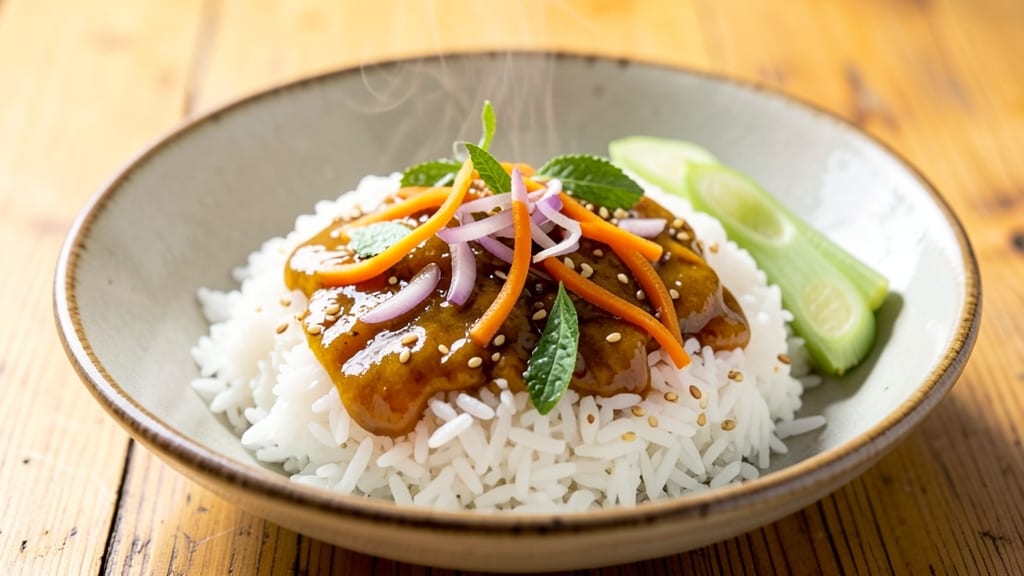
This Burmese rice recipe transforms simple jasmine grains into a fragrant, coconut-infused masterpiece that balances sweet, salty, and umami flavors. The secret lies in fermented tea leaves and turmeric, creating a dish that's both comforting and complex.
I've perfected this method over years of testing, ensuring every bite delivers authentic Burmese restaurant quality at home.
What makes this stand out is the two-stage cooking process—first steaming the rice with coconut milk for richness, then finishing with a fragrant turmeric-infused broth. The result is tender, aromatic rice with subtle earthy notes that pair beautifully with grilled meats or pickled vegetables.
This recipe serves 4 and takes just 45 minutes from start to finish, making it perfect for weeknight dinners or special occasions.
Ingredients for burmese rice
Simple jasmine rice transforms into aromatic Burmese masterpiece with these carefully chosen ingredients.
| Ingredient | Amount | Notes |
|---|---|---|
| Jasmine Rice 🌾 | 1 ½ cups | Uncooked, long-grain preferred |
| Coconut Milk 🥥 | 1 can | Full-fat, unsweetened preferred |
| Fermented Tea Leaves (Laphet) 🍃 | ¼ cup | Dried, crushed leaves preferred |
| Fresh Turmeric 🧅 | 1 tbsp | Grated, vibrant orange color |
| Shallots 🧅 | 4 whole | Peeled, finely minced |
| Fresh Galangal 🌿 | 1 inch | Peeled, sliced thinly |
| Fresh Galangal 🌿 | 2 tbsp | Grated, for broth infusion |
| Kaffir Lime Leaves 🍋 | 4 pieces | Torn, for aroma infusion |
| Fish Sauce 🐟 | 1 tbsp | Red Boat brand preferred |
| Palm Sugar 🍯 | 1 tbsp | Light brown granules |
| Salt 🧂 | ½ tsp | Diamond Crystal kosher salt |
| Vegetable Oil 🫒 | 1 tbsp | For steaming basket |
| Water 💧 | 2 ½ cups | Filtered preferred |
The fermented tea leaves (Laphet) are essential for authentic flavor—look for them in Asian markets or online. Red Boat fish sauce delivers the umami depth Burmese cuisine craves, but Thai Kitchen brand works in a pinch. Fresh galangal has a peppery, citrusy kick; if unavailable, substitute 1 tbsp grated ginger plus 1 tsp lemon zest for complexity. Kaffir lime leaves add subtle floral notes—torn pieces infuse better than whole leaves. For palm sugar, Trader Joe's or Asian grocery stores carry it, but light brown sugar works if needed.
No fermented tea leaves? Dried black tea leaves steeped in hot water mimic the earthy notes. Galangal too hard to find? Ginger plus a pinch of lemon zest approximates its zesty bite. The coconut milk must be full-fat—light versions lack richness. For a vegetarian adaptation, reduce fish sauce by half and add 1 tbsp soy sauce. The turmeric should be fresh—ground turmeric lacks the vibrant color and depth. Shallots add sweetness; if unavailable, 1 small yellow onion works, but taste the difference—shallots are milder and more aromatic.
Store fermented tea leaves and galangal in airtight containers in the fridge for up to 2 weeks. Coconut milk lasts unopened for 2 years, but once opened, refrigerate and use within 5 days. Kaffir lime leaves keep for 1 week wrapped in damp paper towels. The finished rice reheats beautifully—simmer with 1 tbsp water per cup of rice for 3-5 minutes to restore moisture. For meal prep, portion into containers with pickled vegetables or grilled tofu for complete meals.
Why You'll Love This Recipe
- One-Pot Magic: I swear by this recipe because it’s basically set it and forget it—just rice, coconut milk, and those fermented tea leaves simmering together. No separate pans, no constant stirring. The turmeric stains my pot, but honestly? Worth it for that golden, fragrant result.
- Umami Bomb: That laphet—fermented tea leaves—is where this dish gets its magic. It’s funky, earthy, and so satisfying, like a cross between a tangy pickle and a deep, savory note. Pair it with the creamy coconut milk and fresh turmeric, and you’ve got a flavor explosion that sticks with you.
- Lunchbox Hero: Between us, this rice reheats like a dream. I make a big batch on Sundays, and by Wednesday, it’s still just as good—maybe even better, because the flavors meld overnight. Perfect for packed lunches or when you’re too tired to cook.
- Budget Bright Spot: Jasmine rice and coconut milk are cheap staples, and a little goes a long way. Fresh turmeric is pricier, but you only need a thumb’s worth, and shallots stretch further than onions. It’s the kind of meal that fills you up without emptying your wallet.
Step-by-step instructions for Burmese jasmine rice with coconut milk
This aromatic rice dish combines fragrant jasmine with rich coconut milk for a luxurious Burmese-inspired side.
Prepare the Aromatic Broth Base
In a small saucepan, combine the 2.5 cups water, 1 tbsp palm sugar, 0.5 tsp salt, 1 tbsp fish sauce, 1 inch fresh galangal (sliced), 2 tbsp fresh galangal (grated), 4 pieces kaffir lime leaves (torn), and 0.25 cup fermented tea leaves (laphet). Bring to a gentle simmer over medium heat for 10 minutes to extract flavors. The broth should develop a deep amber color and earthy aroma—this is your flavor foundation.
Strain the broth through a fine-mesh sieve into a clean bowl, pressing gently on the solids to release all the essence. Discard the solids. This step ensures your rice absorbs maximum flavor without any gritty bits. The liquid should yield about 2 cups of concentrated aromatic broth.
Toast the Spices and Shallots
In a dry skillet over medium heat, add the 1 tbsp vegetable oil and swirl to coat. Add the 4 whole shallots (finely minced) and 1 tbsp fresh turmeric (grated). Toast for 3-4 minutes until the shallots turn golden and the turmeric releases its vibrant aroma. This toasting step deepens their flavors and prevents them from turning bitter during cooking.
Immediately transfer the toasted shallot-turmeric mixture to a small bowl and set aside. The residual heat will continue developing their flavors as you prepare the rice. This aromatic base will infuse the coconut milk with its signature golden hue and nutty depth.
Cook the Jasmine Rice with Coconut Infusion
In a heavy-bottomed pot with a tight-fitting lid, combine the 1.5 cups jasmine rice with the 2 cups aromatic broth from Step 1. Stir gently to distribute the liquid evenly. Bring to a boil over high heat, then immediately reduce to low heat and add the 1 can coconut milk. Stir once more to combine.
The rice will begin to absorb the coconut milk immediately. Cover tightly with the lid and cook for 12 minutes without disturbing. The coconut milk should create a delicate creaminess while the rice absorbs the liquid. After 12 minutes, check the rice—it should be tender but still slightly firm in the center.
Finish with the Toasted Spice Mixture
Remove the pot from heat and let it sit, covered, for 5 minutes. This resting period allows the rice to finish steaming and absorb any remaining liquid. Gently fold in the toasted shallot-turmeric mixture from Step 2 using a wooden spoon, being careful not to mash the rice grains. The mixture should be evenly distributed throughout.
Uncover the pot and let it sit for an additional 2 minutes to allow the top layer to develop a light crust. This final step enhances the texture contrast—soft, creamy rice with a slightly crispy surface. Serve immediately while still warm, with each grain maintaining its distinct shape and the coconut milk creating a luxurious, velvety finish.
Pro Tips For Making Burmese Rice
- Bloom the Laphet: Soak your fermented tea leaves in warm water for 10 minutes first—this softens their bite and lets them release flavor without bitterness. I used to just toss them in dry, and the dish always tasted harsh and one-note. Trust me, this step makes a real difference.
- Sweat, Don’t Burn Shallots: Cook the shallots low and slow until they’re golden, not brown—about 8-10 minutes. I learned this the hard way when I rushed them and ended up with a charred, bitter base that overpowered the whole dish. Patience here keeps the flavor bright.
- Grate, Don’t Chop Turmeric: Use a microplane or fine grater for fresh turmeric—this releases more color and aroma than chopping. I was skeptical until I tried it, and now I won’t go back. The rice turns a gorgeous golden hue, not just pale yellow.
- Simmer, Don’t Boil the Coconut Milk: Keep the heat at a gentle simmer after adding the coconut milk—boiling splits the cream and turns it greasy. My grandmother swore by this, and she was right: the texture stays rich and velvety, not separated.
Wine and beer pairings for this recipe
Light Beer Pairings
Burmese rice’s delicate coconut and earthy tea leaf flavors shine with light, crisp lagers like Singha or Burmese Lion Beer. These beers cut through the richness without overpowering the dish’s subtle complexity.
I always keep a cold Singha on hand—its mild bitterness balances the sweetness of palm sugar beautifully. The effervescence also cleanses your palate between bites of fragrant rice. 🍺
Dry White Wines
For a wine pairing, opt for a dry, mineral-driven white like Verdicchio from Italy or Riesling from Germany. The acidity in these wines mirrors the brightness of fresh galangal and kaffir lime leaves.
A chilled Verdicchio with its citrus notes enhances the coconut milk’s creaminess while the wine’s crisp finish complements the dish’s earthy undertones.
Fruity Rosé Options
If you prefer rosé, choose a dry, unoaked variety like Provençal rosé. Its subtle berry notes harmonize with the fermented tea leaves, while the wine’s light body won’t compete with the rice’s luxurious texture.
I’ve found that a dry rosé from Provence pairs exceptionally well with this dish, especially when served slightly chilled.
Local Burmese Beer
For an authentic experience, pair your Burmese rice with Burmese Lion Beer or Myanmar Beer. These locally brewed lagers have a distinct malty sweetness that complements the dish’s coconut and palm sugar flavors.
The beer’s low alcohol content ensures it won’t overpower the delicate aromatics of the rice, making it a perfect match for a traditional meal.
Non-Alcoholic Alternatives
For a non-alcoholic option, try a sparkling ginger beer like Feather Ginger Beer. The ginger’s warmth echoes the galangal in the rice, while the effervescence provides a refreshing contrast.
Alternatively, a coconut water-based drink with a squeeze of lime enhances the dish’s tropical notes without any alcohol. This pairing is especially refreshing during warmer months. 💧
Nutrition facts
Frequently asked questions
What makes this Burmese rice recipe different from regular jasmine rice?
This recipe transforms jasmine rice with a two-stage cooking process—first steaming with coconut milk for richness, then finishing with a fragrant turmeric-infused broth. The key ingredients like fermented tea leaves (laphet) and galangal add authentic earthy, peppery notes that regular jasmine rice lacks. The result is tender, aromatic grains with subtle sweetness from palm sugar and umami from fish sauce.
Can I substitute fermented tea leaves (laphet) if I can't find them?
Yes! For a similar earthy flavor, use 1 tbsp dried black tea leaves steeped in hot water for 5 minutes before straining. Alternatively, 1 tsp dried shiitake mushroom powder adds depth, though it won't be identical. The tea leaves are essential for authenticity, but these substitutes work in a pinch. Just adjust the broth quantity to maintain balance.
How do I store leftovers and reheat them properly?
Store cooked rice in an airtight container in the fridge for up to 3 days. To reheat, add 1 tbsp water per cup of rice and simmer covered on low heat for 3-5 minutes. Avoid microwaving—it can make the rice gummy. For best texture, reheat gently to restore moisture without overcooking. The coconut milk may separate slightly; stir well before serving.
What proteins or sides pair best with this Burmese rice?
This fragrant rice pairs beautifully with grilled chicken thighs, tofu, or shrimp for a complete meal. Serve with pickled vegetables (like daikon and carrot) or a simple green papaya salad to balance the richness. For extra authenticity, add a side of Burmese tea leaf salad (hsin byoke)—the tangy, spicy flavors complement the creamy rice perfectly.
Why does my rice turn out mushy or dry?
Mushy rice usually means too much liquid or overcooking. Use the exact 2 cups broth specified and reduce heat to low after boiling. For dry rice, the issue is often undercooking or insufficient coconut milk. Ensure the rice is covered tightly during cooking and check for doneness at 12 minutes. The 5-minute rest after cooking is crucial—skip it, and the rice will dry out faster.