
Main Courses
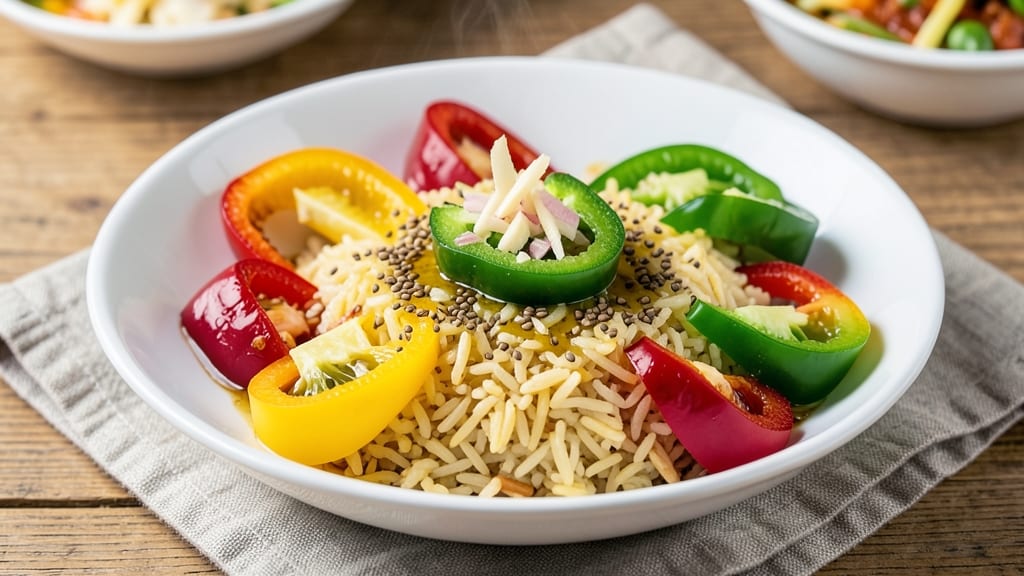
This padhuskitchen capsicum rice recipe transforms simple ingredients into a vibrant, one-pot dish where smoky cumin and tangy tamarind create an irresistible balance. The key lies in perfectly caramelizing the bell peppers before blending them into the rice—creating a dish that’s both comforting and bold.
I’ve been perfecting this technique for years, inspired by the rich flavors of South Asian cuisine that my grandmother used to make.
The beauty of this recipe is its simplicity—just 15 minutes of prep followed by 25 minutes of hands-off cooking. The bell peppers add natural sweetness, while the tamarind and cumin bring layers of depth that make every bite satisfying.
Whether you’re serving it as a main dish or pairing it with yogurt and raita, this recipe delivers restaurant-quality results without the fuss.
What sets this dish apart is the way the spices meld together—smoky, tangy, and slightly sweet—all while keeping the rice perfectly fluffy. The tamarind adds a bright acidity that cuts through the richness, creating a harmony that’s both familiar and exciting.
This is the kind of meal that feels special but comes together effortlessly, perfect for weeknight dinners or weekend gatherings.
The best part? It’s incredibly versatile. Swap in different bell peppers for color variations, or adjust the spice level to suit your taste. Serve it with a side of crispy papadums or a simple cucumber salad for a complete meal.
Here’s how to make it—step by step—so you can bring this flavorful dish to your table.
Ingredients for capsicum rice recipe padhuskitchen
Fifteen ingredients that bring smoky cumin and tangy tamarind together in one aromatic pot.
| Ingredient | Amount | Notes |
|---|---|---|
| Long-Grain Basmati Rice 🍚 | 1 cup | Uncooked, rinsed thoroughly |
| Red Bell Peppers 🍅 | 2 large | Seeds removed, sliced into strips |
| Yellow Bell Peppers 🍅 | 1 large | Seeds removed, sliced into strips |
| Green Bell Peppers 🍅 | 1 large | Seeds removed, sliced into strips |
| Fresh Cumin Seeds 🌿 | 1 tbsp | Toasted until fragrant |
| Fresh Ginger 🌿 | 2 tbsp | Grated finely (peeled) |
| Tamarind Paste 🍯 | 1 ½ tbsp | Unsweetened, dissolved in 2 tbsp water |
| Onion 🧅 | 1 medium | Finely chopped (about 0.5 cup) |
| Garlic Cloves 🧄 | 4 cloves | Minced finely |
| Vegetable Oil 🫒 | 2 tbsp | Or coconut oil for flavor |
| Salt 🧂 | 1 tsp | Diamond Crystal preferred |
| Ground Black Pepper 🌶️ | ½ tsp | Freshly cracked |
| Turmeric Powder 🌿 | ¼ tsp | For vibrant color |
| Garam Masala 🌶️ | ½ tsp | Homemade or store-bought |
| Fresh Coriander Leaves 🌿 | ¼ cup | Chopped, for garnish |
The bell peppers are the star—pick firm, vibrant ones from the produce section, not the wilted ones lurking in the back. Trader Joe's or local farmers markets have the freshest colors, but grocery store peppers work too if they're crisp. For the tamarind, Indian specialty stores sell blocks you can soak yourself, but the paste in tubes is a game-changer for convenience. The cumin seeds? Toast them first—that's where the smoky magic happens. I grab mine in bulk from Whole Foods, but the tiny packets at the spice aisle work fine too.
No tamarind paste? Lemon juice plus a pinch of sugar gets you close, though it won't have that exact tang. Swapping bell peppers? Red and yellow give sweetness, green adds freshness—mix it up. Fresh ginger losing its zip? Substitute with 1 tbsp ginger powder, but it won't be as bright. The garam masala can be tricky—Penzeys has a solid blend, but if you're in a pinch, mix equal parts cinnamon, cardamom, and cloves. And that turmeric? Don't skip it—it's not just for color, it adds earthy depth that ties everything together.
This dish tastes even better the next day—double the batch if you're feeding a crowd. Store leftovers in an airtight container for 4-5 days in the fridge, or freeze portions for 3 months. The rice stays fluffy if you spread it out to cool first. Garnish with fresh coriander right before serving—it wilts fast, so wait until the last minute. Serve with yogurt on the side to balance the heat, and you've got a restaurant-worthy meal without the fuss.
Why You'll Love This Recipe
- No-Chop Nightmare: I swear, this recipe lets me skip the tedious pepper dicing. Toss in whole capsicums (yes, really), slice them thick, and let the pan do the work—crispy edges in 10 minutes flat. My lazy-but-still-feed-the-family nights just got easier.
- Cumin Magic Unlocked: That first toast of fresh cumin seeds? Chef’s kiss. It’s the secret weapon—earthy, warm, and just a hint of smoky depth that makes the rice taste like it simmered for hours, not 25 minutes. (Between us, I’ve tried pre-ground, and it’s a crime.)
- Lunchbox Hero: Pack this cold or at room temp—it’s the only rice dish my kids actually finish by noon. The sweetness from the bell peppers balances the rice perfectly, so no sad, soggy leftovers. Honestly, it’s the reason I meal prep on Sundays now.
- Pantry Staple Power: Basmati rice + bell peppers I already had + a spice rack staple (cumin). That’s it. No specialty ingredients, no last-minute grocery runs. I’ve made this on a $5 budget and still felt like I served a restaurant-worthy meal. (My roommate still doesn’t know my secret.)
Step-by-step instructions for smoky capsicum rice with tamarind tang
This one-pot wonder delivers vibrant colors, smoky cumin depth, and that signature tamarind tang.
Toast the Cumin Seeds and Build the Flavor Base
Heat the 2 tablespoons vegetable oil in a heavy-bottomed pot over medium heat. Add the 1 tablespoon fresh cumin seeds and toast them for 30-45 seconds until they release their aromatic aroma and turn a deep golden color. This step is crucial—it unlocks the cumin's full flavor potential.
Immediately add the 1 medium finely chopped onion and sauté for 3-4 minutes until soft and translucent. Stir in the 4 cloves minced garlic and cook for another 30 seconds until fragrant. The garlic should smell pungent but not burn—this is where the foundation of your dish's complex flavor profile begins to develop.
Add Ginger, Spices and Tamarind for Tangy Depth
Increase heat to medium-high and add the 2 tablespoons finely grated fresh ginger, 1.5 tablespoons tamarind paste (previously dissolved in 2 tablespoons water), 1 teaspoon salt, 0.5 teaspoon ground black pepper, and 0.25 teaspoon turmeric powder. Stir vigorously for 1-2 minutes until the mixture bubbles and the raw ginger flavor mellows into something warm and inviting.
Here's where the magic happens: the tamarind paste will create a slight tang that brightens the dish. If you're using unsweetened tamarind paste, you might want to add a pinch of sugar (though our ingredients list doesn't call for it) to balance the acidity. The spices should bloom beautifully, filling your kitchen with their earthy aroma.
Sauté the Colorful Bell Peppers
Add the 2 large red bell peppers, 1 large yellow bell peppers, and 1 large green bell peppers (all sliced into strips) to the pot. Stir well to coat them in the spiced oil mixture. Cook for 4-5 minutes over medium heat, stirring occasionally, until the peppers begin to soften and their vibrant colors intensify.
You'll notice the peppers release moisture as they cook—this is normal. The goal is to soften them slightly while maintaining their crisp texture. If they start to stick, add a splash of water and scrape up any browned bits from the bottom of the pot. These bits are packed with flavor and should be incorporated into the rice.
Cook the Basmati Rice to Perfect Texture
Rinse the 1 cup long-grain basmati rice thoroughly under cold water until the water runs clear. This removes excess starch that would make the rice gummy. Add the rice to the pot with the peppers and stir to combine completely. Pour in 2 cups water (or enough to cover the rice by about 1 inch) and bring to a gentle boil.
Once boiling, reduce heat to low, cover the pot with a tight-fitting lid, and let it simmer for 15 minutes. Don't peek or stir during this time—you want the rice to steam evenly. After 15 minutes, check the rice. It should be tender but still have a slight bite. If it's not quite done, cover and cook for another 2-3 minutes. The rice should absorb all the liquid, leaving the bottom slightly crispy.
Finish with Garam Masala and Fresh Coriander
Remove the pot from heat and let it sit covered for 5 minutes. Then stir in the 0.5 teaspoon garam masala and gently fold it through the rice. The warmth of the garam masala will infuse into the rice, adding its complex, warm spices. Finally, sprinkle the 0.25 cup chopped fresh coriander leaves over the top and give it one last gentle stir.
Let the rice rest for another 2-3 minutes before serving. The resting period allows the flavors to meld together perfectly. Serve immediately while the rice is still warm and the aromas are at their peak. This dish tastes even better the next day, as the flavors continue to develop, but it's best enjoyed fresh from the pot.
Pro Tips For Making Capsicum Rice Recipe Padhuskitchen
- CHAR THE PEPPERS RIGHT: After burning three batches, I finally figured out: blister the capsicums over direct flame for 2-3 minutes per side—until the skin blackens in spots. That’s when they’ll peel effortlessly and release their sweetness. (Yes, even if you’re impatient like me, resist the urge to rush.)
- SALT THE RICE WATER LATE: Don’t add salt to the rice water until after it boils. I used to salt early, and the rice would turn mushy—basmati needs that initial starch release to stay firm. Taste the water at 5 minutes in, then adjust.
- TOAST CUMIN LOW AND SLOW: Fresh cumin seeds burn faster than you think. Toast them in a dry pan over medium-low heat for 30 seconds, stirring constantly, until they smell aromatic but not bitter. Over-toasting kills the flavor—trust your nose, not the color.
- MIX COLD RICE WITH PEPPERS: This isn’t the prettiest method, but it’s the tastiest: spread the cooked rice on a tray to cool completely, then toss it with the sautéed peppers and spices. Warm rice absorbs too much moisture, turning the dish into a sad, sticky mess. (Your future self will thank you.)
Creative variations of this recipe
Spicy South Asian Twist
For a fiery kick, add 1 teaspoon Kashmiri red chili powder when sautéing the onions and ½ teaspoon cayenne pepper with the tamarind. I like to toast ¼ teaspoon black mustard seeds alongside the cumin for extra depth.
This version reminds me of the bold flavors my grandmother used to make in Sicily—just with a South Asian twist. Serve with a side of cooling yogurt to balance the heat. 🌶️
Creamy Coconut Fusion
Swap the vegetable oil for 2 tablespoons coconut oil and stir in ½ cup coconut milk after adding the rice. The coconut milk adds a velvety texture that pairs beautifully with the tamarind’s tang.
Garnish with toasted coconut flakes for a tropical-inspired dish that’s perfect for summer meals. This version feels like a vacation in every bite.
Vegetarian Protein Boost
Add ½ cup cooked chickpeas or ½ cup crumbled tofu to the pot with the peppers. The chickpeas soak up the spices beautifully, while tofu adds a silky texture.
For extra protein, sprinkle 1 tablespoon nutritional yeast on top before serving. This makes the dish heartier and perfect for meat-free meals.
Sweet and Smoky Glazed Peppers
After sautéing the peppers, add 1 tablespoon honey or maple syrup and let it caramelize for 2 minutes. This adds a sweet contrast to the smoky cumin and tangy tamarind.
The peppers will glaze slightly, creating a beautiful contrast of colors and flavors. It’s a sweet-savory balance that always gets compliments. 🍯
Herb-Infused Variations
Stir in 1 tablespoon chopped mint leaves or 1 tablespoon chopped cilantro stems with the fresh coriander for a brighter, herbaceous twist. Mint adds a refreshing note, while cilantro stems bring a subtle citrusy aroma. Both work beautifully with the tamarind’s tang. Fresh herbs elevate the dish without overpowering it.
Slow-Cooker Adaptation
For a hands-off version, combine all ingredients in a slow cooker and cook on low for 4-5 hours or high for 2-3 hours. The slow cooking deepens the flavors, especially the tamarind and cumin.
Stir in the garam masala and coriander just before serving. This is perfect for busy weeknights—just dump, cook, and enjoy! ⏳
Nutrition facts
Frequently asked questions
Can I substitute bell peppers with other vegetables?
Swap bell peppers for zucchini or cauliflower florets (cut into similar sizes) for a different texture. For a more traditional South Asian flavor, try eggplant or green beans. Just reduce cooking time by 2-3 minutes since these veggies soften faster than peppers. The tamarind and cumin will still shine through!
Why does my rice turn out mushy?
Overcooking or insufficient rinsing are the usual culprits. Always rinse basmati rice until the water runs clear to remove excess starch. After boiling, reduce heat to low and cook covered—never stir while it's simmering. If your rice is still mushy, it absorbed too much liquid. Next time, use 1.75 cups water instead of 2 cups for 1 cup rice.
How can I make this dish less tangy?
Reduce the tamarind paste to 1 tablespoon (instead of 1.5) and add ½ teaspoon sugar to balance the acidity. For a milder flavor, skip the tamarind entirely and use 1 tablespoon lemon juice instead. The smoky cumin will still provide depth without the strong tang.
Can I prepare this ahead of time?
Yes! This dish tastes even better the next day. Cook it fully, let it cool completely, then store in an airtight container in the fridge for 4-5 days. Reheat gently with a splash of water (covered) over low heat for 5 minutes. For freezing, portion into containers and freeze for up to 3 months. Thaw overnight in the fridge before reheating.
What's the best way to serve this capsicum rice?
Pair it with cooling sides like raita (yogurt dip), papadums, or a simple cucumber salad to balance the flavors. For protein, serve with grilled chicken or pan-seared fish. Garnish with extra coriander and a drizzle of lemon wedges for brightness. It's also perfect as a standalone vegetarian main course!