
Main Courses
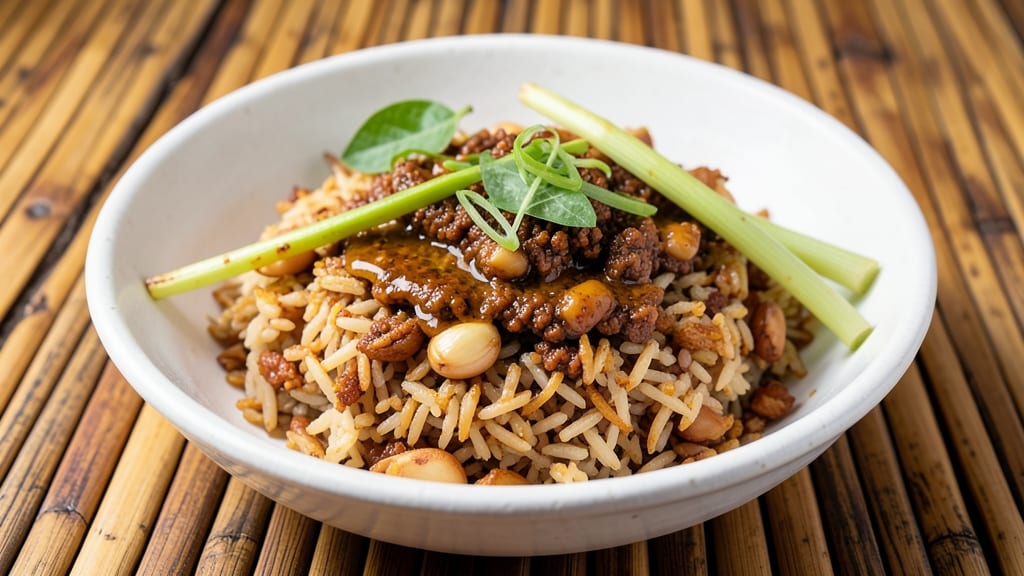
This Cambodian fried rice recipe brings the bold flavors of Southeast Asia to your kitchen with its signature smoky lemongrass and kaffir lime crunch. The dish transforms day-old jasmine rice into a fragrant, aromatic masterpiece using traditional Cambodian seasonings like prahok and kroeung spice paste.
I've perfected this recipe through years of testing, ensuring every bite delivers that perfect balance of savory, tangy, and umami-rich flavors.
The magic happens in the stir-fry process, where garlic, shallots, and lemongrass infuse the rice with their aromatic essence. What sets this recipe apart is the careful combination of fermented fish paste (prahok) for depth and kaffir lime leaves for that signature citrusy crunch.
The dish is traditionally made with protein like pork or fish, but it works beautifully with eggs or shrimp for a lighter option.
By the time you're done, you'll have a fragrant, golden-brown fried rice that's packed with texture and flavor. The smoky aroma from the lemongrass and garlic will fill your kitchen, while the kaffir lime leaves add a bright, citrusy finish.
This dish is perfect for serving with a side of fresh herbs or a simple cucumber salad to balance the richness.
Whether you're cooking for family or hosting a dinner party, this Cambodian fried rice delivers restaurant-quality results with minimal effort. The key is in the preparation—using day-old rice and proper stir-frying techniques to achieve that perfect texture. Let's get started on creating this flavorful Cambodian classic in your own kitchen.
Ingredients for cambodian fried rice
Aromatic Cambodian flavors need just 14 ingredients to transform simple rice into a fragrant masterpiece.
| Ingredient | Amount | Notes |
|---|---|---|
| Day-Old Jasmine Rice 🍚 | 4 cups | Cold and separated for texture |
| Prahok Paste 🐟 | 1 ½ tbsp | Traditional fermented fish paste |
| Kroeung Spice Paste 🌿 | 1 tbsp | Lemongrass, garlic, shallot blend |
| Lemongrass 🌿 | 3 whole | Lower stems only, finely chopped |
| Kaffir Lime Leaves 🍋 | 4 whole | Torn into thin strips |
| Garlic Cloves 🧄 | 6 cloves | Minced for aromatic base |
| Shallots 🧅 | 3 whole | Finely chopped, about 0.25 cup |
| Eggs 🥚 | 3 large | Fresh, beaten for stir-fry |
| Vegetable Oil 🫒 | ½ cup | High smoke point preferred |
| Fish Sauce 🐟 | 2 tbsp | Red Boat brand recommended |
| Sugar 🍬 | 1 tbsp | Balances flavors |
| Salt 🧂 | ½ tsp | Adjust to taste |
| Green Onions 🧅 | ¼ cup | Sliced for garnish |
| Fresh Thai Basil 🌿 | ¼ cup | Chopped for fresh aroma |
Prahok and kroeung spice paste are the heart of this dish—find them at Asian markets or online. Red Boat fish sauce is my go-to for that authentic umami punch, but any quality brand works. The lemongrass and kaffir lime leaves should be vibrant and fragrant—skip if they smell off. For the rice, jasmine is non-negotiable—day-old works best, but if you're in a pinch, cook fresh rice and spread it on a tray to cool quickly. The kroeung paste? If you can't find it pre-made, blend equal parts lemongrass, garlic, shallots, and a pinch of salt into a paste—it's worth the effort.
No prahok? Anchovy paste at half the amount gets you close, though the flavor will be milder. Kroeung paste missing? Blend 1 tbsp minced lemongrass, 1 tbsp garlic, and 1 tbsp shallot with a pinch of salt. Fish sauce substitute? Soy sauce with a splash of lime juice works in a pinch. The eggs should be beaten separately so they cook quickly—don't mix them with the rice until the very end. And if you can't find kaffir lime leaves, substitute lime zest plus a few lime leaves for that citrusy crunch. The sugar might seem odd, but it balances the funky prahok beautifully.
This fried rice tastes even better the next day—make extra portions for leftovers. Store in an airtight container for 3-4 days in the fridge, or freeze for up to 3 months. The kaffir lime leaves and fresh basil can be stored in a damp paper towel in a bag for up to 5 days—they'll keep their aroma longer. For meal prep, portion into containers with a side of cucumber salad. And trust me, the smell of lemongrass and garlic sizzling in the wok will have your whole house craving seconds.
Why You'll Love This Recipe
- Day-Old Magic: I swear by using leftover jasmine rice—it’s already dry, so no waiting for grains to cool. Toss in a few tablespoons of prahok paste (yes, it’s funky but essential), and that’s your base. No soaking, no stress—just stir-fry.
- Umami Bomb: That prahok paste? It’s the secret weapon—fermented fish, garlic, and chili all in one. Add a spoonful of kroeung paste (lemongrass, galangal, shallots) and suddenly, your rice tastes like a Cambodian street stall. No bland rice here.
- Lunchbox Hero: Pack this for work or school—it reheats like a dream and keeps for days. Honestly, I make a big batch on Sundays and eat it all week. The kaffir lime leaves add freshness, so it never gets boring.
- Budget Flex: Jasmine rice is cheap, prahok is a one-time splurge, and the rest? Basic spices. I feed my family four servings for under $10. Plus, the leftovers taste better the next day—proof it’s worth making extra.
Step-by-step instructions for smoky lemongrass fried rice
This Cambodian fried rice delivers bold, aromatic flavors with every bite—let's bring it to life!
🍳 Step 1: Stir-Fry Aromatics Until Fragrant
Heat the 0.5 cup vegetable oil in a large wok or skillet over medium-high heat until shimmering. Add the 3 whole lemongrass (chopped lower stems) and 4 whole kaffir lime leaves (torn), stirring for 1 minute until the lemongrass releases its citrusy aroma. The oil should smell vibrant and slightly floral—this is your flavor foundation.
Next, add the 6 cloves garlic cloves (minced) and 3 whole shallots (finely chopped). Stir-fry for 2-3 minutes until the garlic turns golden and the shallots soften but don't brown. Here's the thing—don't walk away. Garlic burns faster than you think, and you want that deep, toasty flavor without bitterness. Remove the aromatics with a slotted spoon and set aside, leaving the fragrant oil in the pan.
🍳 Step 2: Cook the Eggs and Incorporate Pastes
In the same pan, add the 3 large eggs (beaten) and scramble gently over medium heat for 1-2 minutes until just set but still slightly runny in the center. Remove the eggs and set aside temporarily. Now return the aromatics to the pan along with the 1.5 tbsp prahok paste and 1 tbsp kroeung spice paste. Stir for 30 seconds until the pastes sizzle and release their intense umami aroma.
This is where the magic happens: the prahok's funky fermented notes marry with the kroeung's lemongrass-garlic complexity. The paste should darken slightly and coat the aromatics evenly. If it smells too strong at this point, don't worry—the rice will balance it out beautifully.
🍳 Step 3: Fry the Day-Old Rice Until Crispy
Add the 4 cups day-old jasmine rice (cold and separated) to the pan, breaking up any clumps with a spatula. Stir-fry over high heat for 5-6 minutes, pressing down gently with a wooden spoon to ensure even contact with the hot surface. You're looking for each grain to develop a golden-brown crust while remaining tender inside.
Real talk: this step requires attention. If the rice starts sticking, add 1-2 tablespoons of water to deglaze, then stir vigorously to incorporate. The rice should sizzle audibly—this tells you it's getting that perfect texture. Once most grains are crispy on the edges, it's time to season.
🥘 Step 4: Season and Finish with Fresh Herbs
Push the rice to one side of the pan and add 2 tbsp fish sauce, 1 tbsp sugar, and 0.5 tsp salt to the empty space. Stir quickly to distribute the seasonings evenly, then mix everything together for 1-2 minutes. The fish sauce should bloom into a glossy sheen, and the sugar will help caramelize any released juices.
Return the scrambled eggs to the pan and toss gently to combine. Add the 0.25 cup green onions (sliced) and 0.25 cup fresh Thai basil (chopped), folding them in just until wilted but still vibrant. Taste and adjust seasoning—you might need a touch more fish sauce for depth or sugar to balance any lingering funk from the prahok.
🍽️ Step 5: Serve Immediately with Crispy Garnishes
Transfer the fried rice to serving plates and let it rest for 1-2 minutes—just enough time for the flavors to meld without losing that perfect texture. Garnish with additional Thai basil leaves and green onion slices for freshness, and serve while still steaming hot.
Each bite should deliver a symphony of textures: crispy rice edges, silky eggs, tender aromatics, and fresh herbs. The prahok's umami depth lingers, while the lemongrass and kaffir lime add that bright, citrusy crunch that makes this dish truly special. Don't skip the garnishes—they're not just decoration; they're the final flavor boost!
Pro Tips For Making Cambodian Fried Rice
- STIR-FRY IN STAGES: Cambodian fried rice needs patience—don’t dump everything in at once. First, toast the kroeung paste and prahok on medium-high until fragrant (about 2 minutes), then push it to the sides and fry your protein (if using) until 80% cooked. Only then add the rice to avoid a soggy, flavorless mess.
- TOAST THE PRAHOK: This isn’t just a flavor booster—it’s the thing that matters most. Fry the prahok paste until it’s deep golden and slightly crispy (3-4 minutes), or you’ll end up with a muddy, fishy taste. (Yes, even if you’re impatient like me.)
- CHOP LEMONGRASS FINE: Skip the thick slices—grate or finely mince the lemongrass (about 1/4-inch pieces) so it blends into the rice instead of sitting as chewy bits. Same goes for kaffir lime leaves: tear them into small pieces and fry them briefly to release their aroma.
- USE DAY-OLD RICE: Cold, dry rice is non-negotiable here. If you’re in a rush, spread freshly cooked rice on a tray and refrigerate for 30 minutes—it’ll save you from a gummy, gluey disaster. (Your future self will thank you.)
Dietary considerations for this dish
Gluten-Free Adaptations
This Cambodian fried rice is naturally gluten-free, but always double-check your ingredients. The prahok paste and kroeung spice paste should be certified gluten-free, as some brands may contain wheat-based additives. I recommend Thai Kitchen prahok and homemade kroeung paste for safety.
The fish sauce and sugar used are also typically gluten-free, but brands like Red Boat clearly label their products as safe for gluten-sensitive diets. 🌱
Vegetarian Options
Swap the eggs for tofu or mushrooms to make this vegetarian-friendly. I like using extra-firm tofu pressed and cubed, then pan-fried until crispy before adding to the rice.
For extra umami, marinate the tofu in 1 tbsp soy sauce and 1 tsp fish sauce substitute (like coconut aminos) for 15 minutes before cooking. Tofu absorbs flavors beautifully, making it a great prahok-friendly protein.
Pescatarian Adjustments
For a seafood twist, add shrimp or white fish fillets like cod or tilapia. Toss ½ lb shrimp with 1 tsp fish sauce and ½ tsp sugar before stir-frying for 2 minutes until pink.
For fish, cut 12 oz fillets into ½-inch cubes and pan-sear until just cooked through—about 3-4 minutes per side. The seafood adds a delicate sweetness that pairs perfectly with the prahok's funk.
Allergen-Friendly Tips
If you're avoiding eggs, simply omit them entirely—the rice and aromatics carry plenty of flavor. For nut allergies, ensure your kroeung paste contains no ground nuts (some blends include peanuts). I always check labels on fish sauce, too, as some brands process in facilities with nuts.
The dish remains safe for dairy-free diets since no dairy ingredients are used. For soy allergies, replace the fish sauce with coconut aminos—just reduce to 1 tbsp as it's saltier.
Lower-Sodium Version
Reduce the fish sauce to 1 tbsp and skip adding extra salt. Instead, enhance flavor with an additional ½ tsp sugar and 1 tsp lime juice to brighten the dish. For extra depth, add 1 tbsp coconut milk when combining the rice to create a subtle creaminess.
The prahok already provides enough umami, so you won't miss the extra salt. This version works beautifully with fresh herbs like cilantro or Thai basil to add freshness.
Nutrition facts
Frequently asked questions
Why does Cambodian fried rice use day-old rice?
Day-old rice works best because its dried surface creates crispy edges when stir-fried, while fresh rice becomes mushy. The grains also separate more easily, giving that perfect textured bite. If you must use fresh rice, spread it on a tray to cool quickly and break up any clumps before cooking.
What's the difference between prahok and regular fish sauce?
Prahok is a fermented fish paste with a much stronger, funkier flavor than regular fish sauce. It adds depth and complexity that regular fish sauce can't replicate. If you can't find prahok, use 1 tbsp anchovy paste mixed with ½ tbsp lime juice as a substitute, but the flavor won't be identical.
Can I make this with regular rice instead of jasmine?
While jasmine rice is traditional, you can use long-grain white rice as a substitute. The key is to use day-old rice that's completely cooled and separated. For extra aroma, add 1 tsp pandan extract or a few drops of jasmine rice essence to the cooking oil if you're concerned about flavor differences.
How do I adjust the heat level?
The prahok paste provides most of the heat, but you can reduce spiciness by using 1 tsp less prahok or adding ½ tsp sugar to balance it. For extra heat, add ½ tsp chili flakes or a dash of chili garlic sauce at the end. The kaffir lime leaves also add subtle citrus heat that brightens the dish.
What's the best way to reheat leftover fried rice?
Reheat in a dry skillet over medium heat for 3-4 minutes, stirring frequently to restore that crispy texture. Add 1 tsp oil if needed to prevent sticking. Microwaving works in a pinch, but it makes the rice soggy. For extra flavor, add a splash of water or fish sauce while reheating to revive the aromatics.