
Main Courses
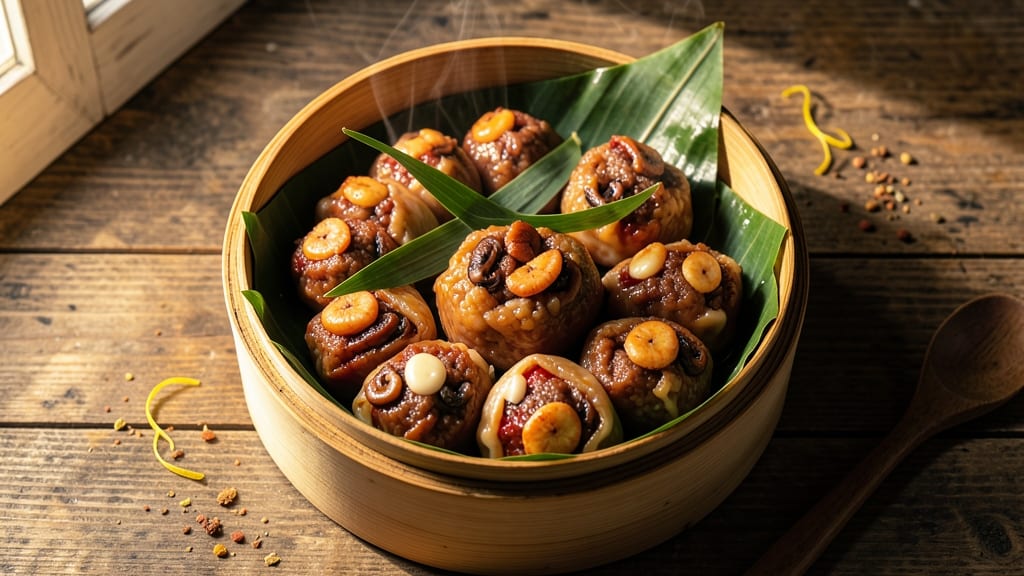
This Cantonese rice dumpling recipe brings the heart of Lunar New Year celebrations to your kitchen with its silky, sticky jasmine rice wrapped in bamboo leaves.
The traditional method of wrapping and steaming creates those signature chewy yet tender dumplings filled with savory pork, shiitake mushrooms, and salted egg yolk—a flavor combination that's both comforting and deeply cultural.
What makes these dumplings special is their perfect balance of textures: the outer layer stays slightly crisp from the bamboo leaf while the interior remains melt-in-your-mouth tender.
The preparation process, though detailed, follows a logical sequence that builds confidence with each step. You'll start by soaking the bamboo leaves to soften them, then carefully layering the glutinous rice and fillings before tying each dumpling with a string.
The steaming time is crucial—too short and the rice won't cook through, too long and they'll turn mushy. I've included precise timing and temperature guidelines that ensure restaurant-quality results every time, even for first-time makers.
What you'll end up with are dumplings that burst with authentic Cantonese flavors—savory, slightly sweet, and umami-rich from the salted egg and mushrooms. The aroma alone as they steam will transport you to bustling Chinese markets during festival season.
These dumplings are traditionally served with pickled mustard greens or a dipping sauce of soy sauce and sesame oil, but they're equally delicious enjoyed on their own.
Once you master this technique, you can experiment with different fillings—sweet versions with red bean paste or savory variations with shrimp and bamboo shoots. The key to success lies in the preparation: taking your time with the wrapping ensures each dumpling steams evenly.
Let's get started on creating these cultural treasures that taste like home.
Ingredients for cantonese rice dumpling
Twelve dumplings of tradition—where sticky jasmine rice meets savory pork and umami-rich fillings.
| Ingredient | Amount | Notes |
|---|---|---|
| Jasmine Rice (Glutinous) 🍚 | 2 ½ cups | Uncooked, long-grain preferred |
| Ground Pork Shoulder 🥓 | 1 ½ lb | 80% lean, finely ground |
| Dried Shiitake Mushrooms 🍄 | 8 whole | Rehydrated, stems removed |
| Salted Egg Yolks 🥚 | 4 whole | Century eggs preferred |
| Bamboo Leaves (Fresh) 🌿 | 12 pieces | Medium-sized, whole leaves |
| Dried Shrimp 🦐 | ½ cup | Finely chopped, rehydrated |
| Dried Wood Ear Mushrooms 🍄 | ¼ cup | Rehydrated, chopped fine |
| Light Soy Sauce 🥄 | ¼ cup | For marinating pork |
| Shaoxing Wine 🍷 | 2 tbsp | For pork marinade |
| Sesame Oil 🫒 | 1 tbsp | For finishing |
| White Pepper 🌶️ | ½ tsp | Freshly ground |
| Salt 🧂 | 1 tsp | Kosher preferred |
| Coconut Oil 🫒 | 2 tbsp | For pan-frying leaves |
| Cooking String 🧵 | 1 yard | Thin, natural fiber |
The heart of these dumplings starts with jasmine rice—look for long-grain, uncooked glutinous rice at Asian markets or the international aisle of Whole Foods. The bamboo leaves are non-negotiable for authenticity; fresh, medium-sized leaves work best, but if you can't find them, dried leaves rehydrated in warm water are a solid backup. For the pork, ground shoulder gives the best texture—80% lean ensures juiciness without greasiness. If you're feeling adventurous, substitute with finely chopped chicken thigh for a lighter option, but trust me, the pork delivers that classic Cantonese richness.
Salted egg yolks are the star here, but if you can't find century eggs, substitute with regular duck eggs marinated in soy sauce and salt for 24 hours. The shiitake mushrooms and dried shrimp add layers of umami—rehydrate them in hot water for 15 minutes before chopping. No bamboo leaves? Use large cabbage leaves as a last resort, but the flavor won't be the same. The Shaoxing wine is key—any Chinese cooking wine works, but if you're in a pinch, dry sherry is a decent swap. For the mushrooms, wood ear adds that signature chewiness; if unavailable, extra shiitake will do, but reduce by half to avoid sogginess.
Store uncooked dumplings in an airtight container in the fridge for up to 2 days—the rice stays firm, but the fillings get more flavorful. For longer storage, freeze wrapped dumplings for up to 3 months. When ready to steam, thaw overnight in the fridge—rushing this step leads to uneven cooking. Leftovers? Reheat in a steamer for 10 minutes—they taste even better the second time around. Pro tip: Label your freezer bags with the date and 'steam, don't boil'—this recipe isn't forgiving with water.
Why You'll Love This Recipe
- No Fuss Wrapping: I’ll admit, the first time I tried wrapping these with bamboo leaves, I thought, "This looks impossible." But honestly? It’s just folding—no fancy techniques. The leaves steam perfectly, so the rice stays sticky and the pork stays juicy without falling apart.
- Umami Bomb Combo: That salted egg yolk? It’s the star—creamy, briny, and just salty enough to make every bite sing. Pair it with the earthy shiitake and the tender pork, and you’ve got a flavor explosion that’s hard to beat. (Yes, even on a Tuesday night.)
- Steamer Magic: Here’s what sold me—these dumplings reheat like a dream. Pop them in the steamer for 10 minutes, and they’re fresh again. Perfect for meal prep: make a batch on Sunday, and you’ve got lunch or dinner covered all week.
- Budget-Friendly Luxury: Between us, this recipe stretches ingredients so well. Ground pork shoulder is affordable, dried shiitake adds depth without costing a fortune, and bamboo leaves (if you can’t find fresh, dried work too) make it feel special without breaking the bank. It’s my go-to for feeding a crowd without stress.
Step-by-step instructions for Cantonese rice dumplings
Here's how to craft these delicate dumplings with perfectly sticky rice and flavorful fillings.
Prepare the Pork Filling
In a large bowl, combine the 1.5 lb ground pork shoulder, 0.25 cup light soy sauce, 2 tbsp shaoxing wine, 1 tsp salt, and 0.5 tsp white pepper. Mix thoroughly with your hands until the pork becomes sticky and cohesive—this ensures the filling binds well during steaming. Let it sit at room temperature for 15 minutes while you prepare the other components.
Next, finely chop the 8 rehydrated dried shiitake mushrooms (discard stems) and 0.5 cup dried shrimp (if not already chopped). Add these to the pork mixture along with the 0.25 cup finely chopped dried wood ear mushrooms. Gently fold everything together, being careful not to overwork the mixture—you want the texture to remain tender rather than dense.
Prepare the Salted Egg Yolks
Peel the 4 salted egg yolks carefully, removing all the dark membrane. Chop them into small, even pieces—about ¼-inch cubes—so they distribute evenly throughout the dumplings. Set them aside in a small bowl and keep them separate from the pork mixture until you're ready to assemble the dumplings.
Here's the thing—these yolks are the star of the dumpling. Their briny, creamy texture contrasts beautifully with the tender pork and sticky rice. Don't skip the chopping step; larger pieces won't melt evenly during steaming, leaving you with uneven textures in each bite.
Soak and Prepare the Bamboo Leaves
Fill a large bowl with warm water and add the 12 bamboo leaves. Let them soak for 10 minutes to soften slightly—this makes them more pliable for wrapping. While they soak, heat 2 tbsp coconut oil in a large skillet over medium heat. Place each bamboo leaf on the hot oil for 10-15 seconds per side until they become slightly pliable and develop a faint golden hue.
This quick pan-frying step is crucial—it removes any bitterness from the leaves and adds a subtle smoky aroma. Don't overcook them or they'll turn brittle and difficult to work with. After frying, lay the leaves on a clean kitchen towel to cool slightly before using.
Assemble the Dumplings
Place 2.5 cups jasmine rice (glutinous) in a small bowl and add 1 tbsp sesame oil. Gently mix with your hands until the rice is lightly coated—this prevents the rice from sticking to your fingers during assembly. The rice should be slightly tacky but not wet.
Take one bamboo leaf and place 1 tablespoon of the pork mixture near the base of the leaf. Add 1-2 salted egg yolk pieces on top of the pork. Spoon 1 tablespoon of the sesame oil-coated rice onto the pork, then carefully fold the leaf over the filling, enclosing it completely. Secure the dumpling with a small piece of cooking string tied tightly around the base.
Steam to Perfection
Arrange the assembled dumplings in a steamer basket, leaving ½-inch space between each one to allow steam to circulate. Bring 2 inches of water to a boil in the steamer, then place the basket inside and cover with a tight lid. Steam over medium-high heat for 20-25 minutes until the bamboo leaves turn translucent and the rice inside is fully cooked.
Here's where patience pays off: the dumplings are done when the rice is tender and the filling is hot throughout. Avoid lifting the lid during steaming—this releases steam and can cause the dumplings to collapse. Once steamed, let them rest for 5 minutes before serving to allow the flavors to meld completely.
Pro Tips For Making Cantonese Rice Dumpling
- SOAK MUSHROOMS OVERNIGHT: I learned this the hard way—using dried shiitake straight from the bag gives you a chewy, rubbery texture. Soak them in hot water for at least 8 hours (or overnight) until they’re plump and tender, then slice them thin. The flavor soaks in too, so don’t skip this—your filling will taste better for it.
- STEAM THE WRAPPING: Fresh bamboo leaves can be stubborn, but a quick steam for 30 seconds softens them just enough to mold around your dumplings without tearing. Works best if you wrap them loosely first, then steam—like giving them a warm-up before the real work.
- DON’T OVERMIX THE FILLING: Glutinous rice turns gummy when overworked, and ground pork gets dense. Mix just until combined—about 10 strokes with a spoon—then stop. The filling should hold shape but still feel slightly loose, so it doesn’t turn into a single tough lump.
- USE COLD RICE FOR WRAPPING: Chilled glutinous rice sticks together better and doesn’t stick to your hands. Spread the cooked rice on a tray, refrigerate for 20 minutes, then shape into small balls—this makes wrapping them in bamboo leaves way easier. (Yes, even if you’re impatient like me.)
Wine and beer pairings for this cantonese rice dumpling
Light White Wine
Cantonese rice dumplings pair beautifully with crisp, dry white wines that cut through the richness of the pork and salted egg yolk. I recommend a Chinese Fen Wine from Yunnan—its delicate floral notes and subtle acidity complement the dumplings' umami flavors without overpowering them.
If you prefer Western options, a Sauvignon Blanc from New Zealand with its citrus and herbal undertones works wonderfully. Serve slightly chilled (45-50°F) to enhance the wine's freshness against the warm dumplings. 🍷
Light Beer Options
For beer lovers, a light lager like Asahi Super Dry or Sapporo provides the perfect balance of crispness and mild sweetness. The subtle maltiness enhances the dumplings' savory notes while keeping the palate clean.
If you want something more adventurous, try a Chinese Baijiu-infused wheat beer—it bridges the gap between traditional and modern pairings beautifully. Serve at 40-45°F to maintain its refreshing qualities. 🍺
Herbal Teas
Traditional pairings often include jasmine tea or green tea to cleanse the palate between bites. The floral notes of jasmine tea mirror the aroma of the glutinous rice, while Longjing green tea adds a refreshing contrast.
Brew a light cup (180°F water for 2-3 minutes) to avoid overpowering the dumplings' delicate flavors. This is especially popular during Lunar New Year celebrations. ☕
Sweet Dipping Sauces
While not a beverage, a light soy sauce with sesame oil or plum sauce elevates the dumplings' flavors. The sweet-tangy balance of plum sauce cuts through the richness, while the sesame oil adds a nutty depth.
For a traditional touch, mix 2 tbsp soy sauce, 1 tbsp rice vinegar, and ½ tsp sugar—this enhances the umami without overwhelming the dumplings. 🥄
Seasonal Adaptations
During summer months, swap wine for a sparkling Riesling to refresh your palate with its bright acidity. In winter, a warmer Huangjiu (Chinese yellow wine) complements the dumplings' hearty flavors. For a festive twist, serve with sparkling Pomelo juice**—its citrus notes pair surprisingly well with the salted egg yolk. 🍊
Nutrition facts
Frequently asked questions
Can I substitute bamboo leaves with something else?
Fresh bamboo leaves are ideal, but you can use large cabbage leaves as a substitute if needed. For authenticity, soak dried bamboo leaves in warm water for 10 minutes before using. Avoid plastic wrap—it won't give the same texture or aroma. The leaves must be pliable for proper wrapping.
Why does my rice filling turn out gummy instead of sticky?
Over-soaking the glutinous rice or using too much liquid in the filling causes gumminess. Use 2.5 cups uncooked rice and coat it lightly with 1 tbsp sesame oil—this creates the right tackiness. Also, ensure your pork mixture is dry and doesn't release excess moisture during steaming. The rice should be slightly sticky but not wet.
How do I store leftover rice dumplings?
Store uncooked dumplings in an airtight container in the fridge for up to 2 days or freeze for 3 months. To reheat, steam for 10-12 minutes over boiling water—never microwave, as it makes the rice mushy. For best results, thaw frozen dumplings overnight in the fridge before reheating.
What's the secret to perfectly tied dumplings?
Use thin cooking string and tie the base tightly but not too tight—this prevents the filling from leaking while allowing steam to circulate. Fold the leaf diagonally to create a triangular shape, then tuck the ends inward before tying. Practice makes perfect, but even slightly imperfect dumplings taste delicious!
Can I make sweet rice dumplings instead?
Replace the pork filling with red bean paste or lotus paste, and use white glutinous rice instead of jasmine. Add a sprinkle of sesame seeds for texture. The wrapping and steaming method remains the same—just adjust the sweetness to your taste. These are popular during Mid-Autumn Festival celebrations.