
Main Courses
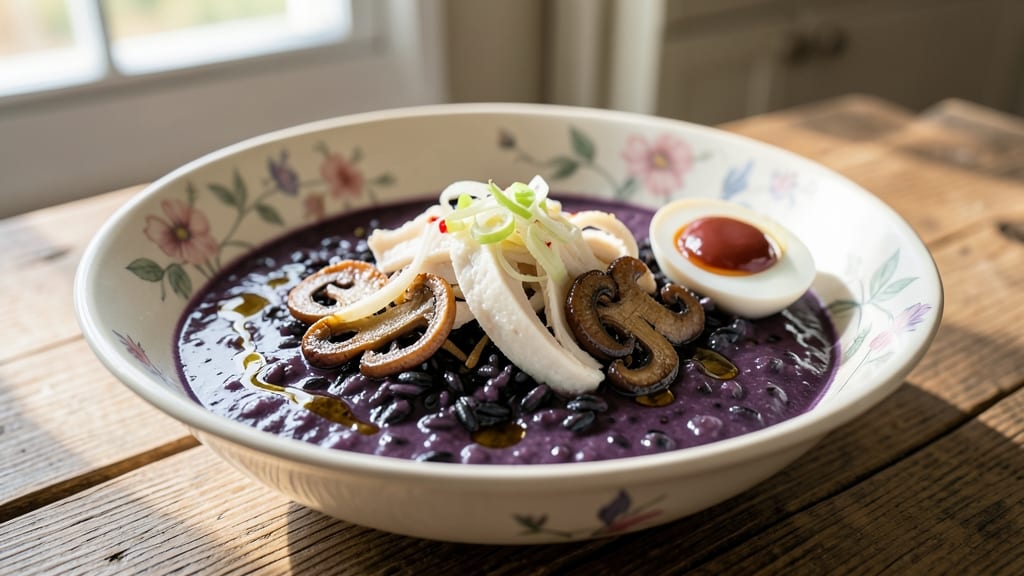
This black rice congee recipe delivers a luxurious porridge with deep umami flavor and silky black grains that transform simple ingredients into a nourishing masterpiece.
The secret lies in soaking black rice overnight to soften its dense texture, then simmering it into a velvety broth that balances earthy richness with subtle sweetness.
Whether you follow traditional Chinese methods or adapt Thai-style variations with coconut milk, the result is a comforting dish that’s as versatile as it is elegant—perfect for breakfast, recovery meals, or light dinners.
What sets this recipe apart is its ability to adapt to any preference: keep it vegetarian with ginger, scallions, and century egg, or add protein like shredded chicken or tofu for a heartier version.
The porridge’s texture can be adjusted from thin and drinkable to thick and spoonable, ensuring every bowl meets your needs. With just a few key ingredients and patience, you’ll create a dish that’s both deeply satisfying and effortlessly refined.
Ingredients for black rice congee
Transform simple pantry staples into velvety black rice congee with deep umami and silky texture.
| Ingredient | Amount | Notes |
|---|---|---|
| Black Rice (Forbidden Rice) 🌾 | 1 cup | Uncooked, soaked overnight |
| Chicken Breast 🍗 | ½ lb | Boneless, skinless, shredded |
| Dried Shiitake Mushrooms 🍄 | 4 whole | Rehydrated in warm water |
| Fresh Ginger 🧄 | 1 tbsp | Finely grated, peeled |
| Scallions 🧅 | ¼ cup | Thinly sliced, white and green parts |
| Century Egg (Optional) 🥚 | 1 whole | Sliced, for umami depth |
| Light Soy Sauce 🥄 | 2 tbsp | Kikkoman preferred |
| Sesame Oil 🫒 | 1 tsp | Toasted, for aroma |
| Coconut Milk (Optional) 🥥 | ½ cup | Full-fat, for Thai variation |
| Rock Sugar or Brown Sugar 🍯 | 1 tbsp | Dissolved for subtle sweetness |
| Vegetable Oil 🫒 | 1 tbsp | High smoke point preferred |
| Salt 🧂 | ½ tsp | Diamond Crystal preferred |
| Water 💧 | 6 cups | Filtered preferred |
The black rice is non-negotiable for that signature deep purple hue and nutty flavor. Look for forbidden rice at Asian markets or specialty grocery stores like Whole Foods—it’s pricier but worth it. Soak it overnight to soften the dense grains, which is crucial for that signature congee texture. Dried shiitake mushrooms from bulk bins at Trader Joe's or H Mart add earthy depth; rehydrate them in warm water to preserve their umami punch. For the ginger, fresh is essential—the dried version lacks the bright, zesty kick this dish needs.
No chicken breast? Shredded tofu or leftover rotisserie chicken work beautifully for a vegetarian or protein-flexible version. Century egg is optional but adds luxurious texture—substitute with extra soy sauce and a dash of vinegar if unavailable. The light soy sauce should be Kikkoman for that classic umami balance, but any high-quality brand will do. For the Thai-inspired variation, coconut milk from a can (like Thai Kitchen brand) blends seamlessly without overpowering the delicate broth. If you’re adjusting sweetness, rock sugar dissolves more elegantly than granulated, but brown sugar works in a pinch.
Prep the rice and mushrooms ahead to save time—soaking overnight and rehydrating mushrooms in advance cuts cooking time dramatically. Store leftovers in airtight containers for up to 4 days, though the texture thickens further overnight, which many find preferable. For reheating, low heat is key—microwave in short bursts or simmer gently on the stovetop to maintain that silky consistency. Freeze portions in ice cube trays for quick single-serving meals later.
Why You'll Love This Recipe
- No-Chop Night: That dried shiitake? Just soak it overnight—no prep day-of. Chicken breast shreds itself after simmering, and the black rice? Toss it in raw, then stir once. Honestly, I’ve made this while scrolling through my phone.
- Earthy Magic: The forbidden rice turns that milky, velvety porridge an inky purple—like a secret’s been spilled. Ginger and shiitake add this deep, almost smoky warmth, while the scallions cut through like a bright whisper. Not fancy, but ridiculously good.
- Leftovers for Days: This stuff only gets better reheated. I make a big batch Sunday, and by Wednesday, the rice has softened into pure comfort. Add a fried egg on top? Instant office lunch or post-work crutch. (Yes, even on a Tuesday night.)
- Budget Luxury: Black rice might sound exotic, but a cup lasts ages. Chicken breast stretches across three servings, and those dried mushrooms? A $3 bag turns into flavor gold. It’s the kind of meal that feels special without breaking the bank—or my willpower.
Step-by-step instructions for black rice congee
Transform forbidden rice into a velvety porridge with deep umami richness through precise technique.
Prepare the Black Rice Base
Begin by rinsing the 1 cup black rice (forbidden rice) thoroughly under cold water until the water runs clear. This removes excess starch that would otherwise make your congee gummy. Soak the rice in 6 cups water for at least 8 hours or overnight at room temperature. The rice should absorb water and nearly triple in volume.
After soaking, drain the rice completely using a fine-mesh strainer. Transfer it to a heavy-bottomed pot—this prevents scorching. Add 6 cups fresh water (the same amount used for soaking) and bring to a boil over high heat. Once boiling, immediately reduce to low heat and stir occasionally to prevent sticking. The rice will simmer for 30-40 minutes until it breaks down into a thick, creamy slurry with no whole grains remaining.
Build Umami Layers with Protein and Mushrooms
While the rice cooks, prepare the 0.5 lb chicken breast by shredding it into thin, bite-sized pieces. Set aside. For the 4 whole dried shiitake mushrooms, place them in a heatproof bowl and cover with hot (not boiling) water. Let soak for 20 minutes until pliable, then drain and finely chop the rehydrated mushrooms.
Once the rice has thickened into a porridge, add the shredded chicken, chopped mushrooms, and 1 tbsp finely grated fresh ginger. Stir gently to combine. The mixture should remain thick but still spoonable. If it becomes too stiff, add ½ cup hot water at a time until you reach a pudding-like consistency—this is crucial for the perfect congee texture.
Season and Finish with Depth of Flavor
In a small saucepan, combine 2 tbsp light soy sauce, 1 tbsp rock sugar or brown sugar (dissolved in 2 tablespoons water), and 0.5 tsp salt. Simmer for 2 minutes until the sugar fully dissolves. Stir this seasoning mixture into the congee along with 1 tsp toasted sesame oil and 0.25 cup thinly sliced scallions. The sesame oil should perfume the air immediately—this is your signal that the aromatics are properly incorporated.
For an optional but recommended depth, add 1 whole sliced century egg (if using) and 0.5 cup coconut milk (if desired) at this stage. The century egg adds a creamy, briny contrast to the earthy black rice, while the coconut milk introduces a subtle sweetness that balances the umami. Stir gently to avoid breaking the delicate century egg slices.
Rest and Serve for Optimal Texture
Remove the congee from heat and let it rest, covered, for 10 minutes. This resting period allows the starches to fully gelatinize, resulting in a silky, almost custard-like texture. The congee should be thick enough to hold its shape when spooned but still smooth enough to coat the back of a spoon.
Serve immediately in deep bowls, garnished with additional scallions and a drizzle of sesame oil. The contrast between the deep black porridge and the pale toppings creates a visually striking dish. Each spoonful should deliver a harmonious blend of earthy black rice, savory chicken and mushrooms, and subtle sweet-salty balance—the hallmark of a well-executed congee.
Pro Tips For Making Black Rice Congee
- SOAK THE BLACK RICE: Black rice needs a good 4+ hour soak—overnight if possible—to break down properly. I learned this the hard way when my congee turned out grainy and underwhelming; the starch just doesn’t release without proper hydration. Trust me, the extra time makes all the difference in texture.
- SIMMER LOW AND SLOW: Once the congee starts thickening, drop the heat to the lowest setting you can tolerate. I used to rush it, and the rice would either burn or turn mushy. A gentle simmer for at least 45 minutes after boiling is non-negotiable—this is where the deep, nutty flavor develops.
- REHYDRATE THE MUSHROOMS: Dried shiitakes soak up water like sponges, but don’t drain them completely before adding to the pot. Leave them slightly damp—this keeps their texture intact and prevents them from turning rubbery. Toss them in early and let them simmer with the rice.
- SHRED CHICKEN IN HOT BROTH: Pull the chicken from the broth when it’s just done, then shock it in ice water for 2 minutes before shredding. This makes slicing clean and easy, and the hot broth keeps the strands tender. Cold chicken tears like paper; hot chicken shreds like it’s supposed to.
Dietary considerations for this black rice congee
Vegetarian Adaptations
Skip the chicken entirely and use 1 cup firm tofu, pressed and cubed, for a protein-rich vegetarian version. Pan-fry the tofu in 1 tbsp vegetable oil until golden before adding it to the congee.
For extra depth, stir in 1 tbsp miso paste during the final seasoning step—it adds a fermented umami that mimics the chicken's savory profile. 🌱
Gluten-Free Options
Replace the light soy sauce with tamari or coconut aminos to eliminate gluten entirely. Both provide the same salty depth without the wheat. For the Thai-inspired variation, use coconut milk> from a can labeled gluten-free, like Thai Kitchen brand.
Always check labels on dried mushrooms and broths if using them as well.
Low-Sodium Adjustments
Cut sodium by reducing the light soy sauce> to just 1 tbsp and omitting added salt entirely. Boost flavor with 1 tsp fish sauce> (if not avoiding seafood) or 1 tbsp rice vinegar> for acidity.
For a completely salt-free version, use kelp flakes> (½ tsp) to add mineral depth instead.
Sweetness Control
For those avoiding refined sugar, swap the rock sugar> with date paste> (1 tbsp) or monk fruit sweetener> dissolved in water. If you prefer natural sweetness, add ½ cup mashed ripe banana> during the final resting period—the fruit's creaminess complements the porridge beautifully.
Nut-Free Considerations
Sesame oil is the primary nut-based ingredient, so omit it entirely if avoiding nuts. Replace its aroma with 1 tsp toasted sesame seeds> sprinkled on top or ½ tsp smoked paprika> for a different earthy note.
For the Thai variation, use coconut milk> from a nut-free brand to maintain creaminess without cross-contamination risks.
Nutrition facts
Frequently asked questions
Why does black rice congee have a deeper color than regular rice porridge?
Black rice (forbidden rice) contains high levels of anthocyanins, the same antioxidants that give blueberries their color. These pigments are heat-stable, so they deepen during cooking, creating that rich, velvety black hue. The longer you simmer it, the more vibrant the color becomes—this is why traditional versions often have a striking contrast with toppings like century egg or scallions.
Can I make black rice congee without soaking the rice overnight?
Technically yes, but the texture won't be as silky. Black rice has a tough outer layer that requires 8+ hours of soaking to soften properly. If you're short on time, soak it for 4 hours minimum and use a heavy pot with frequent stirring to prevent burning. The result will be slightly chewier but still delicious. For best results, plan ahead!
How do I adjust the thickness of the congee?
Start with 6 cups water for 1 cup soaked black rice, then taste-test as it cooks. For a thinner, drinkable version (like Chinese-style), add ½ cup hot water at a time until it reaches your desired consistency. For a thicker, spoonable texture (like Thai-style), reduce water by ½ cup and simmer longer. The key is patience—congee thickens as it rests!
What's the best way to reheat leftover black rice congee?
Never microwave it directly—this makes it gummy. Instead, transfer to a saucepan with 2-3 tbsp water and heat on low-medium over medium-low heat, stirring constantly for 3-5 minutes. The gentle heat prevents lumps and maintains that silky texture. For extra creaminess, add a splash of coconut milk or chicken broth while reheating.
Can I substitute black rice with regular rice?
While you can use white or brown rice, you'll lose the signature nutty, earthy flavor and deep color. Black rice's unique anthocyanins give it a distinctive taste and higher antioxidant content. If you're avoiding black rice, try wild rice blend (for a similar chewy texture) or black glutinous rice (for extra stickiness). The flavor won't be identical, but it'll still be delicious!