
Main Courses
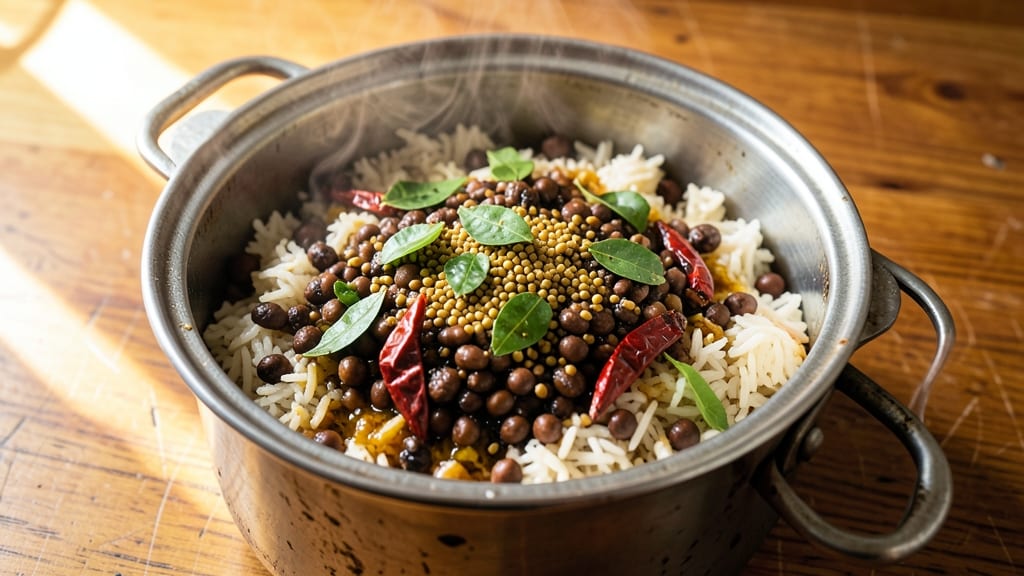
This Black Urad Dal Rice recipe in Tamil delivers the heart of South Indian home cooking—Paruppu Kanji—where nutty urad dal and fragrant rice create a protein-rich, vegan masterpiece.
The secret lies in slow-cooked dal infused with tempered spices that transform simple ingredients into a symphony of flavors, perfect for lunch or dinner.
The recipe begins with rice and dal simmered together, absorbing flavors as they cook to a perfect, creamy consistency. A tempering of mustard seeds, curry leaves, and asafoetida adds depth, while coconut and green chilies brighten every bite.
This one-pot wonder is not just a meal—it’s a tradition, packed with iron, fiber, and the soul of Tamil Nadu’s kitchen.
Ingredients for black urad dal rice recipe in tamil
Nutty urad dal and fragrant rice form the soul of this South Indian one-pot masterpiece.
| Ingredient | Amount | Notes |
|---|---|---|
| Black Urad Dal (Whole) 🌾 | 1 cup | Unsplit, washed thoroughly |
| Long-Grain White Rice 🍚 | 1 cup | Uncooked, medium grain preferred |
| Fresh Curry Leaves 🌿 | ¼ cup | Packed, stems removed |
| Mustard Seeds 🌶️ | 1 tbsp | Brown or yellow variety |
| Dried Red Chilies 🌶️ | 4 whole | Kashmiri or red chili, split |
| Asafoetida (Hing) 🧂 | ⅛ tsp | Pure powdered form |
| Fresh Coconut (Grated) 🥥 | ½ cup | Freshly grated, no water |
| Green Chilies 🌶️ | 2 whole | Fresh, slit lengthwise |
| Ginger (Grated) 🧄 | ½ tbsp | Freshly grated, no skin |
| Cumin Seeds 🌿 | ½ tsp | Toasted lightly for aroma |
| Turmeric Powder 🌿 | ¼ tsp | Freshly ground preferred |
| Garam Masala Powder 🌶️ | ½ tsp | Homemade or store-bought |
| Salt 🧂 | 1 ½ tsp | Adjust to taste |
| Coconut Oil 🫒 | 2 tbsp | For tempering |
| Water 💧 | 4 cups | Filtered or boiled |
The black urad dal is the heart of this dish—whole urad dal from a reputable Indian grocery store like Patel Brothers or Apna Bazaar delivers the best texture and flavor. Look for dal that’s uniformly black and free of impurities. The rice should be medium-grain and unbroken for the perfect consistency. Fresh curry leaves are non-negotiable; dried leaves lose their aromatic punch. If you can’t find fresh, freeze dried leaves work as a compromise, but toast them lightly before using. For the coconut, freshly grated is ideal, but frozen grated coconut (thawed and drained) works in a pinch. The green chilies should be fresh, vibrant, and slightly firm to the touch.
No fresh curry leaves? Dried curry leaves at half the amount can substitute, but toast them first to revive their flavor. Mustard seeds too strong? Swap for equal parts cumin seeds. The asafoetida is crucial for that authentic South Indian aroma—never skip it. For the coconut, if you’ve got coconut milk, you can use 0.25 cup instead of grated, but the texture will differ slightly. The ginger and garlic can be minced instead of grated if you prefer, but freshly grated delivers more depth. If you’re short on time, pre-minced ginger from a jar works, though it lacks freshness.
This dish tastes even better the next day as flavors meld. Store in an airtight container in the fridge for up to 4 days, though the dal may thicken slightly—just stir in a splash of water to loosen. For longer storage, freeze portions for up to 3 months. The tempering spices (mustard seeds, curry leaves, etc.) can be pre-mixed and stored in a small jar for up to 2 weeks to save time during cooking. Always reheat gently on low heat to preserve the dal’s creamy texture.
Why You'll Love This Recipe
- No-Soaking Needed: The whole black urad dal cooks in 20 minutes—no pre-soaking, no fuss. Just toss the dal into boiling water with a pinch of salt, and let it puff up like magic while you prep the rice.
- Temple of Spice: That first crackle of mustard seeds and curry leaves in hot oil? Pure theater. The dried red chilies add a slow-building warmth that lingers, while the dal’s earthy bite cuts through the rice’s mildness—like a perfect balance of fire and comfort.
- Leftover Legend: This dish tastes even better the second day. Reheat with a splash of water, and the dal softens just enough to become creamy. Pack it for lunches or freeze portions—it’s my go-to when I’m too tired to cook.
- Pocketbook Hero: Black urad dal is cheaper than lentil mixes, and rice stretches it into meals for days. Honestly, I’ve fed a family of four for under $5 with this—plus, the leftovers keep my wallet happy as much as my stomach.
Step-by-step instructions for black urad dal rice in Tamil style
This one-pot wonder delivers authentic South Indian flavors with minimal effort.
Pressure Cook the Dal and Rice Together
In a pressure cooker, combine the 1 cup of washed black urad dal (whole) and 1 cup of long-grain white rice. Add the 4 cups of filtered water, 1.5 teaspoons of salt, and 0.25 teaspoon of turmeric powder. Seal the cooker and cook on medium-high heat for 12-15 minutes until the pressure builds and the contents are three whistles clear.
I always check the water level before sealing—it should cover the ingredients by about 1 inch. The dal should become soft and mushy while the rice cooks through. Let the pressure release naturally for 5 minutes before opening the lid to prevent steam burns. Once open, give the mixture a gentle stir and set aside.
Prepare the Tempering (Tadka)
In a separate heavy-bottomed pan, heat the 2 tablespoons of coconut oil over medium heat. Add the 0.5 teaspoon of toasted cumin seeds and let them sizzle for 10 seconds until fragrant. Add the 1 tablespoon of mustard seeds and cook until they pop audibly.
Next, add the 4 whole dried red chilies and 2 whole slit green chilies. Let them dance in the oil for 20 seconds until the chilies turn vibrant red. This is where the magic happens—the spices release their essential oils, creating the aromatic base for our dish. Add the 0.125 teaspoon of asafoetida (hing) and stir for 5 seconds to bloom its distinct aroma.
Incorporate Aromatics and Coconut
Add the 0.5 tablespoon of freshly grated ginger and 0.25 cup of packed fresh curry leaves to the tempering. Sauté for 30 seconds until the curry leaves turn crisp and the ginger releases its pungent aroma. Pour this entire tempering over the cooked dal-rice mixture in the pressure cooker.
Stir gently to combine, then add the 0.5 cup of freshly grated coconut and 0.5 teaspoon of garam masala powder. The coconut should melt slightly into the mixture, creating a creamy texture. Taste and adjust the salt if needed—this is where you fine-tune the balance of flavors. The dish should have a perfect harmony of spice, coconut sweetness, and umami from the dal.
Simmer and Serve with Traditional Accompaniments
Transfer the entire mixture to a clean pot and cook on medium-low heat for 5-7 minutes, stirring occasionally. This final simmer allows all the flavors to meld together perfectly. The rice should be tender with just the right amount of moisture, while the dal adds its signature creaminess.
Serve immediately with steamed appalam (rice dumplings) or tamarind rice on the side. The contrast of textures and temperatures makes this dish truly special. For an authentic Tamil experience, pair with a side of sambar and buttermilk. The black urad dal rice keeps well in the refrigerator for 2 days, though it's best enjoyed fresh when the spices are most aromatic.
Pro Tips For Making Black Urad Dal Rice Recipe In Tamil
- Temper the Mustard: Heat the mustard seeds in a dry pan first—just until they sizzle and release their aroma. Cold seeds burn easily and taste bitter, which ruins the temper’s balance. I learned this the hard way after a batch tasted like charred popcorn.
- Soak Dal for 2 Hours: Skip the 4-hour soak if you’re short on time, but at least 2 hours makes a real difference. The dal softens faster and absorbs flavors better, especially when simmered with rice. (Yes, even if you’re impatient like me.)
- Split Rice Before Cooking: Break the rice into smaller pieces before adding it to the dal—this guarantees even cooking and prevents mushy bits. My grandmother swore by this, and she was right: the texture stays firm and fluffy.
- Add Curry Leaves Late: Toss in the curry leaves only in the last 2 minutes of cooking. They burn fast and turn bitter, which kills the fresh, citrusy aroma that’s the soul of this dish. (Your future self will thank you.)
Best sauces and condiments for this recipe
Tempering Essentials
The tempering (tadka) is where the magic happens—mustard seeds, curry leaves, and asafoetida create the aromatic base. I always start with 2 tbsp coconut oil heated to medium heat, then add 1 tbsp mustard seeds until they pop.
For extra depth, toast 0.5 tsp cumin seeds first—they add a warm, earthy note that complements the dal’s nuttiness. 🌿
Don’t skip the asafoetida (hing)—its umami punch is essential. Add it last in the tempering for just 5 seconds to bloom its flavor without overpowering. If you’re sensitive to strong flavors, reduce the mustard seeds by half and increase cumin to 1 tsp for a milder profile.
Coconut Variations
Freshly grated coconut is ideal, but frozen works in a pinch—just thaw and drain excess water. For a creamy texture, blend 0.25 cup coconut milk with 0.25 cup grated coconut before adding to the dal. This shortcut still delivers that rich, velvety finish. 🥥
Want extra richness? Add 1 tbsp roasted coconut powder (store-bought or homemade) to the tempering. It caramelizes slightly, adding a toasty depth that pairs beautifully with the dal’s earthiness. Adjust salt after adding coconut—its natural sweetness can mellow the spices.
Spice Level Control
Adjust heat by modifying the chilies: 2 green chilies give a mild kick, while 1 dried red chili + 1 green adds medium heat. For spice lovers, add 0.25 tsp red chili powder directly to the dal after tempering. Always taste before serving—South Indian dishes balance heat with coconut’s sweetness.
For a tangy twist, finish with 1 tsp tamarind pulp or a squeeze of lemon. The acidity cuts through the richness, brightening every bite. Store-bought tamarind paste works, but fresh is superior—just dissolve 0.5 tsp tamarind pulp in 2 tbsp warm water before adding.
Garnish Ideas
Fresh curry leaves sprinkled on top add a fragrant finish, while toasted coconut flakes bring crunch. I love a drizzle of ginger-turmeric oil (heat 1 tbsp oil with 0.5 tsp grated ginger and 0.25 tsp turmeric, then cool) for extra aroma. 🌟
For a smoky touch, garnish with 0.5 tsp chaat masala—its tangy, spiced notes elevate the dish. Serve with buttermilk on the side to cool the palate and balance the spices. The contrast of temperatures makes each bite unforgettable.
Nutrition facts
Frequently asked questions
Can I use split urad dal instead of whole?
Whole black urad dal is traditional for this recipe, but you can use split urad dal (toor dal) in a pinch. The texture will be slightly softer, and cooking time reduces to 8-10 minutes in a pressure cooker. For best results, soak split dal for 30 minutes before cooking to ensure proper softening. The flavor remains delicious, though the creaminess differs slightly.
What's the secret to getting the perfect creamy texture?
The creamy texture comes from three key steps: cooking the dal and rice together, adding freshly grated coconut, and simmering gently after tempering. For extra richness, blend 0.25 cup coconut milk with the grated coconut before adding. Never overcook the dal—it should be soft but not mushy. The final 5-7 minute simmer lets flavors meld without breaking the dal's structure.
Can I make this recipe without coconut?
Yes, but the dish will lose its signature South Indian flavor profile. Replace coconut with 0.5 cup tomato puree or 0.25 cup yogurt for creaminess. For a spicier version, add 0.5 tsp coriander powder and 0.25 tsp garam masala directly to the dal. The dish will still be delicious but won't have the same balanced sweet-spicy contrast.
How do I adjust this for a pressure cooker vs. instant pot?
For a pressure cooker: Use 12-15 minutes on medium-high heat. For an Instant Pot: Set to high pressure for 8 minutes, then natural release for 5 minutes. The cooking times differ because Instant Pots build pressure faster. Always check rice for doneness—it should be tender but not mushy. The dal should be soft and creamy in both methods.
What's the best way to reheat leftovers?
Reheat gently on low heat with 2-3 tablespoons of water to prevent drying. Stir occasionally and cover with a lid. For microwave reheating, use 30-second intervals on medium power, stirring between each interval. Never reheat to a boiling point—this can make the dal gummy. The dish tastes even better the next day as flavors meld!