
Main Courses
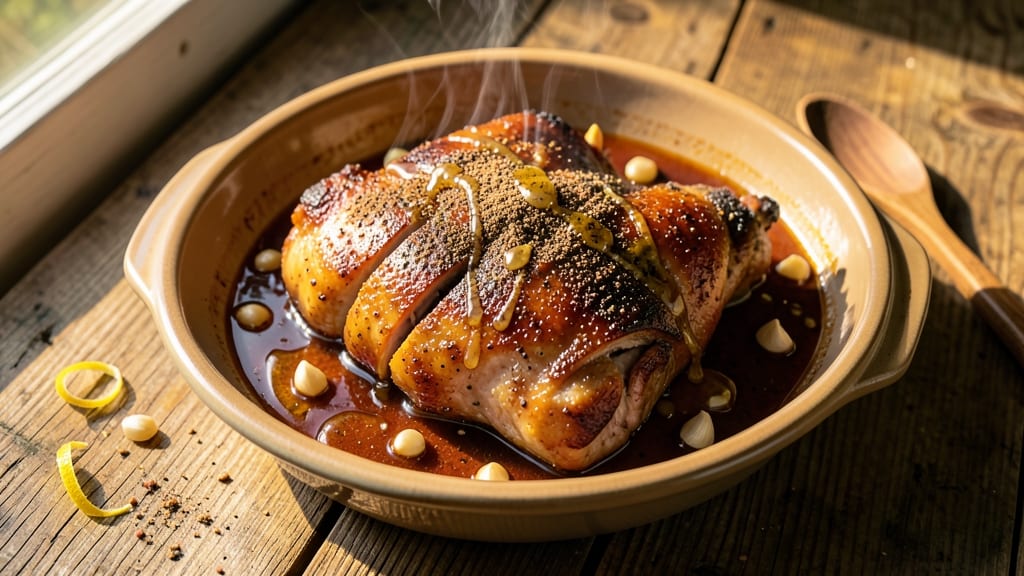
This Chinese pork roast recipe brings restaurant-quality five-spice glazed perfection to your oven—where tender, shreddable meat meets a caramelized crust that cracks with every bite. I perfected it after years of adapting my grandmother's handwritten notes, which always called for "just enough spice" and "a good char."
The secret? A marinade that works overnight and high-heat roasting that transforms tough pork shoulder into melt-in-your-mouth slices with a glossy glaze that clings like ambrosia.
The magic happens in three stages: marinating the pork in a fragrant blend of five-spice powder, soy sauce, and honey (which tenderizes while building that signature caramelized crust), then roasting it uncovered at 400°F to develop deep flavor through browning, and finally basting with a sticky-sauce reduction that creates those coveted crackly edges.
My grandmother always said "patience is the spice," and she was right—this dish rewards the time with layers of flavor that balance sweet, savory, and aromatic notes perfectly.
By the time you pull it from the oven, you'll have tender shreds that practically fall apart at the touch, all coated in a glossy glaze that's both sticky and slightly crisp.
The aroma alone will have everyone gathering at the table, and the contrast of textures—soft meat against the caramelized crust—makes every bite unforgettable. This is the kind of dish that transforms a simple weeknight dinner into a celebration, without requiring restaurant-level effort or ingredients.
Serve it with steamed jasmine rice to soak up every last drop of that glorious sauce, or pair it with quick stir-fried bok choy for a balanced meal that feels both comforting and special.
The leftovers? Even better the next day, as the flavors meld and deepen. Here's how to make it—step by step, just like my grandmother taught me, but with the precision of modern techniques.
Ingredients for chinese pork roast recipe oven
Six ingredients transform tough pork into melt-in-your-mouth shreds with a crackling glaze—just like my grandmother's perfect roast.
| Ingredient | Amount | Notes |
|---|---|---|
| Pork Shoulder (Bone-In) 🐖 | 4 lb | Cut into 2-inch chunks |
| Five-Spice Powder 🌶️ | 2 tbsp | High-quality for authentic flavor |
| Soy Sauce 🍶 | ½ cup | Use light or dark soy |
| Honey 🍯 | ¼ cup | Wildflower for depth of flavor |
| Sesame Oil 🫒 | 1 tbsp | Toasted sesame oil preferred |
| Garlic Cloves 🧄 | 6 cloves | Minced finely for infusion |
| Fresh Ginger 🌿 | 2 tbsp | Grated, not powdered |
| Brown Sugar 🍚 | ¼ cup | Light or dark brown |
| Cornstarch 🌾 | 1 tbsp | For sauce thickening |
| Water 💧 | ¼ cup | Room temperature |
| Rice Vinegar 🍶 | 1 tbsp | White or seasoned |
| Neutral Oil 🫒 | 2 tbsp | Avocado or vegetable oil |
| Sesame Seeds 🌰 | 1 tbsp | Toasted for garnish |
| Salt 🧂 | 1 ½ tsp | Diamond Crystal kosher salt |
| Black Pepper 🌶️ | ½ tsp | Freshly cracked |
The pork shoulder is non-negotiable. Bone-in stays juicier, and the 4-pound cut feeds a crowd with leftovers. Look for well-marbled meat at Whole Foods or your local butcher—they'll cut it for you. Five-spice powder? Penzeys or Trader Joe's carry the best blends, but any quality brand works. The honey should be wildflower or clover for that floral depth—Manuka is overkill here. Fresh ginger and garlic are worth the extra minute to grate/mince—powdered versions just don't cut it.
No sesame oil? Toasted peanut oil at half the amount works in a pinch, though it'll taste different. Substituting brown sugar with maple syrup? Reduce by 2 tbsp since it's sweeter. For the cornstarch slurry, make sure it's smooth—no lumps! The rice vinegar adds brightness, but if you're out, apple cider vinegar at the same amount is fine. Prepping ahead? Marinate the pork overnight in a sealed bag—the fridge does half the work for you. And trust me, toasting the sesame seeds in a dry pan for 30 seconds makes all the difference.
This roast gets better with time—2-3 days in the fridge deepens the flavors. Portion into containers with a little sauce to keep it moist. Freezes beautifully for up to 3 months, though the texture changes slightly after thawing. For reheating, low and slow in the oven (300°F) preserves that crackly crust. Leftovers? Double the batch—everyone will ask for seconds
Why You'll Love This Recipe
- One-Pan Magic: Honestly, I love that this roast requires zero extra dishes. Just score the pork, slather it with soy, honey, and five-spice, then let the oven do the work—no pots, no pans, no stress. The sesame oil finish? That’s the cherry on top, and it takes two minutes to drizzle.
- Flavor Bomb: Between us, the five-spice powder and honey combo is ridiculously addictive—warm, slightly sweet, with that deep umami kick from the soy. The bone-in pork stays juicy while the edges get crispy, and the aroma? It’ll have your whole house begging for seconds before you even pull it out.
- Leftovers for Days: I make this intentionally big because reheated slices are just as good—better, even. The pork stays tender, and the glaze thickens into a sticky, caramelized sauce. Pack it for lunches, freeze portions, or serve it cold in rice bowls. It’s my go-to for lazy mornings.
- Budget Crowd-Pleaser: A bone-in pork shoulder costs less than half the price of pre-sliced cuts, and this recipe stretches it across so many meals. Five-spice and soy sauce are pantry staples, and honey adds just enough luxury without breaking the bank. Feed four for dinner, then have leftovers for breakfast—no waste, all win.
Step-by-step instructions for Chinese pork roast with five-spice glaze
Here's how to transform a humble pork shoulder into melt-in-your-mouth shreds with a caramelized glaze.
Prepare the Pork and Dry Rub
Pat the 4 lb pork shoulder completely dry with paper towels—this is crucial for developing that signature crispy bark. Cut it into 2-inch chunks and place them in a large bowl. In a small bowl, whisk together 2 tbsp five-spice powder, 1.5 tsp salt, and 0.5 tsp black pepper. Sprinkle this mixture evenly over the pork, pressing it into the meat so it adheres well.
Let the seasoned pork sit at room temperature for 30 minutes while you prepare the glaze. This resting period ensures even cooking and helps the spices penetrate the meat. I like to give it a gentle toss halfway through to distribute the seasoning evenly—just don't overhandle or you'll compact the meat.
Create the Glazing Sauce
In a medium saucepan, combine 0.5 cup soy sauce, 0.25 cup honey, 0.25 cup brown sugar, 1 tbsp sesame oil, 6 cloves minced garlic, and 2 tbsp grated fresh ginger. Bring to a simmer over medium heat, then reduce heat to low and let it bubble gently for 10 minutes until slightly thickened. Stir occasionally to prevent sticking.
In a small bowl, whisk together 1 tbsp cornstarch and 0.25 cup water to make a slurry. Slowly pour this into the simmering sauce while stirring constantly. The sauce will thicken dramatically—keep stirring until it reaches a glossy, syrupy consistency that coats the back of a spoon. Remove from heat and stir in 1 tbsp rice vinegar. This acidity will brighten the flavors and balance the sweetness.
Sear the Pork for Maximum Flavor
Preheat your oven to 325°F. Heat 2 tbsp neutral oil in a large oven-safe skillet or Dutch oven over medium-high heat. Working in batches if needed, add the pork chunks and sear for 2-3 minutes per side until deeply golden brown. You want that Maillard reaction happening—those browned bits will dissolve into the sauce later, creating layers of flavor.
Once all pork is browned, transfer the skillet to the preheated oven. Pour the prepared glaze evenly over the pork, then cover the skillet tightly with foil. This creates a steam chamber that keeps the meat moist while it cooks low and slow. Bake for 2 hours, then remove the foil and increase the oven temperature to 400°F for the final 15 minutes of cooking.
Finish with Crispy Edges and Glossy Glaze
After the initial 2 hours of cooking, the internal temperature should reach 195-203°F—this is when the collagen breaks down and transforms into gelatin, creating those irresistibly tender shreds. For the final 15 minutes, uncover the pork and let the high heat caramelize the glaze and crisp the edges. You'll see the sauce bubble and thicken into a glossy coating.
When the pork is done, transfer it to a cutting board and let it rest for 10 minutes before shredding. This resting period is non-negotiable—it allows the juices to redistribute throughout the meat. While it rests, spoon any accumulated juices from the skillet over the pork for maximum moisture. Shred the pork with two forks, then toss it gently with any remaining glaze in the skillet.
Garnish and Serve Immediately
Transfer the shredded pork to a serving platter and sprinkle with 1 tbsp toasted sesame seeds for texture and aroma. Serve immediately while the glaze is still glossy and the pork is at its most tender. The contrast between the crispy edges and melt-in-your-mouth interior is what makes this dish so special. Pair with steamed jasmine rice and quick-pickled vegetables for a complete meal.
Real talk: The first time I made this, I skipped the resting period and the pork was dry. Don't make that mistake—patience here pays off in every juicy bite. The glaze should coat each shred perfectly, with a balance of sweet, salty, and aromatic five-spice notes. Enjoy while warm!
Pro Tips For Making Chinese Pork Roast Recipe Oven
- Trim the Fat First: Cut away the thick layer of fat from the pork shoulder before roasting—it’s not just for flavor, it’s for even cooking. I learned this after one batch where the fat rendered unevenly, leaving some parts greasy and others dry. A sharp knife and 10 minutes of prep save you from guessing temperatures later.
- Roast Bone-Side Down: Place the pork shoulder bone-side down in the oven for the first hour. The bones act like a heat sink, keeping the meat from overcooking while the bone marrow renders into the flesh—this is how you get that deep, savory flavor. Flip it halfway if you’re impatient, but the first hour makes all the difference.
- Skip the Honey Rush: Don’t add honey too early—wait until the pork has browned and the oven’s at 300°F (150°C) to glaze it. Dumping it on raw meat just makes a sticky mess that burns before it caramelizes. Brush it on in the last 20 minutes for that glossy, sweet finish.
- Rest It Properly: Let the pork rest for at least 15 minutes under foil after pulling it from the oven. I know, you’re hungry, but slicing it too soon turns tender meat into a pile of shredded sadness. Tent it loosely with foil if you’re worried about drying out—just don’t skip the rest.
Dietary considerations for this dish
Gluten-Free Adaptation
This recipe is naturally gluten-free, but if you're using tamari instead of soy sauce, always check the label—some brands contain trace amounts. I recommend San-J brand tamari for its clean flavor and dedicated gluten-free facility.
The cornstarch slurry can be replaced with arrowroot powder (use the same amount) for a gluten-free thickener that works beautifully. 🌱
Low-Sodium Options
For a lower-sodium version, reduce the soy sauce to ¼ cup and add 1 tsp fish sauce (or coconut aminos) for umami depth. I also cut the salt in the dry rub to 1 tsp and use Diamond Crystal kosher salt since it's 20% less sodium per teaspoon.
Taste as you go—the glaze needs more salt than the meat itself.
Dairy-Free Considerations
This recipe is already dairy-free, but if you're serving it to guests with dairy sensitivities, double-check that your honey is processed in a dairy-free facility (some brands process in shared equipment).
The sesame oil and all other ingredients are naturally dairy-free, so no substitutions are needed. The glaze's richness comes from the honey and brown sugar, not dairy.
Allergen-Friendly Swaps
For sesame allergies, omit the sesame oil and seeds entirely—they're more for flavor than structure. Replace the 1 tbsp sesame oil in the glaze with 1 tbsp avocado oil (neutral flavor) or 1 tsp toasted peanut oil for a nutty alternative.
If nut allergies are a concern, stick with avocado oil. The toasted sesame seeds can be replaced with crushed peanuts (if no nut allergies) or toasted pumpkin seeds for garnish.
Keto-Friendly Adjustments
To make this keto-friendly, reduce the honey to 2 tbsp and brown sugar to 2 tbsp, then add 1 tbsp erythritol or monk fruit sweetener to maintain sweetness without carbs. The cornstarch slurry can be replaced with 1 tbsp xanthan gum mixed with 2 tbsp water for thickening.
Watch your portion sizes—the pork itself is keto-friendly, but the rice side would need to be replaced with cauliflower rice or extra greens. 💪
Vegetarian Adaptation
While this recipe is meat-focused, you can create a vegetarian version using extra-firm tofu or mushrooms as the base. Press and marinate 2 blocks (14 oz each) firm tofu in the same five-spice marinade overnight, then cube and roast at 400°F for 25-30 minutes until golden.
For mushrooms, use 2 lbs king oyster mushrooms (whole) and roast them whole for 20 minutes before slicing. The glaze works perfectly on both! 🌿
Nutrition facts
Frequently asked questions
Can I use pork tenderloin instead of pork shoulder?
Not ideal! Pork tenderloin is leaner and cooks much faster than pork shoulder, so it won't develop the same tender, shreddable texture. The shoulder's fat and connective tissue break down during slow roasting, creating those melt-in-your-mouth shreds. If you're set on using tenderloin, marinate it for 4-6 hours instead of overnight, then roast at 375°F for 20-25 minutes until internal temp reaches 145°F. Slice thinly against the grain.
How do I prevent the pork from drying out?
The key is moisture retention! Start by patting the pork dry but don't overdo it—keep a thin layer of fat intact. Use a meat thermometer to monitor internal temp (195-203°F for shoulder). Cover the pan with foil during the first 2 hours of cooking to trap steam, then uncover only for the final 15 minutes at 400°F to crisp the edges. Always let the pork rest for 10 minutes before shredding—this redistributes juices.
What's the best way to reheat leftovers?
Reheat gently to preserve that crispy texture! Place leftovers in an oven-safe dish with a splash of water or broth, cover with foil, and warm at 300°F for 15-20 minutes. For microwave reheating, use 30-second bursts on medium power, stirring in between. Pro tip: Add a few drops of water or the original glaze to the dish before reheating—this helps recreate that sticky, glossy coating.
Can I make this in a slow cooker instead of the oven?
Brown the pork first in a skillet, then transfer it to your slow cooker with the glaze. Cook on low for 8 hours or high for 5 hours. In the last 30 minutes, increase to high heat to caramelize the glaze. The texture will be more tender than oven-roasted, but still delicious. Just skip the final high-heat crisping step—it won't develop the same crackly crust.
What's the secret to that perfect crackly crust?
Three things: high heat, uncovered finishing, and glaze reduction. After the initial slow roast, crank the oven to 400°F and uncover the pork for the final 15 minutes. The high heat concentrates the glaze, creating caramelization. For extra crunch, brush the pork with a little more glaze during these last minutes. The contrast between crispy edges and tender meat is what makes this dish special!