
Main Courses
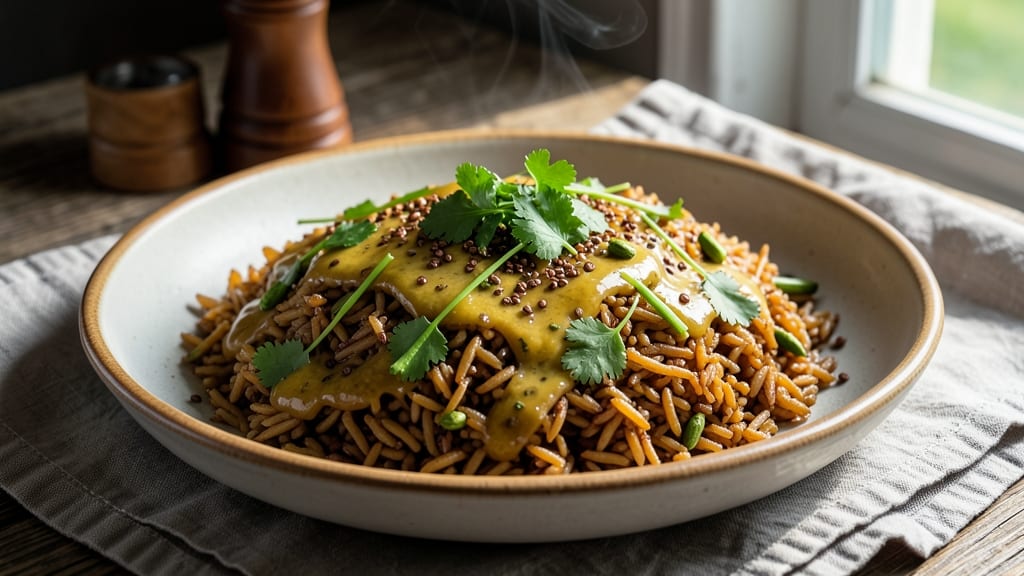
This Pakistani brown rice recipe transforms simple grains into an aromatic, spice-infused dish that's the heart of any meal. The secret lies in tempering whole spices like cumin and cardamom in ghee, creating layers of warmth that infuse the rice perfectly.
I've perfected this method over years of cooking traditional Pakistani feasts, where the rice isn't just a side but the star.
The key steps—proper soaking, gentle simmering with bay leaves, and finishing with fresh herbs—ensure each grain stays distinct yet infused with flavor. This version stays true to authentic techniques while being simple enough for weeknight dinners.
Serve it alongside curries or grilled meats for a complete, restaurant-quality meal that feels homemade.
Ingredients for brown rice pakistani
Authentic Pakistani spices and simple grains create this fragrant, restaurant-quality rice dish.
| Ingredient | Amount | Notes |
|---|---|---|
| Long-Grain Brown Rice 🌾 | 1 ½ cups | Uncooked, rinsed thoroughly |
| Ghee 🧈 | ½ cup | Clarified butter, unsalted |
| Cumin Seeds 🌿 | 1 tbsp | Whole, toasted lightly |
| Green Cardamom Pods 🌿 | 6 whole | Lightly crushed, seeds only |
| Bay Leaves 🌿 | 2 whole | Fresh preferred, dried works |
| Fresh Cilantro 🌿 | ¼ cup | Chopped, stems removed |
| Fresh Mint Leaves 🌿 | ¼ cup | Chopped, stems removed |
| Fresh Ginger 🧅 | 1 tbsp | Finely grated, fresh root |
| Water 💧 | 3 cups | Filtered or spring water |
| Salt 🧂 | ½ tsp | Diamond Crystal kosher |
| Black Cardamom Pods 🌿 | 2 whole | Lightly crushed, optional |
| Cloves 🌿 | 2 whole | Lightly crushed, optional |
| Lemon Juice 🍋 | 1 tbsp | Freshly squeezed |
The spices are the soul of this dish—whole cumin seeds and cardamom toasted in ghee until fragrant, not burnt. Whole Foods or Indian specialty stores carry the best quality, but regular grocery stores will have cumin seeds. For cardamom, green pods are essential—black cardamom is an optional but wonderful addition. Fresh bay leaves elevate the flavor, but dried works in a pinch. The rice should be long-grain brown rice—jasmine or basmati brown if you can find it, though any brown rice will work. Toast the spices in ghee for 30 seconds max—just until aromatic, or they'll turn bitter.
No fresh herbs? Dried cilantro or mint at one-third the amount will work, but fresh is ideal. The ginger should be freshly grated—pre-grated loses potency quickly. Running short on ghee? Butter or neutral oil works, though the flavor won't be as authentic. For the water, filtered or spring water is best—tap water with strong chlorine can affect the rice texture. The lemon juice at the end brightens everything, so don't skip it. If you're feeling adventurous, add a pinch of saffron steeped in warm water for a luxurious touch.
This rice keeps beautifully—3-4 days in the fridge sealed in an airtight container, or up to 3 months frozen. For freezing, spread it on a tray first to prevent clumping. Reheat gently with a splash of water to restore moisture. I always make a double batch—one for dinner, one for leftovers. It reheats perfectly and tastes even better the next day as the flavors meld. Store the ghee separately if you're not using it all—it keeps indefinitely in a cool, dark place.
Why You'll Love This Recipe
- Foolproof Basics: I swear by this—just toast the rice, add whole spices, and let the ghee do the work. No fancy techniques, no stress. Honestly, the hardest part is remembering to stir it once.
- Warm Spice Magic: That first bite? Nutty brown rice kissed by fragrant cumin and cardamom, all tied together with rich ghee. It’s the kind of flavor that makes you pause mid-bite, like a hug in grain form.
- Weeknight Workhorse: Double the batch on Sunday—it reheats beautifully for lunches or as a side for curries. My kids even ask for it plain (yes, really), and it pairs with everything from dal to grilled meats.
- Budget Bright Spot: Brown rice is my wallet’s best friend, and this method stretches it further. A few cardamom pods and bay leaves turn simple grains into something special without breaking the bank. Leftovers? They’re just free flavor bombs later.
Step-by-step instructions for brown rice Pakistani recipe
Transform simple brown rice into a fragrant, aromatic dish with this traditional Pakistani spice infusion.
Toast the Spices for Maximum Flavor
Heat the 0.5 cup ghee in a medium saucepan over medium heat until it begins to shimmer but doesn't smoke. Add the 1 tbsp cumin seeds and toast for 30 seconds until they release their deep, nutty aroma and begin to pop.
Next, add the 6 whole green cardamom pods, 2 whole bay leaves, 2 whole black cardamom pods, and 2 whole cloves. Stir gently for 1 minute until the spices become fragrant and the ghee takes on a golden hue. This step is crucial—it develops the complex spice profile that defines Pakistani cuisine. Remove the pan from heat immediately after to prevent burning.
Infuse the Ghee with Aromatics
Return the saucepan to medium-low heat and add the 1 tbsp finely grated fresh ginger. Cook for 1 minute until the raw aroma disappears and the ginger becomes fragrant. This step ensures the ginger's pungency mellows into a warm, earthy note rather than an overpowering bite.
Now add the 1.5 cups long-grain brown rice and stir to coat each grain evenly with the spiced ghee. Cook for 2 minutes, stirring frequently, until the rice becomes translucent at the edges. This brief toasting enhances the nutty flavor of the brown rice and prevents it from becoming mushy during cooking.
Add Water and Simmer Gently
Pour in the 3 cups water and add the 0.5 tsp salt. Bring to a gentle boil, then immediately reduce heat to low and cover the saucepan with a tight-fitting lid. Let the rice simmer for 40 minutes, checking occasionally to ensure the water hasn't evaporated completely.
Here's the key: maintain a gentle simmer, not a rolling boil. Too much heat can cause the rice to cook unevenly or develop a hard exterior. If you notice the water level dropping significantly, add 1-2 tablespoons of hot water to maintain the proper ratio. The rice should be tender but still have a slight bite in the center when tested with a fork.
Finish with Fresh Herbs and Acid
Once the rice is tender, remove the saucepan from heat and let it sit covered for 5 minutes. This resting period allows the rice to absorb any remaining liquid and develop a more cohesive texture. Discard the whole bay leaves and cardamom pods—they've done their job infusing flavor.
Gently fold in the 0.25 cup chopped fresh cilantro and 0.25 cup chopped fresh mint leaves using a wooden spoon. Finish with the 1 tbsp fresh lemon juice, tossing lightly to distribute the bright acidity throughout. The lemon juice cuts through the richness of the ghee and adds a refreshing contrast to the warm spices.
Rest and Serve with Proper Texture
Transfer the rice to a serving bowl and let it rest for 10 minutes before serving. This final resting period is essential—it allows the rice to firm up slightly and develop its characteristic fluffy texture. The grains should be separate but tender, with a subtle sheen from the ghee.
Serve immediately while still warm. The dish should have a delicate balance of earthy spices, fresh herbs, and bright citrus notes. Each grain should be distinct, with a satisfying bite that gives way to a creamy interior. For best results, serve as a side to grilled meats or spiced curries, where the rice can soak up the rich flavors of the main dish.
Pro Tips For Making Brown Rice Pakistani
- TOAST THE RICE FIRST: Brown rice soaks up water like a sponge, but toasting it in ghee for 2-3 minutes first adds a nutty depth and prevents mushiness. I learned this the hard way—skipping it leads to a bland, gluey texture that even extra spices can’t fix.
- USE WHOLE CARDAMOM PODS: Cracking open green cardamom pods releases their oils too early, turning your rice into a perfumed but one-dimensional dish. Toss in 2-3 whole pods with the bay leaves—remove them after 5 minutes of cooking so the flavor infuses without overpowering.
- STEER CLEAR OF BOILING: The moment brown rice hits a rolling boil, it turns to paste. Instead, bring the water to a gentle simmer after adding rice, then reduce heat to low. This keeps the grains intact and lets the ghee’s aroma work its magic without turning the rice into porridge.
- SALT THE WATER LATE: Adding salt early makes the rice absorb it unevenly, leaving some grains bland. Wait until the rice has soaked up most of the liquid (about 10 minutes into cooking) before sprinkling in a pinch of salt. This ensures every grain gets the same flavor boost.
Storing and reheating your brown rice pakistani
Fridge Storage Secrets
Store your Pakistani brown rice in an airtight container—I use glass Pyrex with snap-on lids—for up to 4 days. The flavors actually deepen as spices meld, but keep it sealed to prevent drying. Label with the date to track freshness. 🌿
Let the rice cool completely before refrigerating to avoid moisture buildup. If storing for more than 2 days, place a paper towel on top to absorb any excess steam.
The ghee helps preserve texture, but the rice may firm up slightly when reheated—just add a splash of water if needed.
Freezer-Friendly Tips
Freeze in single-serving portions using quart-sized freezer bags for easy thawing. Lay the rice flat on a tray first to prevent clumping—this is my #1 trick for restaurant-quality texture after thawing. Freeze for up to 3 months without quality loss. ❄️
Thaw overnight in the fridge for best results. If short on time, use the microwave's defrost setting for 1-2 minutes, then finish with 15 seconds of reheating. The spices stay vibrant, but avoid reheating directly from frozen—it can make the rice gummy.
Reheating Like a Pro
My preferred method: Stovetop with ghee. Heat 1 tbsp ghee in a pan over medium-low heat, add the cold rice, and cover for 5-7 minutes. The residual spices reactivate, restoring that fragrant aroma. Add 1-2 tbsp water if the rice looks dry. 🔥
For microwave reheating, cover with a damp paper towel and heat in 30-second intervals, stirring between each. This prevents uneven heating. The lemon juice and herbs should be added after reheating to preserve their freshness—just toss them in at the end.
Texture Rescue Tricks
If reheated rice turns out dry, steam it. Place in a bowl with 2 tbsp hot water, cover tightly, and let sit for 5 minutes. The steam will revive the grains without making them mushy. This works even for freezer-thawed rice. 💫
For extra fluffiness, fluff with a fork while still warm. The 10-minute rest after cooking is just as important for reheated rice—let it sit covered for 5 minutes before serving to redistribute moisture. The result? Light, fragrant grains every time.
Nutrition facts
Frequently asked questions
Can I substitute ghee with butter or oil in this Pakistani brown rice?
You can use butter or neutral oil as substitutes, but ghee gives the most authentic flavor. For butter, use 1/4 cup melted unsalted butter instead of ghee—it won't caramelize as beautifully, but the spices will still infuse well. For oil, choose a high-smoke-point option like avocado or vegetable oil, but the rice may lack that rich, nutty depth. If using oil, add an extra 1/2 teaspoon of salt to compensate for the missing umami from ghee.
What's the best way to make this rice less chewy?
Brown rice naturally stays slightly chewy, but you can achieve a softer texture by soaking the rice for 1-2 hours before cooking. This reduces cooking time and prevents mushiness. Also, ensure you're using a 1:2 rice-to-water ratio (1.5 cups rice to 3 cups water) and simmering gently—never boiling vigorously. If the rice still feels firm, add 2-3 tablespoons of hot water during the last 5 minutes of cooking.
Can I make this Pakistani-style rice in a rice cooker?
Yes! Use the same ingredients and method, but adjust the water ratio to 1:1.5 (1.5 cups rice to 2.25 cups water). Toast the spices in ghee first, then add the rice and water. Cook on the white rice setting and let it steam for 10 minutes after cooking before opening the lid. For best results, add the fresh herbs and lemon juice after cooking, then let it rest 5 minutes before serving.
What's the difference between this recipe and regular Pakistani jeera rice?
This recipe is essentially a jeera rice (cumin rice) with extra aromatic layers. Traditional jeera rice uses just cumin seeds, but this version adds cardamom, bay leaves, and ginger for deeper complexity. The ghee infusion and fresh herbs at the end also set it apart from basic jeera rice. For a purer jeera rice, omit the cardamom and black cardamom, but keep the cumin and bay leaves—they're essential for that classic Pakistani aroma.
How can I make this rice more flavorful if I'm missing some spices?
No cardamom? Use 1/4 teaspoon ground cardamom or double the cinnamon. Missing bay leaves? Add 1/4 teaspoon dried thyme or a pinch of ground allspice. For extra depth, toast 1/2 teaspoon of fennel seeds with the cumin. The key is balancing warmth—if you're missing earthy spices, add a pinch of ground coriander or turmeric to keep the flavor profile rich and aromatic.