
Main Courses
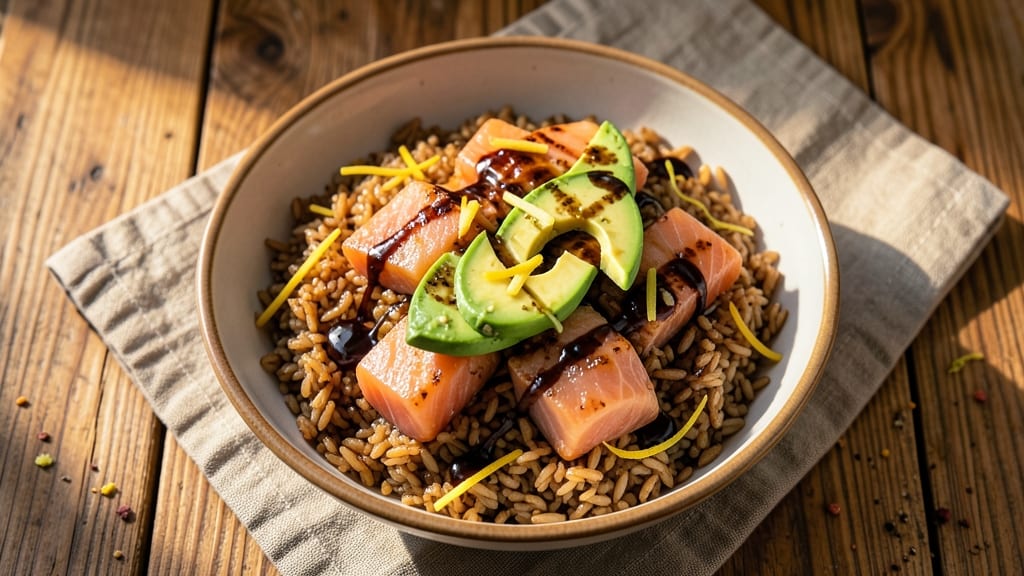
This brown rice poke bowl recipe transforms a Hawaiian classic into a modern, umami-rich meal with crispy toppings and balanced flavors. The foundation starts with perfectly cooked brown rice—chewy yet firm—paired with marinated raw salmon or tuna for that signature poke texture.
What sets this apart is the customizable topping bar: think avocado slices, crunchy edamame, and quick-pickled cucumbers that add brightness to every bite.
The real magic happens in the sauce—a fusion of traditional soy-ginger and modern teriyaki or spicy mayo—where you control the heat and depth. This isn’t just a bowl; it’s a build-your-own feast that works for pescatarians, veggie lovers (swap in tofu), and anyone craving restaurant-quality at home.
Ready in 25 minutes, it’s the ultimate weeknight solution that still feels special.
Ingredients for brown rice poke bowl
Brown rice poke bowls start with chewy rice and fresh salmon, topped with crunchy, vibrant ingredients.
| Ingredient | Amount | Notes |
|---|---|---|
| Short-Grain Brown Rice 🌾 | 1 cup | Rinsed thoroughly before cooking |
| Sushi-Grade Salmon Fillet 🐟 | 8 oz | Fresh, skinless, cut into 1-inch cubes |
| Soy Sauce 🥢 | ¼ cup | High-quality, preferably Japanese |
| Sesame Oil 🫒 | 1 tbsp | Toasted for nutty aroma |
| Fresh Ginger 🧄 | 1 tbsp | Finely grated, peeled |
| Avocado 🥑 | 1 whole | Ripe, sliced into thin wedges |
| Edamame 🌱 | ½ cup | Shelled, steamed until tender |
| Cucumber 🥒 | 1 whole | English or Persian, thinly sliced |
| Rice Vinegar 🍶 | 1 tbsp | For quick-pickled cucumbers |
| Sesame Seeds 🌻 | 1 tbsp | Toasted, for garnish |
| Spicy Mayo 🍯 | ¼ cup | Store-bought or homemade |
| Teriyaki Sauce 🍜 | ¼ cup | Store-bought or homemade |
| Green Onions 🧅 | 2 whole | Thinly sliced, white and green parts |
| Toasted Nori Strips 🍣 | ¼ cup | Crumbled for texture |
| Sesame Oil (extra) 🫒 | ½ tbsp | For drizzling over bowl |
The short-grain brown rice is the backbone—look for sushi-grade rice at Whole Foods or the Asian market section. Rinsing it thoroughly removes excess starch, so it doesn’t turn mushy. For the sushi-grade salmon, Trader Joe’s or Sprouts carry pre-cut fillets that save time, but if you’re buying whole, ask the fishmonger to cut it into 1-inch cubes. Freshness is key here—salmon should smell clean and bright, not fishy. If you’re pescatarian but not into raw fish, seared ahi tuna or smoked salmon works perfectly too.
No sesame oil? Toasted peanut oil or even toasted walnut oil can mimic that nutty depth, though sesame is ideal. The spicy mayo can be store-bought (check labels for pescatarian compliance) or homemade with mayo, sriracha, and a dash of lime. For the quick-pickled cucumbers, slice the cucumber thin, toss with rice vinegar, a pinch of sugar, and a tiny bit of salt—let it sit for 15 minutes before serving. The edamame should be bright green and tender; if you’re short on time, frozen edamame works just as well (no need to thaw).
Prep ahead to save time: cook the rice and marinate the salmon up to 24 hours in advance. Store the rice in the fridge, and keep the salmon in a sealed container with a paper towel on top to absorb moisture. The pickled cucumbers can sit in the fridge for up to 3 days, making this a great make-ahead meal. For the toppings, keep everything separate until serving—this keeps the textures crisp. The bowl itself reheats beautifully, but the toppings are best added fresh for that restaurant-quality crunch.
Why You'll Love This Recipe
- No-Fuss Cooking: I swear, this bowl takes less effort than ordering takeout. The rice cooks while you slice the salmon—no chopping marathons, no last-minute panics. Just a quick sear in a hot pan with sesame oil, and you’re done.
- Umami Magic: That first bite of warm brown rice with the crispy salmon? The soy sauce and ginger cut right through the richness, balancing everything perfectly. It’s the kind of flavor combo that makes you want to eat it straight from the pot.
- Lunchbox Hero: Between us, this is my go-to for packed lunches. The rice stays fresh for days, and the salmon holds up better than you’d think. Toss in some cucumber or avocado the night before, and you’ve got a meal that’s basically foolproof.
- Budget Win: Short-grain brown rice is cheap, and a single salmon fillet stretches across multiple bowls. Honestly, I’ve made this for four nights in a row with leftovers, and no one’s complained—just empty plates. Smart, satisfying, and wallet-friendly.
Step-by-step instructions for brown rice poke bowl
Here's how to assemble a perfectly balanced bowl with chewy rice, fresh toppings, and bold flavors.
Cook the Short-Grain Brown Rice to Perfect Chewiness
Rinse the 1 cup short-grain brown rice thoroughly under cold water until the water runs clear. This removes excess starch that can make the rice gummy. Combine the rinsed rice with 1½ cups water in a small pot and bring to a boil over high heat.
Once boiling, reduce heat to low, cover tightly with a lid, and simmer for 35-40 minutes. You'll know it's done when the rice absorbs all the liquid and has a slight bounce when pressed with a spoon. Let it sit covered for an additional 10 minutes—this resting period allows the grains to fully hydrate and develop that signature chewy texture we want for poke bowls.
Prepare the Salmon and Quick-Pickled Cucumber
Cut the 8 oz sushi-grade salmon fillet into 1-inch cubes and place them in a medium bowl. In a small bowl, whisk together the 0.25 cup soy sauce, 1 tbsp sesame oil, and 1 tbsp finely grated fresh ginger. Pour this marinade over the salmon and gently toss to coat evenly. Let it marinate for at least 15 minutes at room temperature—this ensures maximum flavor absorption.
For the quick-pickled cucumber, thinly slice the whole cucumber and toss with the 1 tbsp rice vinegar. Let it sit for 10 minutes while you finish other components. The acidity will brighten the flavor and provide that refreshing crunch that cuts through the richness of the salmon and avocado.
Assemble the Bowl Components with Flavor Balance
Divide the cooked short-grain brown rice evenly among 4 bowls. For each serving, add 2 oz of the marinated salmon cubes, 2 thin avocado wedges, and 2 tablespoons of shelled edamame. The key here is distribution—spread these components evenly to create visual appeal and ensure each bite has a mix of textures and flavors.
Drizzle each bowl with 1 tablespoon of teriyaki sauce and 1 teaspoon of spicy mayo. The teriyaki adds that signature umami sweetness while the spicy mayo brings heat and creaminess. Toss the bowls gently to combine all the components and create a cohesive base before adding the final toppings.
Garnish for Texture and Visual Appeal
Sprinkle each bowl with 1 tablespoon of toasted sesame seeds and 1 tablespoon of crumbled toasted nori strips. These add essential crunch and visual contrast to the soft rice and creamy avocado. Thinly slice the 2 whole green onions and divide them evenly among the bowls, placing some on top and some around the edges for that classic poke bowl presentation.
Finally, drizzle each bowl with 0.5 teaspoon of the extra sesame oil. This not only enhances the nutty aroma but also helps bind all the components together, creating that perfect balance of textures and flavors in every bite. Serve immediately while the rice is still warm and the avocado maintains its creamy texture.
Pro Tips For Making Brown Rice Poke Bowl
- SOAK THE RICE OVERNIGHT: I learned this the hard way—skipping the soak means your brown rice will turn out chewy instead of fluffy. Toss it in cold water (1:2 rice-to-water ratio) for at least 8 hours, then drain. The extra effort guarantees rice that’s tender but holds its shape under the salmon and toppings.
- CUT SALMON AGAINST THE GRAIN: Thin, even slices are key, but the real trick is slicing against the grain of the fish. If you’re unsure which way that is, look for the tightest muscle fibers—cut perpendicular to them. This keeps the texture clean and prevents the slices from curling when they hit the bowl.
- MARINATE GINGER IN SESAME OIL: Skip the raw ginger paste—it can taste bitter and overpower the dish. Instead, finely mince or grate fresh ginger, then toss it in a teaspoon of sesame oil for 5 minutes before adding it to the rice. This mellows the heat and lets the nutty oil shine.
- USE COLD SOY SAUCE: I was skeptical until I tried it: chilling your soy sauce (even just for 30 minutes) makes a real difference in a poke bowl. The cold sauce keeps the rice from getting soggy and adds a crisp contrast to the warm salmon. Pro move: mix it with a splash of rice vinegar for balance.
Common mistakes when making this recipe
Overcooking the Rice
Brown rice is forgiving, but overcooking turns it mushy instead of chewy. I’ve ruined countless bowls by walking away and letting it simmer too long. The key is 35-40 minutes on low heat—no more!
After cooking, always let it rest 10 minutes covered. This resting time is critical for texture. If your rice feels sticky, it’s overdone. 🌾
Using Non-Sushi-Grade Fish
Never, ever use non-sushi-grade fish for raw poke bowls—it’s a food safety risk. I once used regular salmon fillet and regretted it immediately (not to mention the stomachache).
Always ask for sushi-grade at the fish counter. If you’re unsure, opt for pre-cut sushi-grade salmon from trusted brands like Trader Joe’s or Sprouts. 🐟
Skipping the Marinade Time
Rushing the 15-minute marinade for the salmon means bland, underseasoned bites. The soy-ginger-sesame combo needs time to penetrate the fish. I’ve learned this the hard way—salmon marinated for just 5 minutes tastes like nothing compared to properly marinated pieces. Patience here makes all the difference. ⏰
Overcrowding the Bowl
Pile everything on top and you’ll drown the flavors. I’ve seen people smother their bowls with too much rice, avocado, and salmon, leaving no room for the crunchy toppings.
The magic is balance—aim for ⅔ rice, ¼ protein, and ¼ toppings. This keeps every bite vibrant and textured. 🥗
Ignoring the Pickle Time
Quick-pickled cucumbers need that 10-minute sit to develop proper tang. I’ve served them fresh from the knife and ended up with bland, watery slices. The acidity needs time to work its magic. While you’re finishing other components, let those cucumbers marinate—they’ll thank you with bright, crisp flavor. 🥒
Using Store-Bought Sauces Without Taste
Some pre-made teriyaki or spicy mayo sauces taste like they came from a can. I’ve used generic brands that added too much sugar or artificial flavors. When possible, make your own spicy mayo (mayo + sriracha + lime) or choose high-quality store-bought options like Kikkoman teriyaki.
The difference is night and day. 🍜
Nutrition facts
Frequently asked questions
Can I substitute white rice for brown rice in this recipe?
Technically yes, but you’ll lose that signature chewy texture that makes poke bowls so satisfying. White rice cooks faster (15 minutes) and turns softer, which can make the bowl feel less substantial. If you must use it, try short-grain white rice like sushi rice and reduce the cooking liquid by ¼ cup for a firmer bite.
How do I keep the avocado from turning brown?
Avocado oxidizes quickly, but a simple trick prevents browning: toss the sliced avocado with 1 teaspoon lime or lemon juice and a pinch of salt. This acid barrier keeps it vibrant for up to 30 minutes. For longer prep, store avocado pieces under cold water in the fridge until ready to use.
What if I don’t like raw fish? Are there good alternatives?
Swap the raw salmon for seared ahi tuna (cook to 130°F internal temp), smoked salmon, or even marinated tofu for a vegan option. For texture, try crispy fried tofu or quick-pickled mushrooms. The key is maintaining that 1-inch cube size for consistent bites.
Can I make this ahead of time?
Yes, but strategically! Cook the rice and marinate the salmon up to 24 hours ahead, storing separately in airtight containers. Assemble the bowls 30 minutes before serving—this lets flavors meld. Keep toppings like avocado and cucumbers separate until the last minute to preserve crispness. The sauce can be pre-mixed too.
Why does my poke bowl taste too salty?
Most likely, the soy sauce or spicy mayo is overpowering. Balance it by adding more fresh elements: extra avocado, cucumber, or edamame. For the rice, rinse it thoroughly before cooking to reduce sodium absorption. If using store-bought sauces, dilute with 1 teaspoon water per 1 tablespoon sauce to mellow the flavor.