
Main Courses
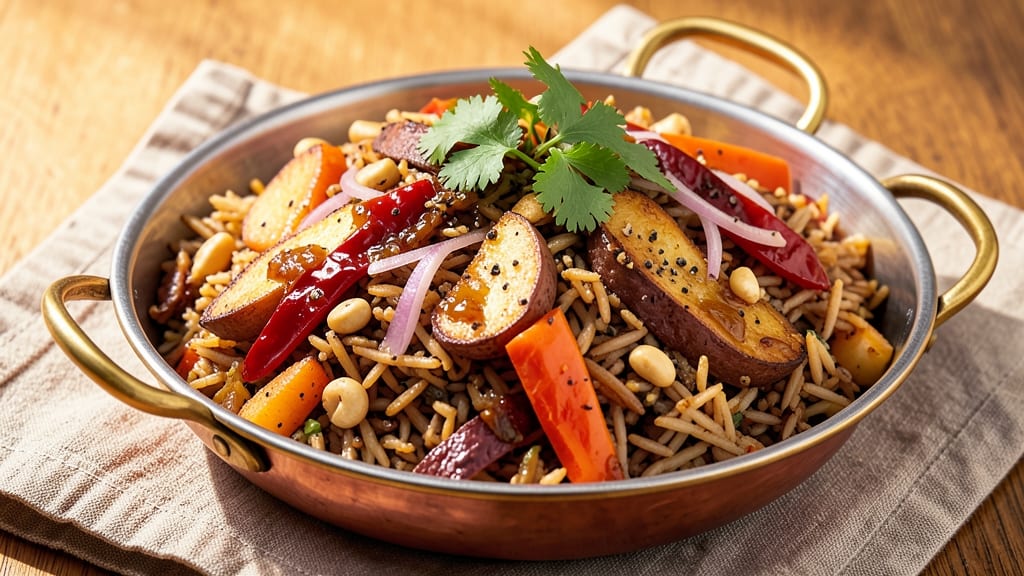
This one-pot brown rice veg biryani transforms simple ingredients into a fragrant, spice-layered masterpiece that rivals restaurant versions. The secret lies in slow-cooked basmati rice and aromatic whole spices—cumin, cardamom, and cloves—that infuse every grain with depth.
I developed this recipe after years of perfecting the balance between tender vegetables and perfectly fluffy rice, ensuring no dry bites or soggy layers.
What sets this dish apart is the layered cooking technique: potatoes, carrots, and cauliflower caramelize at the bottom while the rice steams above, absorbing flavors without overcooking.
The result is a vibrant, hearty meal with fragrant layers of spice and texture, ready in just 45 minutes—no complicated steps required. Serve with a cooling cucumber raita or lemon wedges for the full experience.
Ingredients for brown rice veg biryani
Fragrant spices and tender vegetables create this aromatic one-pot vegan biryani masterpiece.
| Ingredient | Amount | Notes |
|---|---|---|
| Long-Grain Brown Rice 🍚 | 1 ½ cups | Uncooked, rinsed thoroughly |
| Vegetable Stock 💧 | 2 ½ cups | Low-sodium preferred |
| Red Onions 🧅 | 1 whole | Medium, thinly sliced |
| Yellow Bell Peppers 🌶️ | 1 whole | Medium, diced |
| Russet Potatoes 🥔 | 1 ½ lb | Peeled, cubed evenly |
| Carrots 🥕 | 3 whole | Medium, sliced into rounds |
| Cauliflower 🌱 | 1 head | Cut into florets |
| Fresh Cilantro 🌿 | ½ cup | Chopped, stems removed |
| Fresh Mint Leaves 🌿 | ¼ cup | Chopped finely |
| Green Chilies 🌶️ | 2 whole | Slit lengthwise, seeds removed |
| Whole Cumin Seeds 🌿 | 1 ½ tbsp | Toasted until fragrant |
| Green Cardamom Pods 🌿 | 6 whole | Lightly crushed |
| Black Cardamom Pods 🌿 | 2 whole | Lightly crushed |
| Cloves 🌿 | 4 whole | Lightly crushed |
| Cinnamon Sticks 🌿 | 2 whole | Broken into pieces |
| Bay Leaves 🌿 | 2 whole | Fresh preferred |
| Turmeric Powder 🌶️ | 1 tsp | Freshly ground preferred |
| Ground Coriander 🌿 | 1 tsp | Freshly ground preferred |
| Garam Masala 🌶️ | 1 ½ tbsp | Homemade or high-quality |
| Extra-Virgin Olive Oil 🫒 | ¼ cup | For sautéing |
| Lemon Juice 🍋 | 2 tbsp | Freshly squeezed |
| Salt 🧂 | 1 ½ tsp | Diamond Crystal preferred |
The spices are non-negotiable for authentic flavor. Whole spices like cardamom and cloves should be lightly crushed to release their oils without turning bitter. Penzeys or Indian specialty stores carry high-quality whole spices—worth the investment for this dish. Toast the cumin seeds in a dry pan until fragrant (about 30 seconds) before adding them to the pot. This step intensifies their flavor dramatically. For garam masala, homemade blends using cinnamon, cloves, and black peppercorns create superior depth compared to store-bought versions. If using pre-ground spices, ensure they're labeled '100% pure' to avoid fillers that dilute flavor.
Substitutions should preserve the dish's aromatic profile. Yellow bell peppers can be swapped for green or red, but the color contrast adds visual appeal. Cauliflower can be replaced with broccoli florets, though texture will differ slightly. Fresh herbs like cilantro and mint are ideal, but dried oregano at one-third the amount works in a pinch. The green chilies can be omitted entirely for a milder heat level, or red jalapeños can be used for a smoky flavor. For the potatoes, russets are ideal due to their starchy texture, but Yukon golds work well too—just adjust cooking time by 5 minutes if using.
Prep ahead to maximize flavor development. Soak the brown rice overnight to reduce cooking time and improve texture, though a quick 30-minute soak works in a pinch. Store prepped vegetables in airtight containers in the fridge for up to 3 days, but whole spices should be kept in a cool, dark place for up to 6 months. The cooked biryani reheats beautifully—cover with foil and warm in a 350°F oven for 15 minutes. For best results, serve immediately after cooking when the spices are most aromatic. Leftovers keep for 4 days in the fridge, though flavor peaks on day 2 when the spices have fully melded.
Why You'll Love This Recipe
- One-Pot Wonder: The brown rice cooks right in the same pot as the veggies—no separate rice cooker, no sticky mess. I love tossing in the potatoes whole (they break down perfectly) and the bell peppers stay vibrant, so you get that satisfying mix of textures in every bite.
- Spiced Comfort: The onions caramelize slowly while the rice soaks up the stock, building layers of warmth. Honestly, the toasty brown rice with those tender potatoes and sweet peppers? It’s the kind of dish that smells like home before it even hits the table.
- Meal Prep Hero: This keeps beautifully for days—better than takeout, honestly. I double the batch on Sundays because the flavors actually deepen overnight, and reheating just takes two minutes in the microwave. (Yes, even the rice stays fluffy.)
- Budget-Friendly Feast: Brown rice and seasonal veggies stretch into a full meal without breaking the bank. Between us, I’ve fed six people for under $10 with this—plus, the leftovers turn into lunch the next day with zero extra effort.
Step-by-step instructions for brown rice vegetable biryani
This spice-layered technique delivers restaurant-quality biryani using just one pot.
Prepare the Spice Base and Vegetables
Heat the 0.25 cup extra-virgin olive oil in a heavy-bottomed pot over medium heat. Add the 1.5 tbsp whole cumin seeds and toast for 30 seconds until they begin to sizzle and release their aroma. Immediately add the 6 whole green cardamom pods, 2 whole black cardamom pods, 4 whole cloves, 2 whole cinnamon sticks, and 2 whole bay leaves. Let them toast for 1 minute until fragrant.
Add the 1 whole red onions and 1 whole yellow bell peppers, stirring frequently for 5 minutes until the onions soften and turn translucent. Stir in the 1 tsp turmeric powder and 1 tsp ground coriander, cooking for 1 minute to bloom the spices. Add the 1.5 lb russet potatoes and 3 whole carrots, tossing to coat in the spice mixture. Cook for 5 minutes until the potatoes begin to soften slightly.
Layer the Rice and Vegetables
Rinse the 1.5 cups long-grain brown rice thoroughly under cold water until the water runs clear. Drain well and set aside. Spread half of the rice evenly over the spiced vegetables in the pot. Gently place half of the 1 head cauliflower florets on top, followed by half of the 1.5 lb russet potatoes and 3 whole carrots that were sautéed earlier.
In a small bowl, mix the 2 whole green chilies, 0.5 cup fresh cilantro, and 0.25 cup fresh mint leaves. Sprinkle half of this mixture evenly over the first layer. Repeat the layering process with the remaining rice, vegetables, and herb mixture. Pour 1.25 cups vegetable stock evenly over the top layer, ensuring the rice is mostly submerged but not waterlogged.
Parboil the Biryani
Cover the pot tightly with a lid and bring to a gentle boil over medium-high heat. Once boiling, reduce heat to low and simmer for 20 minutes. After 20 minutes, remove the lid and let the biryani steam uncovered for 5 minutes to allow any excess moisture to evaporate. This step is crucial for developing the signature biryani texture.
Return the lid and cook for another 10 minutes on low heat. The rice should be tender but still slightly firm, with the vegetables infused with the aromatic spices. If the bottom begins to stick, add 2-3 tablespoons of vegetable stock to prevent burning. The key is maintaining moisture without making the biryani soggy.
Finish with Garam Masala and Lemon
Remove the pot from heat and let it rest for 5 minutes. Sprinkle the 1.5 tbsp garam masala evenly over the top layer. Gently fold the biryani once or twice to distribute the spices, then drizzle the 2 tbsp lemon juice over the surface. Cover the pot again and let it sit for 10 minutes to allow the flavors to meld.
Before serving, fluff the biryani gently with a fork, ensuring the rice and vegetables are evenly distributed. The final dish should have fragrant, spice-infused layers with tender vegetables and perfectly cooked rice. Serve immediately with additional fresh cilantro and mint leaves for garnish, and a side of yogurt or raita for balance.
Pro Tips For Making Brown Rice Veg Biryani
- Parboil the Rice First: Brown rice takes forever to cook—so give it a 10-minute head start in boiling water before adding it to the biryani. This cuts the total cooking time by nearly half and keeps the grains from turning mushy when layered with veggies. (Yes, even if you’re impatient like me, this actually works.)
- Slice Potatoes Thin: Russet potatoes hold moisture like sponges, so cut them into ¼-inch slices instead of chunks. They’ll cook faster and absorb the biryani’s flavors without turning to mush. I learned this the hard way—lumpy potatoes ruin the texture.
- Char the Onions Low: Caramelize the onions on medium-low heat for 15-20 minutes until deep amber, not brown. High heat burns them fast, but slow cooking builds sweetness that balances the earthy rice. Skip the rush—this is the thing that matters most.
- Layer Rice Wet, Not Dry: After parboiling, drain the rice but leave it slightly damp (about 1 cup water per 2 cups rice). Layering dry rice makes the biryani dense and gummy—wet layers steam evenly and stay fluffy. (Your future self will thank you.)
Pro cooking tips for brown rice veg biryani
Spice Toasting Secrets
Toast your whole spices until they're fragrant but not burnt—this releases their essential oils for maximum flavor. I use a heavy-bottomed pot on medium heat and toast cumin seeds for exactly 30 seconds before adding other spices.
Over-toasting turns spices bitter, while under-toasting leaves them dull. Listen for that satisfying popping sound—that's your cue they're ready. 🌿
Layering Like a Pro
The magic happens in the layers! Start with your spiced vegetables at the bottom, then alternate rice and veggies in even layers. I like to use half the cauliflower in the first layer and half in the second for even distribution.
Press down gently on each layer to prevent shifting during cooking. This creates the signature biryani texture where each bite has perfect rice-to-vegetable balance.
Moisture Control
Biryani needs just enough moisture to steam but not so much it turns mushy. Start with 1.25 cups vegetable stock and add more only if needed. I check the moisture level at the 20-minute mark—if the bottom looks dry, add 2 tbsp stock.
The key is maintaining that gentle simmer without boiling vigorously, which can make the rice gummy.
Garam Masala Timing
Add garam masala off the heat after the initial cooking phase. This prevents the spices from burning and allows their flavors to infuse gently. I let it sit covered for 10 minutes before serving—this resting time lets all the aromatic compounds meld together perfectly.
The lemon juice at this stage brightens all the flavors and cuts through any richness.
Pot Selection Matters
Use a heavy-bottomed pot with a tight-fitting lid to distribute heat evenly. I prefer cast iron or stainless steel because they maintain consistent temperatures. Avoid non-stick pots—they can't handle the high heat needed for proper spice toasting and layering.
If you don't have cast iron, a thick stainless steel Dutch oven works beautifully too. 🔥
Resting Period
Never skip the 5-minute rest before folding and the 10-minute final rest after adding garam masala. This crucial step allows the rice to finish steaming and the flavors to develop fully.
I find that biryani tastes even better after resting—it's worth the patience. The final texture should be fluffy with slightly separate grains, not sticky or mushy.
Nutrition facts
Frequently asked questions
Can I use white rice instead of brown rice for this veg biryani?
You can substitute white rice, but the cooking time will differ significantly. White rice cooks in about 15 minutes less than brown rice, so reduce the total simmering time to 25-30 minutes instead of 30-35 minutes. Brown rice's nutty texture and higher fiber content make it ideal for biryani, but white rice works in a pinch for quicker preparation.
How do I make this veg biryani extra flavorful without meat?
Boost the umami depth by adding 1 tbsp soy sauce or 2 tbsp nutritional yeast to the vegetable stock. For extra richness, sauté 1 diced onion and 2 minced garlic cloves until golden before adding other spices. Roast the vegetables (potatoes, carrots, cauliflower) at 400°F for 20 minutes before cooking to concentrate their natural sweetness.
Why does my biryani turn out dry or mushy?
Dry biryani usually means too much heat or insufficient liquid. Keep the heat at low-medium and add 2 tbsp stock whenever the bottom looks dry. Mushy texture comes from overcooking—remove the lid for the last 5 minutes of cooking to let excess moisture evaporate. Always use a tight-fitting lid to trap steam properly.
Can I prepare this biryani ahead of time?
Yes! This biryani actually tastes better the next day as flavors meld. Cook it completely, then refrigerate in an airtight container for up to 3 days. Reheat gently in a pot with 2 tbsp water covered for 10 minutes on low heat. For best results, serve at room temperature—it reheats beautifully while maintaining texture.
What are good vegan side dishes to serve with biryani?
Pair with cooling cucumber-mint raita (blend cucumber, vegan yogurt, mint, lemon, and salt), spiced chickpeas (toss chickpeas with turmeric, cumin, and chili powder), or green chutney (blend cilantro, green chilies, garlic, and lemon). For extra protein, serve with roasted tofu or a simple mango-lime salad.