
Main Courses
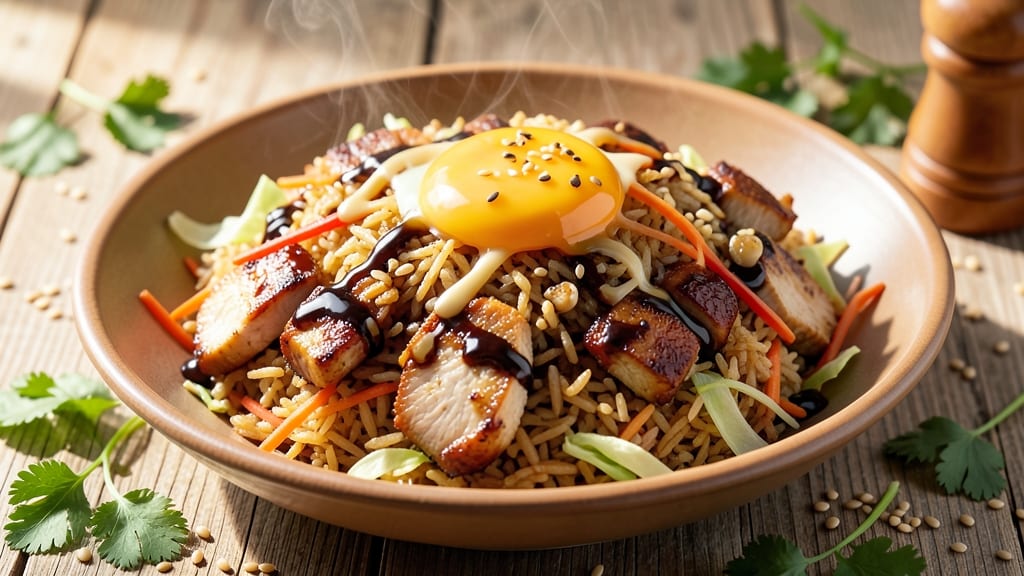
This Burmese fried rice recipe delivers the smoky, savory depth that makes it a street food staple. The secret lies in perfectly cooked jasmine rice, wok-tossed with tender protein, crisp vegetables, and aromatic seasonings like turmeric and fish sauce.
Every bite combines rich eggy flavors with the signature wok hei—those smoky charred notes that elevate this dish beyond ordinary fried rice.
What sets this recipe apart is the balance of textures: tender chicken or fish, crisp cabbage and carrots, and perfectly cooked rice that stays separate yet infused with flavor. The dish comes together in minutes but feels like a restaurant experience, thanks to the layered seasonings and proper stir-frying technique.
Whether you're serving it as a main course or a side, this Burmese fried rice brings authentic Burmese flavors to your table with minimal effort.
Ingredients for burmese fried rice
Jasmine rice, tender protein, and aromatic spices create this restaurant-quality Burmese fried rice.
| Ingredient | Amount | Notes |
|---|---|---|
| Jasmine Rice 🍚 | 2 cups | Uncooked, day-old preferred |
| Boneless Chicken Breast 🍗 | 1 ½ lb | Cut into 1-inch pieces |
| Large Eggs 🥚 | 4 whole | Freshly beaten |
| Green Cabbage 🥬 | 3 cups | Shredded, thinly sliced |
| Carrots 🥕 | 1 ½ cups | Julienned or thinly sliced |
| Garlic Cloves 🧄 | 6 cloves | Minced finely |
| Fish Sauce 🍶 | 2 tbsp | Red Boat preferred |
| Turmeric Powder 🌿 | 1 tbsp | Freshly ground preferred |
| Soy Sauce 🥢 | 3 tbsp | Light or dark preferred |
| Vegetable Oil 🫒 | ½ cup | High smoke point |
| Ground White Pepper 🌶️ | ½ tsp | Freshly ground preferred |
| Salt 🧂 | 1 tsp | Kosher or sea salt |
| Lime Juice 🍋 | 2 tbsp | Freshly squeezed |
| Fresh Cilantro 🌿 | ¼ cup | Chopped, for garnish |
| Sesame Seeds 🌰 | 1 tbsp | Toasted for garnish |
The jasmine rice is non-negotiable here—it needs to be day-old for that perfect texture. Trader Joe's or Asian grocery stores carry it in bulk, and it's worth the trip if you don't have a local supplier. For the chicken, boneless breast stays tender when stir-fried, but thigh meat adds juiciness if you prefer. The fish sauce is where Burmese flavors shine—Red Boat is the gold standard, but any reputable brand works. Look for vibrant color and a strong umami aroma when selecting. Fresh garlic and ginger are essential for that authentic wok hei—no substitutions here.
No fish sauce? Soy sauce plus a splash of oyster sauce gets you close, though it won't be identical. Using pre-shredded cabbage? Pat it dry thoroughly—wet veggies steam instead of crisping. The carrots can be baby carrots if that's what's handy, but julienned gives that restaurant-style look. Asian markets often sell pre-minced garlic and ginger in jars, which saves time. If you're vegetarian, swap the chicken for tofu or extra egg whites—just make sure to press the tofu well for that meaty texture. The lime juice should be freshly squeezed; bottled won't cut it for this dish.
This dish reheats beautifully—30 seconds in the microwave with a splash of water keeps the rice from drying out. Store leftovers in an airtight container for 3-4 days in the fridge. For freezing, portion into single servings and freeze flat—up to 3 months. The sesame seeds and cilantro are best added fresh after reheating. Double the batch and freeze half; it's perfect for lazy weeknights when you want restaurant-quality takeout without the hassle.
Why You'll Love This Recipe
- One-Pan Magic: I swear by this—just toss everything into one hot wok with a splash of soy and turmeric, and let the chicken and eggs sizzle into crispy perfection. No dirty dishes, no fuss, just that golden, fragrant pile of rice waiting for you.
- Turmeric Glow: That first golden bite? The turmeric stains your fingers and makes the rice taste like sunshine. The chicken stays juicy, the eggs get that perfect runny center, and the cabbage adds crunch—it’s the kind of flavor that sticks with you long after lunch.
- Lunchbox Hero: Between us, this is my go-to for packed lunches. Cold or reheated, it’s still solid—just toss in some lime wedges for that bright finish. My kids eat it straight from the fridge, and honestly? So do I.
- Budget Win: Jasmine rice is cheap, chicken thighs stretch further than you’d think, and cabbage lasts forever. I make a big batch on Sundays, and by Wednesday, I’m still eating it with zero guilt. Plus, leftovers taste even better the next day—crispier, somehow.
Step-by-step instructions for wok-tossed Burmese fried rice
Master this vibrant dish with perfectly balanced textures and bold flavors—here's exactly how to execute it.
Prepare the Day-Old Jasmine Rice
Use the 2 cups of jasmine rice that's been cooked and cooled completely (day-old works best). Break up any clumps with your fingers until you have individual grains. The rice should be completely dry to the touch—this prevents a gummy texture when frying. If using freshly cooked rice, spread it on a tray and refrigerate for at least 2 hours before proceeding.
This drying step is crucial. Wet rice will steam instead of fry, resulting in a soggy rather than crispy fried rice. I like to spread the rice on a baking sheet and let it sit uncovered at room temperature for 15-20 minutes before cooking to ensure maximum crispiness.
Marinate and Cook the Chicken
Cut the 1.5 lb boneless chicken breast into 1-inch pieces. In a bowl, combine the chicken with 1 tablespoon of the soy sauce, 1 tablespoon of the lime juice, and 1 teaspoon of the salt. Let it marinate for at least 15 minutes while you prepare the other components.
Heat 2 tablespoons of the vegetable oil in a wok or large skillet over medium-high heat. Add the marinated chicken and cook for 5-6 minutes, stirring occasionally, until the chicken is cooked through and lightly browned. Remove the chicken from the wok and set aside on a plate. The chicken should reach an internal temperature of 165°F.
Stir-Fry the Vegetables and Aromatics
In the same wok, add the remaining 3 tablespoons of vegetable oil and heat over medium-high heat. Add the 6 cloves of minced garlic and cook for 30 seconds until fragrant. Add the 1.5 cups of julienned carrots and 3 cups of shredded green cabbage, stirring constantly for 3-4 minutes until the vegetables begin to soften but remain crisp.
Sprinkle the 1 tablespoon of turmeric powder and 0.5 teaspoon of ground white pepper over the vegetables. Stir-fry for another 1-2 minutes until the turmeric develops its characteristic golden color and the vegetables are tender-crisp. This step infuses the vegetables with the warm, earthy flavors that define Burmese cuisine.
Combine and Season the Fried Rice
Add the prepared rice to the wok and stir-fry for 2-3 minutes, breaking up any remaining clumps and allowing the rice to absorb the vegetable flavors. Push the rice to one side of the wok and crack the 4 whole beaten eggs into the empty space. Scramble the eggs until just set, then mix them thoroughly with the rice.
Return the cooked chicken to the wok and combine everything with the rice. Drizzle the 2 tablespoons of fish sauce and remaining 2 tablespoons of soy sauce over the mixture. Stir-fry for another 2-3 minutes until the rice is evenly coated and heated through. The dish should have a glossy sheen from the sauces and a vibrant golden color from the turmeric.
Finish and Garnish
Remove the wok from heat and let the fried rice rest for 1 minute. Stir in the 2 tablespoons of lime juice and taste, adjusting seasoning if needed. The dish should be balanced—salty from the fish and soy sauces, tangy from the lime, and slightly sweet from the carrots.
Transfer the fried rice to serving plates and garnish with the 0.25 cup of chopped fresh cilantro and 1 tablespoon of toasted sesame seeds. Serve immediately while the rice is hot and the eggs are still slightly runny in the center for that authentic Burmese texture.
Pro Tips For Making Burmese Fried Rice
- STIR-FRY CHICKEN FAST: Cook the chicken breast in two batches if it’s thick—cutting it into ½-inch strips makes it crisp faster, but overcrowding the pan turns it rubbery. I learned this the hard way when my first batch came out gray and sad.
- USE DAY-OLD RICE: Cold, slightly dry jasmine rice fries up fluffier and absorbs flavors better than fresh-cooked rice. Spread yesterday’s leftovers on a tray and let them air-dry for 10 minutes before frying—this guarantees that sticky, clumpy mess won’t happen.
- SCRAMBLE EGGS LOW: Push the eggs to the edge of the pan and let them set for 10 seconds before folding them into the rice. High heat makes them rubbery, and I was skeptical until I tried it—now my eggs stay creamy and cling to every grain.
- SAUTE CABBAGE FIRST: Chop the cabbage into thin, even strips and fry it until just wilted (about 3 minutes) before adding the carrots. This prevents the rice from turning soggy when you toss everything together later—your future self will thank you.
Perfect pairings for this burmese fried rice
Smoky Tea Pairings
Burmese fried rice pairs beautifully with Burmese tea—specifically a black tea with milk and sugar, known locally as laphet thoke. I recommend Assam tea for its bold, malty notes that complement the dish's savory depth.
Brew a strong cup and sweeten to taste, then add a splash of cold milk for creaminess. The tea's richness balances the dish's umami flavors while adding a comforting warmth. 🍵
Spicy Condiment
Serve with Burmese chili paste (nam prik) on the side for those who crave heat. Look for brands like Mae Ploy or Thai Kitchen—these deliver the perfect tangy-spicy kick.
I like to mix 1 teaspoon of chili paste with a splash of lime juice and serve it in small bowls. The paste's fruity heat contrasts beautifully with the fried rice's earthy turmeric and creamy eggs. 🌶️
Light Lime Garnish
Finish each serving with a wedge of fresh lime on the side. The citrus brightens the dish's rich flavors and cuts through the oiliness of the fried rice.
I like to squeeze just a few drops over the top right before serving—it adds a refreshing zing that keeps every bite vibrant. For extra flair, add a sprinkle of toasted sesame seeds alongside the lime. 🍋
Cucumber Salad
A simple cucumber salad with rice vinegar and a pinch of salt makes an excellent side. Thinly slice ½ cup cucumber, toss with 1 tablespoon rice vinegar, ½ teaspoon salt, and a drizzle of sesame oil.
The cool, crisp salad contrasts the fried rice's warmth and adds a refreshing crunch. This side is quick to prepare and elevates the meal to restaurant quality. 🥒
Beer Recommendations
For beer lovers, a light lager like Burmese Bia or Heineken works perfectly. The crisp, clean flavors won’t overpower the dish but will cleanse your palate between bites. If you prefer something darker, try a Burmese pale ale—its subtle maltiness pairs well with the turmeric and fish sauce.
Avoid heavy stouts or IPAs, which can clash with the dish's delicate balance. 🍺
Nutrition facts
Frequently asked questions
Why does Burmese fried rice need day-old rice?
Day-old rice absorbs flavors better and stays separate when stir-fried, avoiding that dreaded mushy texture. Freshly cooked rice contains too much moisture, which turns fried rice into a sticky mess. Spread cooked rice on a tray and refrigerate for at least 2 hours before using—this drying step is key!
Can I substitute chicken with another protein?
Shrimp or firm tofu work beautifully—just adjust cooking times. For shrimp, cook for only 2-3 minutes until pink, while tofu needs 4-5 minutes to crisp up. Vegetarians can also use extra egg whites or mushrooms for umami depth.
What if I don't have fish sauce?
Mix 1 tablespoon soy sauce with ½ teaspoon oyster sauce as a substitute. The umami will be slightly different but still delicious. For extra depth, add a pinch of MSG (if you have it). Never use soy sauce alone—it won't replicate fish sauce's complex flavor.
How do I get that smoky wok hei flavor?
Use a carbon steel or cast iron wok on high heat and work quickly—don't overcrowd the pan. Add a tiny bit of oil to the wok before cooking, then wipe it out with a paper towel to create smoke. Stir-fry in batches if needed to maintain that smoky aroma.
Can I make this gluten-free?
Yes! Use tamari or coconut aminos instead of soy sauce, and ensure your fish sauce is gluten-free (check labels). For extra safety, verify all spices (like turmeric) are processed in gluten-free facilities. The dish remains just as flavorful with these swaps!