
Main Courses
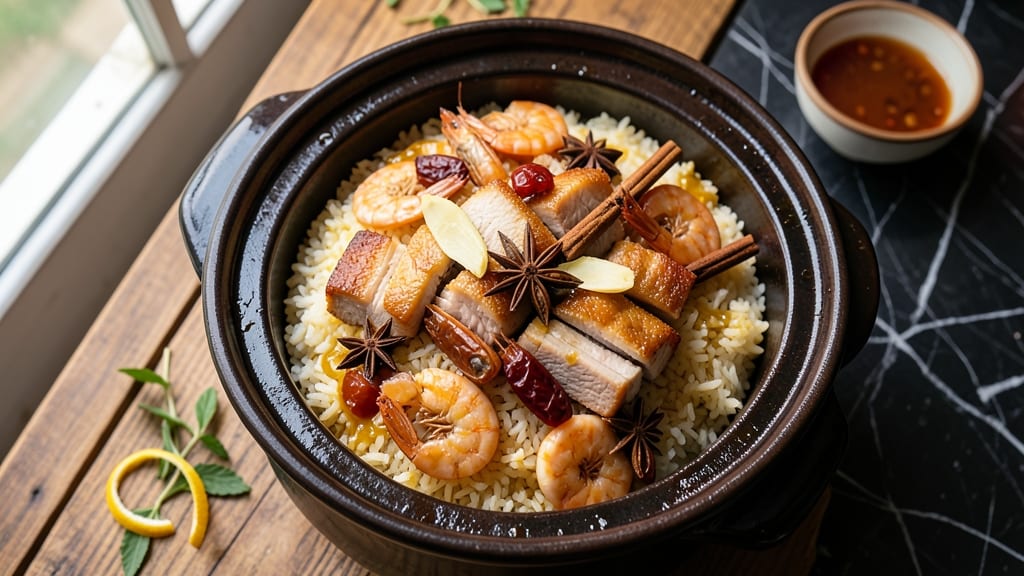
This Cantonese claypot rice recipe delivers the soul of a bustling Hong Kong kitchen—fragrant five-spice aromas trapped in a steamed clay pot, where each bite reveals tender rice, savory pork, and aromatic broth.
The secret lies in layering ingredients and steaming them together, creating a dish where every component harmonizes in perfect balance.
The claypot technique transforms simple ingredients into a restaurant-quality meal. Pork belly, ginger, and dried shrimp infuse the rice with deep umami flavors, while star anise and cinnamon add warmth.
The result is a fragrant, savory dish where the rice absorbs the essence of its companions, creating a symphony of textures and tastes that define Cantonese comfort food.
Ingredients for cantonese claypot rice
Simple ingredients layered in a clay pot create Cantonese comfort food magic.
| Ingredient | Amount | Notes |
|---|---|---|
| Jasmine Rice 🍚 | 2 cups | Uncooked, long-grain preferred |
| Pork Belly 🥓 | 1 lb | Skin-on, cut into 1-inch cubes |
| Dried Shrimp 🦐 | ¼ cup | Rinsed to remove excess salt |
| Fresh Ginger 🧄 | ½ cup | Julienned, skin removed |
| Star Anise 🌿 | 2 whole | Lightly crushed for aroma |
| Cinnamon Sticks 🍃 | 2 whole | Broken into 1-inch pieces |
| Dried Red Dates 🍇 | 4 whole | Pitted and chopped |
| Light Soy Sauce 🥄 | ½ cup | Kikkoman preferred |
| Shaoxing Wine 🍷 | ¼ cup | Substitute dry sherry if unavailable |
| Sesame Oil 🫒 | 1 tbsp | Toasted for aroma |
| Salt 🧂 | 1 ½ tsp | Kosher or sea salt |
| White Pepper 🌶️ | ½ tsp | Freshly ground preferred |
| Vegetable Oil 🫒 | 2 tbsp | High smoke point |
| Scallions 🧅 | 4 whole | Green parts only, chopped |
The pork belly is the heart of this dish—look for thick cuts with good marbling. Costco or Asian markets often have the best quality at reasonable prices. If you can't find pork belly, pork shoulder works in a pinch, but it won't have the same rich texture. Fresh ginger should be firm and aromatic—skip any with soft spots. The star anise and cinnamon sticks should be whole and fragrant; if they smell stale, replace them. For dried shrimp, Asian grocery stores carry the best quality, usually in small bags near the seafood section.
No Shaoxing wine? Dry sherry or mirin both work well, though the flavor will differ slightly. The dates add natural sweetness—if they're too dry, soak them in warm water for 10 minutes first. For the ginger, paste works in a bind, but fresh julienned gives the best texture and flavor. The soy sauce matters here—Kikkoman or Pearl River Bridge brands have that authentic umami punch. If you're using pre-minced garlic, drain it well to avoid excess moisture in the pot. For extra aroma, toast the star anise and cinnamon sticks in a dry pan for 30 seconds before adding to the pot.
This dish tastes even better the next day as flavors meld. Store leftovers in an airtight container in the fridge for up to 3 days. For longer storage, freeze portions for up to 3 months. The clay pot itself can be reused—just wash it with warm water and a soft brush. If you don't have a clay pot, a heavy-bottomed pot or Dutch oven works. For serving, garnish with extra scallions and a drizzle of sesame oil—trust me, it makes all the difference. The rice absorbs all the flavors, so don't skip the final steaming step.
Why You'll Love This Recipe
- One-Pot Magic: I swear by this recipe because it’s one pot—no rice cooker fuss, no extra pans. Just toss in the jasmine rice, pork belly, and dried shrimp with a splash of water, and let the claypot do the work while you sip tea. Honestly, the cleanup is criminally easy.
- Umami Bomb: That combo of pork belly and dried shrimp? It’s like flavor overload in the best way—salty, smoky, and deeply savory. The star anise and fresh ginger add this bright, aromatic punch that makes every bite feel like a little hug. (Yes, even on a Tuesday night.)
- Weeknight Workhorse: This dish is my go-to for busy evenings, but it also stars at Sunday brunches. Swap in chicken for pork belly? No problem. Add a fried egg on top? Instant upgrade. It’s the kind of meal that works for lazy nights and company alike.
- Budget-Friendly Leftovers: Pork belly might sound fancy, but a little goes a long way, and dried shrimp stretches the flavor without breaking the bank. The leftovers? Even better the next day—those aromatics deepen, and the rice gets that perfect chewy texture. My secret weapon for stress-free lunches.
Step-by-step instructions for Cantonese claypot rice
Master the art of claypot rice with this authentic method that balances rich aromatics and tender textures.
Prepare the Pork Belly and Aromatics
Cut the 1 lb pork belly into 1-inch cubes, leaving the skin on for crispy edges. In a separate bowl, combine the 0.25 cup dried shrimp (rinsed), 0.5 cup julienned fresh ginger, 2 lightly crushed star anise, 2 broken cinnamon sticks, and 4 chopped dried red dates. This aromatic blend forms the flavor foundation of the dish.
Heat 2 tablespoons vegetable oil in a wok over medium-high heat. Add the pork belly cubes and sear until golden brown on all sides, about 8-10 minutes. Remove and set aside—this step develops deep flavor through caramelization. The pork should release easily from the pan when ready to flip.
Build the Fragrant Base
In the same wok, add 0.5 cup light soy sauce and 0.25 cup Shaoxing wine, scraping up any browned bits from the bottom. Let it simmer for 3-4 minutes until reduced by half, concentrating the flavors. Add the prepared aromatic mixture and stir for 1 minute until fragrant.
Pour in 2 cups jasmine rice, coating each grain evenly with the sauce. Stir in 1.5 teaspoons salt and 0.5 teaspoon white pepper, ensuring every grain absorbs these seasonings. This step ensures the rice develops its signature savory depth rather than blandness.
Steam in the Claypot
Transfer the rice mixture to a preheated claypot (or heavy-bottomed pot if claypot unavailable). Add 1 tablespoon toasted sesame oil and the 4 chopped scallion greens, then pour in 2 cups hot water. The water should just cover the rice—no more, no less.
Cover the pot tightly with a lid and bring to a gentle boil over medium heat. Once boiling, immediately reduce heat to low and steam for 18-20 minutes. Avoid peeking—the steam must work undisturbed to create that signature claypot texture. The rice is done when the water is fully absorbed and the bottom develops a crispy crust.
Develop the Crispy Bottom and Rest
Once the rice is cooked, increase heat to high for 1-2 minutes to crisp the bottom. This creates the signature "wok hei" flavor. Remove from heat and let the rice rest, covered, for 5 minutes. This resting period allows the steam to redistribute, ensuring each grain remains tender.
Gently fluff the rice with a fork, being careful not to break the crispy bottom layer. Serve immediately with the crispy pork belly on top, garnished with extra scallions. The contrast between the tender rice, crispy pork, and fragrant aromatics makes this dish unforgettable.
Pro Tips For Making Cantonese Claypot Rice
- Parboil Pork Belly First: I learned this the hard way—skipping this step means your pork belly will turn out chewy. Simmer the belly in water with a pinch of salt for 10 minutes before cooking, then shock it in ice water. This guarantees tender slices that caramelize beautifully in the claypot.
- Toast Dried Shrimp Hard: Sounds weird, but it works—dry-toast the dried shrimp in a separate pan over medium-high heat for 2-3 minutes until they darken and smell nutty. This removes the fishy edge and intensifies their flavor, so they don’t overpower the dish.
- Layer Rice Last, Not First: After frying the pork belly and shrimp, add the ginger, star anise, and broth first. Let everything simmer until the aromatics are fragrant, then spread the jasmine rice evenly on top. This keeps the rice from absorbing all the liquid too fast and turning mushy.
- Watch the Heat After Adding Rice: Once the rice hits the pot, drop the heat to the lowest setting and cover immediately. I used to leave it on medium, and the rice would scorch on the bottom while staying undercooked on top. Low and slow is the only way—this isn’t a stir-fry.
Essential equipment for great cantonese claypot rice
Claypot Essentials
The heart of this dish is the claypot—traditional Yuen Yeung claypots from Hong Kong are ideal, but Lodge cast iron or Le Creuset stoneware work well as substitutes. Avoid nonstick—it won’t develop the signature crispy bottom.
A 10-inch diameter pot serves 4 people perfectly. Preheat your pot for 10 minutes before adding ingredients to ensure even cooking. 🔥
Wok Requirements
A carbon steel wok (like Mauviel or Victorio) is non-negotiable for searing the pork belly—its flat bottom and high heat retention create the perfect caramelization. If you don’t own one, a heavy stainless steel skillet (like All-Clad) works in a pinch.
Heat until smoking hot before adding oil to prevent sticking. For extra flavor, deglaze with Shaoxing wine after searing.
Steaming Tools
You’ll need a steamer basket (preferably bamboo for traditional authenticity) if your claypot lacks built-in steam holes. Place it 1-2 inches above the rice during the final steaming phase to infuse the pork belly with residual aromatics.
A fine-mesh strainer also works—just ensure it fits snugly in your pot. Avoid metal baskets that can react with acidic ingredients.
Temperature Control
Invest in a laser thermometer (like ThermoWorks IR92) to monitor the claypot’s surface temperature—ideal range is 300-350°F during steaming. If your stove lacks precise control, use aluminum foil under the pot to diffuse heat evenly.
For gas stoves, medium-low heat is key; electric stoves may need medium heat due to different heat distribution. 🌡️
Garnish Accessories
Fresh scallions and toasted sesame oil are must-haves for finishing. Keep a small bowl of sesame oil (like Kadoya) at room temperature for easy drizzling. For extra flair, add crushed peanuts or chili oil—both pair beautifully with the dish’s rich flavors.
A tongs set (like OXO Good Grips) helps with plating without breaking the crispy bottom.
Nutrition facts
Frequently asked questions
What makes Cantonese claypot rice different from regular rice dishes?
The claypot technique is key—it steams the rice with aromatics (like star anise and ginger) while creating a crispy bottom layer. This traps flavors inside, making every grain fragrant and savory. The pork belly and dried shrimp add umami depth, while the five-spice blend (star anise, cinnamon) gives that signature Cantonese aroma you can't get with plain rice dishes.
Can I substitute pork belly with chicken or shrimp?
Yes! For chicken, use 1.5 lbs boneless thighs (cut into chunks) and reduce cooking time to 15 minutes. For shrimp, swap the pork with 1 lb large shrimp (peeled, deveined) and add them after the rice starts steaming. The cooking method stays the same—just adjust protein timing to avoid overcooking.
Why does my claypot rice turn out mushy?
Overcooking or too much water are the usual culprits. Use 2 cups water for 2 cups rice and steam for exactly 18-20 minutes on low heat. Avoid peeking! Also, ensure your claypot is preheated—cold pots distribute heat unevenly. If using a substitute pot, reduce heat by 10% to prevent steam buildup.
How do I make this vegetarian?
Replace pork belly with 1 lb shiitake mushrooms (sliced) or 1 block firm tofu (pressed, cubed). Skip dried shrimp and add 1 tbsp vegetarian oyster sauce instead of soy sauce. Boost umami with 2 tbsp soy sauce + 1 tsp miso paste. The aromatic blend (star anise, cinnamon) remains essential for that Cantonese flavor.
Can I prepare this ahead of time?
Yes! The flavors improve overnight. Cook the rice as directed, then refrigerate in an airtight container for up to 3 days. Reheat covered on low heat with 1 tbsp water until steaming. For longer storage, freeze portions for up to 3 months. The crispy bottom may soften slightly—just crisp it again for 1-2 minutes on high heat before serving.