
Main Courses
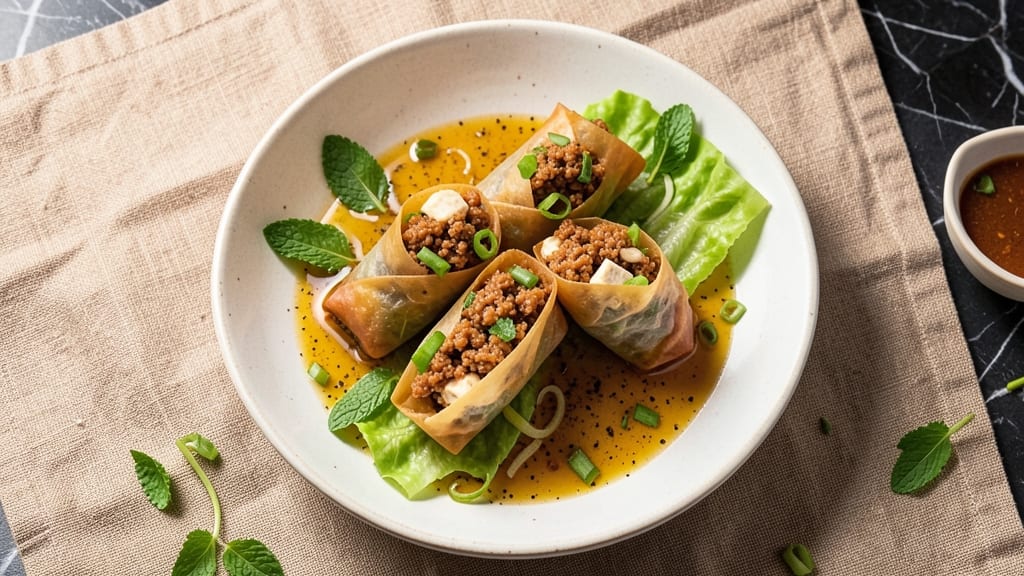
This cha gio recipe with rice paper delivers the perfect balance of crispy, golden wrappers and tender fillings in just 15 minutes. The secret lies in proper rolling technique and high-heat frying, transforming simple ingredients into restaurant-quality Vietnamese spring rolls.
Authentic flavors come from a savory filling of shrimp, pork, and aromatic herbs, all wrapped in delicate rice paper that crisps to perfection.
What sets these apart is the crispy texture achieved through precise rolling and frying methods—no soggy wrappers here. The filling stays juicy while the edges develop a satisfying crunch, and the traditional dipping sauce ties everything together with its tangy, sweet balance.
Whether you're serving as an appetizer or a light main, this recipe delivers professional results at home.
Ingredients for cha gio recipe rice paper
Twelve delicate wrappers and a savory filling blend create restaurant-quality Vietnamese spring rolls in minutes.
| Ingredient | Amount | Notes |
|---|---|---|
| Rice Paper Wrappers 🍱 | 12 whole | Square, 7-inch size preferred |
| Ground Pork Substitute (Vegetarian) 🍄 | 1 lb | Finely chopped mushrooms and tofu blend |
| Firm Tofu 🧀 | 8 oz | Extra-firm, pressed and crumbled |
| White Mushrooms 🍄 | 8 oz | Finely chopped, stems removed |
| Green Onions 🧅 | 4 whole | Thinly sliced, white and green parts |
| Fresh Mint Leaves 🌿 | ½ cup | Finely chopped, stems removed |
| Fresh Cilantro 🌿 | ¼ cup | Finely chopped, stems removed |
| Garlic Cloves 🧄 | 4 cloves | Minced, for aromatic depth |
| Fish Sauce Substitute (Vegetarian) 🍶 | 2 tbsp | Soy sauce or coconut aminos |
| Soy Sauce 🍶 | 1 tbsp | Light or dark, for umami |
| Sesame Oil 🫒 | 1 tbsp | Toasted, for nutty aroma |
| Peanut Oil 🫒 | 3 cups | High smoke point for frying |
| Vegetable Oil 🫒 | ½ cup | For pre-frying rice paper |
| All-Purpose Flour 🌾 | ¼ cup | For dusting work surface |
| Sugar 🍚 | 1 tbsp | White granulated, for dipping sauce |
| Lime Juice 🍋 | 2 tbsp | Freshly squeezed, for tang |
| Water 💧 | 1 cup | For rice paper soaking |
The rice paper wrappers are non-negotiable for authentic texture—Vietnamese brands like Bao Dien or Phuong Nam are ideal, found in Asian markets or online. Look for square, 7-inch sheets; rectangular wrappers are for different dishes. Store them in a cool, dry place—never refrigerate, as moisture ruins them. For the filling, extra-firm tofu and finely chopped mushrooms replicate the meaty texture of traditional shrimp-pork blends. Press the tofu thoroughly to remove excess water, then crumble it into small, pea-sized pieces for even cooking. Fresh herbs like mint and cilantro add brightness, but if unavailable, dried mint at half the amount works in a pinch.
Vegetarian fish sauce substitutes like soy sauce or coconut aminos deliver the necessary umami depth, though they lack the complexity of traditional fish sauce. For an extra layer of flavor, add a dash of miso paste to the filling mixture. Sesame oil should be toasted—heat it gently in a pan until fragrant, then cool before using. The peanut oil for frying must have a high smoke point; store-bought brands like Crisco or local Asian markets' options are best. If you're short on time, pre-chop all vegetables and herbs, then store them in an airtight container in the fridge for up to 3 days. The filling mixture can be prepped ahead and refrigerated for 24 hours, but bring it to room temperature before assembling.
Rice paper wrappers must be handled with care—they dry out quickly once removed from packaging. Keep them covered with a damp towel until ready to use. The filling mixture can be stored in the fridge for 2 days, but the assembled cha gio should be fried immediately for the best texture. Leftover fried spring rolls keep for 3 days in the fridge, though they lose some crispiness. For longer storage, freeze them on a tray before transferring to a bag, then reheat in a 350°F oven for 10-12 minutes. The dipping sauce components (sugar, lime juice, and water) can be mixed fresh or stored separately in the fridge for 1 week.
Why You'll Love This Recipe
- No-Fuss Assembly: I swear, these roll up faster than takeout. The tofu and mushrooms hold their shape perfectly—no crumbling, no stress—while the rice paper stays pliable as long as you keep the bowl of water nearby. My kids even help now, and they’re still standing after.
- Umami Bomb: That combo of sautéed mushrooms and vegetarian ground pork substitute? Chef’s kiss. The green onions add this bright, fresh cut that makes every bite feel like a little celebration. Honestly, the flavor’s so rich you won’t miss meat—trust the texture of the firm tofu pressed into those crispy little pockets.
- Party-Ready in Minutes: Serve them warm with peanut dipping sauce for a crowd, or pack them cold for lunchboxes. They’re the star of potlucks (no one leaves with leftovers) and the hero of lazy Sundays when you’re too tired to cook but still want something impressive.
- Budget Meal Magic: A single bag of rice paper and a block of tofu stretch way beyond one meal. I’ve made these for four nights in a row with the same ingredients—just swapped out the filling flavors—and still saved money compared to store-bought dumplings. Plus, the leftovers reheat like they’re fresh.
Step-by-step instructions for crispy Vietnamese rice paper dumplings
Master these techniques and you'll achieve restaurant-quality cha gio with perfectly sealed, golden-brown wrappers every time.
Prepare the Vegetarian Filling Mixture
In a food processor, pulse the 8 oz firm tofu until it reaches a coarse crumble consistency—think pea-sized pieces, not paste. Transfer to a large mixing bowl and add the 8 oz finely chopped white mushrooms, 4 cloves minced garlic, 4 whole thinly sliced green onions, 0.5 cup finely chopped fresh mint leaves, and 0.25 cup finely chopped fresh cilantro. Pulse the mixture together until just combined, being careful not to over-process.
Add the 1 lb ground pork substitute (vegetarian) and mix thoroughly with your hands, ensuring all ingredients are evenly distributed. In a small bowl, whisk together the 2 tbsp fish sauce substitute, 1 tbsp soy sauce, and 1 tbsp sesame oil. Pour this marinade over the tofu mixture and fold gently but completely. The filling should hold together when pressed but remain loose enough to pipe neatly. Cover and refrigerate for 15 minutes to allow flavors to meld.
Assemble and Seal the Dumplings
Fill a large shallow bowl with 1 cup warm water and let the 12 whole rice paper wrappers soak one at a time for 10-15 seconds until pliable but still slightly firm. Work quickly—over-soaking makes wrappers too soft to handle. Lay each wrapper flat on a clean surface dusted with 0.25 cup all-purpose flour to prevent sticking.
Using a piping bag fitted with a small round tip (or a plastic bag with a corner snipped off), pipe 1 tablespoon of filling into the center of each wrapper, leaving a 1-inch border around the edges. Fold the wrapper diagonally in half to form a triangle, then fold the two sides inward toward the filling, creating a neat, sealed edge. Press gently along the sealed side to ensure a tight seal—this prevents filling from leaking during frying.
Pre-Fry for Structure and Crispiness
Heat 0.5 cup vegetable oil in a large skillet over medium heat until shimmering but not smoking. Arrange the assembled dumplings in a single layer, leaving 1 inch between each. Fry for 2-3 minutes per side until the wrappers turn a pale golden color and the filling is just heated through. The goal here isn't full crispiness—just enough structure to hold their shape during the final fry.
Transfer the pre-fried dumplings to a paper towel-lined plate and let cool for 5 minutes. This resting period allows the wrappers to firm up slightly, making them easier to handle during the final frying without breaking apart. Keep the oil in the skillet for the next step—no need to clean it.
Achieve Perfect Golden Crispiness
Increase the heat to medium-high and add 3 cups peanut oil to the skillet, enough to submerge the dumplings completely. Fry the pre-fried dumplings in batches of 3-4 for 2-3 minutes per batch, turning occasionally, until they achieve an even golden brown color all over. The oil temperature should remain steady at 350°F—use a thermometer to monitor if needed.
Remove the dumplings with a slotted spoon and drain on a wire rack or paper towels. The wrappers should be crispy yet tender, with no soggy spots. If any dumplings open during frying, press them gently back into shape—they'll still taste delicious. Keep the fried dumplings warm in a 200°F oven while you prepare the dipping sauce.
Prepare the Dipping Sauce
In a small saucepan, combine 1 tbsp sugar, 2 tbsp lime juice, and 1 cup water. Bring to a gentle simmer over medium-low heat and cook for 3-4 minutes until the sugar fully dissolves and the mixture thickens slightly into a light syrup. Remove from heat and let cool to room temperature. The sauce should be slightly tangy and sweet, with a glossy finish.
Serve the cha gio immediately with the dipping sauce on the side. Each dumpling should offer a satisfying contrast of crispy exterior, tender wrapper, and flavorful filling. The sauce enhances the umami notes from the tofu and mushrooms while cutting through the richness with bright citrus.
Pro Tips For Making Cha Gio Recipe Rice Paper
- SOAK WRAPPERS JUST RIGHT: Rice paper dries out fast—soak 10-12 wrappers in warm water for exactly 15-20 seconds until pliable but not soggy. I learned this the hard way: over-soaking makes them tear when wrapping, and under-soaking turns them brittle. Keep a damp towel nearby to prevent drying between uses.
- SAUTE TOFU UNTIL CRISP: Press firm tofu to remove moisture, then cut into thin slabs. Pan-fry in 1 tablespoon oil over medium-high heat for 3-4 minutes per side until golden—this adds texture your filling desperately needs. I was skeptical until I tried it: crispy tofu makes the whole roll more satisfying.
- STOP OVERFILLING ROLLS: Pack filling loosely—rice paper can’t handle more than 1 teaspoon of mix per roll or it’ll burst when fried. I used to cram everything in, and half my rolls split open. Less filling = better shape, and you can always add extra rolls instead.
- USE COLD FILLING FOR SHAPE: Chill your ground pork substitute and tofu mixture for 10 minutes before wrapping—it holds together better and won’t ooze out when you roll. I skip this when I’m lazy, but the difference in neat, intact rolls is noticeable. (Your future self will thank you.)
Health benefits of this cha gio recipe rice paper
Light Protein Boost
One serving of cha gio provides about 120 calories and 10 grams of protein—perfect for a light yet satisfying appetizer or snack. The tofu and mushroom filling delivers plant-based protein without heavy saturated fats, making it ideal for balanced meals.
I love serving these as a starter before heavier dishes like pho or beef noodle soup. 💪
Rich in Vegetables
This recipe packs in green onions, mint, and cilantro—herbs and vegetables that add fiber, vitamins A and C, and antioxidants. The mushrooms contribute selenium and B vitamins, while the lime in the dipping sauce provides vitamin C. It's a colorful, nutrient-dense bite that feels indulgent yet wholesome.
Gluten-Free Friendly
With just rice paper wrappers and natural ingredients, cha gio is naturally gluten-free when made with certified gluten-free fillings. The filling mixture avoids wheat-based ingredients, making it safe for those with gluten sensitivities. I always double-check my tofu and soy sauce labels to ensure they're gluten-free certified.
Low-Fat Option
By using peanut oil for frying (which has a high smoke point) and avoiding butter or cream, this recipe keeps saturated fat minimal. The crispiness comes from the frying technique, not excess oil.
For even lighter versions, I sometimes bake the assembled dumplings at 375°F for 12-15 minutes instead of frying.
Hydration Benefits
The dipping sauce's lime juice and water content help with hydration while adding a refreshing contrast to the savory filling. The lime juice also aids digestion and provides a vitamin C boost.
Plus, the fresh herbs in the filling add moisture and crispness that keep the dish light and refreshing. ✨
Meal Prep Advantage
Unlike many fried dishes, cha gio can be prepped ahead—just store the filling mixture and rice paper separately in the fridge for up to 2 days.
The dipping sauce components can be mixed fresh or stored separately for 1 week. This makes it a great make-ahead option for busy weeknights or parties.
Nutrition facts
Frequently asked questions
Can I use rectangular rice paper wrappers instead of square ones?
Square 7-inch rice paper wrappers are ideal for cha gio as they create the proper triangular shape when folded. Rectangular wrappers (often used for summer rolls) won't seal as neatly and may leak filling during frying. If you only have rectangular wrappers, try cutting them into squares or use them for a different Vietnamese dish like goi cuon.
Why did my rice paper wrappers tear when frying?
This usually happens when wrappers are over-soaked (too soft) or not sealed properly. Soak each wrapper for just 10-15 seconds in warm water until pliable but still firm. Press the edges firmly when sealing to create a tight barrier. If they tear during frying, the oil temperature was likely too high—keep it at 350°F for even cooking.
How do I make this vegetarian version taste more like traditional shrimp-pork cha gio?
Boost umami with 1 tbsp miso paste or 1 tsp oyster sauce (vegetarian version) added to the filling. For a seafood-like flavor, use 1 tbsp nori flakes mixed into the tofu. A splash of fish sauce substitute (like soy sauce) also helps replicate that authentic taste. The key is balancing saltiness and depth of flavor.
Can I bake these instead of frying for a healthier option?
Yes! Preheat oven to 375°F and bake assembled (unpre-fried) dumplings on a parchment-lined tray for 12-15 minutes until golden. Brush with a little oil first for crispiness. They won't be as crispy as fried versions, but this cuts calories by about 70% per serving. For extra crunch, broil for 1-2 minutes at the end.
What's the secret to keeping the filling from leaking during frying?
The triple-seal method works best:
- Use 1 tbsp filling per wrapper (not overstuffed),
- Fold the wrapper diagonally first, then press the sides inward, and
- Seal the edges with a tiny dab of water or egg wash. Also, pre-frying at medium heat helps set the wrapper's structure before the final crisp. If leaks happen, press gently with a spatula during frying to reseal.