
Main Courses
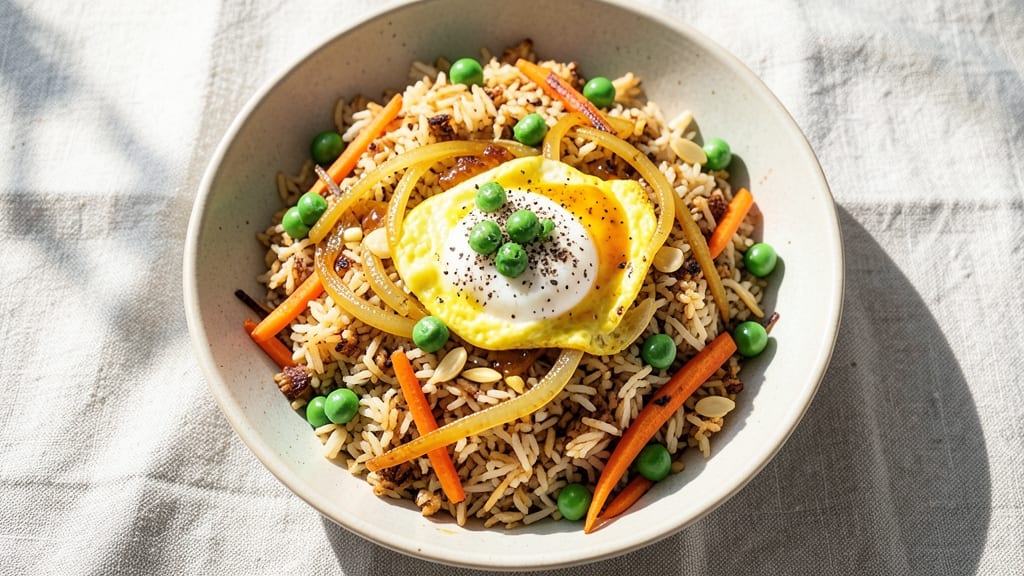
This cheap fried rice recipe proves you don’t need expensive ingredients to make restaurant-quality meals at home. Using day-old rice and simple pantry staples, I’ve perfected a wok-tossed dish that’s flavorful, satisfying, and budget-friendly—without sacrificing taste or technique.
The key lies in high-heat stir-frying and balancing textures, transforming basic ingredients into a dish that feels like a splurge.
With just 15 minutes of active cooking, this recipe repurposes leftovers, minimizes waste, and delivers crispy edges, tender veggies, and perfectly seasoned rice. Whether you’re feeding a family or meal prepping for the week, this method ensures every bite is packed with flavor while keeping costs low.
Let’s get cooking—your wallet (and taste buds) will thank you.
Ingredients for cheap fried rice
Pantry staples and zero-waste ingredients transform into restaurant-quality fried rice in minutes.
| Ingredient | Amount | Notes |
|---|---|---|
| Day-Old Cooked White Rice 🍚 | 4 cups | Cold and separated, no clumps |
| Large Eggs 🥚 | 2 whole | Beaten and seasoned separately |
| Yellow Onion 🧅 | 1 medium | Thinly sliced, about 1 cup |
| Carrots 🥕 | 1 medium | Julienned into thin matchsticks |
| Frozen Peas 🌿 | ½ cup | Thawed and drained |
| Garlic Cloves 🧄 | 4 cloves | Minced, about 1 tsp total |
| Soy Sauce 🥢 | 3 tbsp | Light or regular, not low-sodium |
| Sesame Oil 🫒 | 1 tbsp | Toasted, for aroma |
| Vegetable Oil 🫒 | 2 tbsp | High smoke point, neutral flavor |
| Salt 🧂 | 1 tsp | Diamond Crystal preferred |
| Ground Black Pepper 🌶️ | ½ tsp | Freshly ground for best flavor |
| Green Onions 🧅 | 3 whole | Thinly sliced, for garnish |
| Sesame Seeds 🌾 | 1 tsp | Toasted lightly for crunch |
The rice is non-negotiable—day-old works best for texture, but if you're short, cook extra rice just for this dish. Look for long-grain white rice at Trader Joe's or Costco for the best results. The frozen peas? Great Frog brand is my go-to—they're cheap and never icy. For the onions, yellow or white both work, but yellow has a slightly sweeter flavor. If you're using fresh carrots, julienne them yourself—pre-shredded loses its texture fast when cooked.
No soy sauce? Coconut aminos or tamari in a 1:1 swap will do the trick, though the flavor will differ slightly. Short on sesame oil? Toast the seeds separately and add them at the end for aroma. The eggs can be swapped for tofu or scrambled eggs if you're vegetarian, but the protein-to-fat ratio changes. For the garlic, peel and mince fresh—jarred minced garlic has a metallic aftertaste. If you're using pre-minced, rinse it well first. The green onions? Save the scraps—they regrow in water on your counter.
This dish reheats beautifully—microwave with a splash of water to revive texture. Keeps for 4-5 days in the fridge, or 3 months frozen in a single layer before transferring to a bag. Double the batch and freeze half—perfect for lazy weeknights. For extra crispiness, pat the rice dry before cooking. The sesame seeds? Toast them in a dry pan for 30 seconds before adding to the dish—they'll taste fresh and nutty.
Why You'll Love This Recipe
- No Chopping Chaos: I swear by this trick—just dice the onion and carrots while the wok heats up. No prep-ahead stress, no knife skills required. The frozen peas? Toss ‘em straight from the bag—no thawing, no fuss.
- Eggy Magic Happens: That first crack of the egg into the hot pan? Instant drama. The edges get crispy and golden while the center stays silky—like a little surprise in every bite. (Pro tip: Scramble it fast so it doesn’t turn rubbery.)
- Pantry to Plate in 15: Honestly, I make this when I’m too tired to think. Day-old rice, a handful of veggies, eggs—it’s the ultimate “I don’t wanna cook” solution. Plus, it feeds four for under $5. That’s not just cheap; that’s smart.
Step-by-step instructions for wok-tossed fried rice
Transform yesterday's leftovers into a restaurant-quality dish with this efficient, flavor-packed method.
Prepare the Egg Mixture and Prep Vegetables
In a medium bowl, beat the 2 whole large eggs with 0.5 teaspoon ground black pepper and 1 teaspoon salt until fully combined and frothy. This seasoning ensures each bite carries balanced flavor. Set aside while you prep the vegetables.
Thinly slice the 1 medium yellow onion into half-moons and julienne the 1 medium carrot into matchstick-thin strips. These cuts ensure even cooking and maximum surface area for flavor absorption. Mince the 4 cloves garlic cloves into a fine paste—this releases more aroma when cooked. Thaw and drain the 0.5 cup frozen peas completely, pressing between paper towels to remove excess moisture.
Heat the Wok and Scramble the Eggs
Heat a wok or large skillet over high heat until it's smoking hot. Add 2 tablespoons vegetable oil and swirl to coat the surface evenly. Pour in the egg mixture and let it sit undisturbed for 10-15 seconds until the edges begin to set. Using a spatula, gently push the eggs from the edges toward the center, creating soft, silky curds rather than scrambled pieces. Remove the eggs and set aside temporarily.
Watch the heat carefully—if the oil isn't hot enough, the eggs will stick and form rubbery clumps. You want them just set on the outside with a slightly runny center when you remove them. This texture prevents dryness in the final dish.
Stir-Fry the Vegetables
Return the wok to high heat and add the thinly sliced yellow onion and julienned carrots. Stir-fry for 2-3 minutes until the onions turn translucent and the carrots begin to soften. Add the minced garlic cloves and 0.5 cup thawed peas, tossing continuously for another 1-2 minutes until the garlic becomes fragrant and the peas are heated through.
This high-heat cooking develops the natural sweetness of the vegetables while preserving their texture. If the vegetables start to stick, add a splash of water and scrape up any browned bits from the bottom of the pan—these contain concentrated flavor.
Combine Rice and Season
Add the 4 cups day-old cooked white rice, breaking up any clumps with your spatula. Drizzle in 3 tablespoons soy sauce and 1 tablespoon sesame oil, tossing vigorously to distribute evenly. Cook for 2-3 minutes until the rice is heated through and begins to sizzle in spots.
Here's the key: the rice must be completely dry to achieve that perfect wok hei texture. If it's still damp, spread it on a baking sheet and let it sit uncovered for 5-10 minutes to evaporate excess moisture before continuing.
Finish and Garnish
Return the scrambled eggs to the wok and toss everything together for 1-2 minutes until evenly coated and heated through. Taste and adjust seasoning with additional soy sauce or salt if needed. The dish should be savory but not overly salty, with a subtle peppery kick.
Divide the fried rice among 4 serving plates and garnish with thinly sliced green onions and 1 teaspoon toasted sesame seeds. Serve immediately while hot—this dish loses its ideal texture as it cools. The sesame seeds add a nutty crunch that contrasts beautifully with the tender rice and soft eggs.
Pro Tips For Making Cheap Fried Rice
- CRISP THE RICE FIRST: Break up your day-old rice with your hands or a fork before adding it to the pan—this prevents clumping and gives you those perfect, separate grains. I used to skip this and ended up with a sad, gluey mess every time.
- SCRAMBLE EGGS SEPARATELY: Cook the eggs in a clean, dry section of the pan first until just set, then push them to one side and finish the veggies before mixing everything together. This keeps the eggs creamy instead of rubbery, and it’s way easier to control the texture.
- DON’T OVERLOAD THE PAN: If your pan is crowded, the rice will steam instead of crisp up—no one wants soggy fried rice. Work in batches if needed, and resist the urge to toss in all the rice at once, even if you’re hungry.
- USE FROZEN PEAS DIRECTLY: Skip thawing—toss frozen peas straight into the pan with the other veggies. They’ll soften as the rice cooks, and you’ll save time without sacrificing texture. (Yes, even if your recipe says “fresh.”)
Health benefits of this cheap fried rice
Protein-Packed Efficiency
This recipe delivers a complete protein using just eggs and rice—two of the most budget-friendly staples. A 1-cup serving provides about 12-15 grams of protein, perfect for muscle repair and keeping you full for hours.
The eggs add healthy fats, while the rice contributes complex carbs, creating a balanced meal that won’t leave you hungry again soon. 💪
Fiber-Rich Vegetables
The combination of onions, carrots, and peas adds dietary fiber (about 3-4 grams per serving) to support digestion and gut health. Frozen peas are just as nutritious as fresh and cost significantly less, making this a smart choice for fiber without breaking the bank.
The julienned carrots also contribute beta-carotene, which supports eye health.
Low-Calorie Satisfaction
At roughly 250-300 calories per serving, this fried rice keeps calories in check while delivering maximum flavor. The high-heat stir-frying technique ensures the dish stays light and crispy, avoiding the heaviness of deep-fried options.
It’s an ideal choice for anyone watching their calorie intake without sacrificing taste or satisfaction. ✨
Budget-Friendly Nutrition
Using day-old rice and pantry staples like soy sauce and sesame oil keeps costs under $1.50 per serving. The dish maximizes nutrition per dollar, offering vitamins A (from carrots), C (from onions), and B vitamins (from rice and eggs).
This is a prime example of how to eat well without overspending—especially when using leftovers.
Antioxidant Boost
The sesame seeds and sesame oil provide antioxidants like sesamin and sesamol, which help combat oxidative stress in the body. A 1 teaspoon of toasted sesame seeds adds these benefits while enhancing the dish’s nutty depth. This small addition makes a big difference in both flavor and nutrition. 🌟
Zero-Waste Advantage
This recipe turns day-old rice (which would otherwise be tossed) into a delicious meal, reducing food waste. The frozen peas and onions also minimize spoilage compared to fresh produce. By using what you already have, you’re not only saving money but also contributing to a more sustainable kitchen. 🌱
Nutrition facts
Frequently asked questions
Can I make this fried rice with fresh rice instead of day-old?
Fresh rice works, but it’ll be mushier and less flavorful. Spread 4 cups fresh rice on a tray and let it dry uncovered for 10-15 minutes first. This mimics day-old texture. For extra flavor, cook the rice in slightly less water than usual—this makes it firmer and more absorbent for stir-frying.
What if I don’t have a wok? Can I use a regular pan?
A 12-inch nonstick skillet or even a large sauté pan works perfectly. The key is using high heat and stirring constantly to avoid sticking. If your pan isn’t wide enough, cook in batches—just keep everything hot while you finish the second round.
How can I make this vegetarian without losing flavor?
Swap the eggs for 1 cup crumbled tofu (pressed and pan-fried first) or 1 cup scrambled firm tofu. Boost umami with 1 tbsp soy sauce + 1 tsp miso paste in the seasoning. Add ½ cup shredded cabbage for extra texture and volume—it holds up well to stir-frying.
Why does my fried rice turn out soggy?
Soggy rice usually means too much moisture. First, ensure your rice is completely dry before cooking. If using fresh rice, spread it on a tray to dry. Second, don’t overcrowd the pan—cook in batches if needed. Finally, use high heat and stir constantly to evaporate excess moisture.
Can I add meat to this recipe? What works best?
Yes! Budget-friendly options include diced chicken thighs ($1.50/lb) or ground pork ($2/lb). Cook the meat first until browned, then remove and set aside. Add it back at the end to reheat through. For extra flavor, marinate the meat in 1 tbsp soy sauce + 1 tsp honey for 15 minutes** before cooking.