
Main Courses
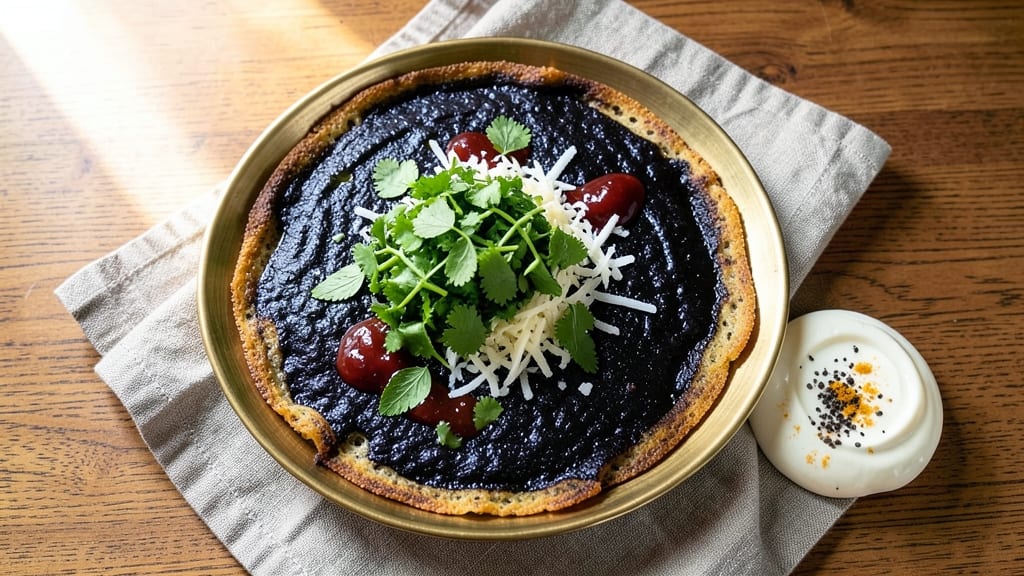
This black rice dosa recipe transforms traditional South Indian cuisine with the earthy nuttiness and antioxidant power of black rice. Fermenting the batter unlocks a subtle tang that pairs perfectly with crispy edges and a tender center—unlike any dosa you've tried before.
The deep purple hue isn't just striking; it's packed with anthocyanins that boost nutrition without sacrificing flavor.
What sets this apart is the nutty crunch from black rice, which holds up beautifully when cooked in a hot skillet. The fermented batter develops a light, airy texture while maintaining structure, creating dosas that crisp perfectly on the outside while staying soft inside.
Serve with coconut chutney and sambar for a complete, restaurant-quality meal that's as nutritious as it is delicious.
Ingredients for black rice dosa
Four servings of antioxidant-packed black rice dosas with crispy edges and nutty crunch—no dairy, no eggs, just pure flavor.
| Ingredient | Amount | Notes |
|---|---|---|
| Black Rice 🌾 | 1 cup | Uncooked, rinsed well |
| White Rice 🍚 | ½ cup | Uncooked, long-grain preferred |
| Urad Dal 🌱 | ½ cup | Split, rinsed thoroughly |
| Rice Flour 🌾 | ¼ cup | For crispy texture |
| Fresh Curds (Vegan Yogurt) 🥛 | ½ cup | Unsweetened, coconut-based |
| Fresh Grated Ginger 🧄 | 1 tbsp | For fermentation kick |
| Green Chilies 🌶️ | 2 whole | Slit lengthwise, seeds removed |
| Asafoetida (Hing) 🌿 | ¼ tsp | Crushed, for aroma |
| Cumin Seeds 🌿 | ½ tsp | Toasted lightly |
| Salt 🧂 | ¾ tsp | Fine sea salt |
| Coconut Oil 🫒 | ½ cup | For cooking, unrefined |
| Water 💧 | 1 ½ cups | Filtered preferred |
| Fresh Cilantro 🌿 | ¼ cup | Chopped, for garnish |
Black rice is the star here, so prioritize quality—look for whole-grain, unpolished varieties at Indian specialty stores or health food sections. The deep purple hue fades when cooked, but the flavor stays rich. Urad dal should be split and rinsed until the water runs clear (this removes bitterness). For the vegan yogurt, So Delicious coconut yogurt works perfectly—it ferments beautifully and adds tang. Freshly grated ginger is non-negotiable; jarred ginger lacks the punch. If you can't find asafoetida, garlic powder at half the amount mimics its savory depth.
No fresh cilantro? Dried cilantro works at one-third the amount, but fresh is ideal for garnish. Short on black rice? Substitute with equal parts purple rice, though the color won't be as dramatic. The rice flour is key for crispiness—Bob's Red Mill is my go-to brand, but any high-quality rice flour works. For the green chilies, serrano or jalapeño are perfect substitutes if you prefer more heat. Toasting the cumin seeds in a dry pan for 30 seconds enhances their aroma—don't skip this step (trust me on the full-fat version).
The batter ferments best at room temperature—cover with a damp cloth and let it sit for 8-12 hours. For quick prep, 4 hours in a warm oven with the light on works too. Store leftover batter in an airtight container in the fridge for up to 3 days, but ferment again before using. Cooked dosas reheat beautifully—wrap in foil and warm in a skillet for 2-3 minutes. The coconut oil adds richness, but avocado oil is a great alternative if you prefer a neutral flavor.
Why You'll Love This Recipe
- No-Soaking Needed: I swear by this trick—soaking the black rice overnight isn’t mandatory. Just blend the pre-cooked black rice with white rice and urad dal, add a splash of vegan yogurt for that signature fluff, and you’re golden. The batter’s ready in 10 minutes, not hours.
- Deep Umami Crunch: That nutty, earthy flavor from black rice? It’s next-level. When you crisp it up in the pan, the contrast with the soft, yogurt-infused center is chef’s kiss—like a hug for your taste buds. (Yes, even my picky teen asks for seconds.)
- Lunchbox Legend: Between us, these dosas are my go-to for meal prep. Pack them with coconut chutney or sambar, and they stay crispy for days. Honestly, I make a double batch every Sunday—my kids eat them cold for breakfast, and I reheat the leftovers for lunch.
- Pantry Staple Magic: No exotic ingredients here—just rice, lentils, and yogurt. If you already keep urad dal and black rice on hand (or can find them at an Indian grocery), this is the ultimate budget-friendly flex. Plus, the batter keeps for 2 days in the fridge, so zero waste.
Step-by-step instructions for black rice dosa
Here's how to make these nutrient-packed, crispy-edged dosas with a nutty black rice flavor.
Soak the Black Rice and Urad Dal
Combine the 1 cup black rice and 0.5 cup urad dal in a large mixing bowl. Add enough water to cover them by about 3 inches—this should be roughly 3 cups total. Let them soak for at least 6 hours or overnight at room temperature. The black rice will absorb water and develop a subtle nutty aroma, while the urad dal softens for a creamy texture.
I like to soak them in the fridge if I'm prepping ahead—this prevents fermentation from starting too soon. After soaking, drain the rice and dal thoroughly using a fine-mesh strainer, pressing gently to remove excess water. This step is crucial because any remaining moisture can make your batter too thin.
Grind the Batter to Perfect Consistency
Transfer the drained black rice, urad dal, 0.5 cup white rice, and 1 tbsp fresh grated ginger to a wet grinder or high-powered blender. Add the 0.5 cup fresh curds (vegan yogurt) and 1.5 cups water. Grind in batches if needed, adding just enough water to create a smooth, medium-thick batter—it should coat the back of a spoon but still hold its shape when drizzled.
The batter should be slightly thicker than traditional dosa batter. If it's too thin, add 1-2 tablespoons of rice flour at a time until it reaches the right consistency. Let the batter rest, covered, for 30 minutes at room temperature. This resting period allows the gluten to relax, making your dosas crispier and easier to spread.
Prepare the Fermentation Base
In a small bowl, mix together the 0.25 tsp asafoetida (hing), 0.5 tsp toasted cumin seeds, and 0.75 tsp salt. Toast the cumin seeds in a dry pan over medium heat for 30 seconds until fragrant—this enhances their aroma. Let them cool completely before adding to the batter.
Gently fold this spice mixture into your rested batter along with the 2 slit green chilies and 0.25 cup rice flour. Mix just until combined—overmixing can develop gluten and make your dosas tough. Cover the batter with a clean kitchen towel and let it ferment at room temperature for 8-12 hours. You'll know it's ready when it develops a slightly tangy smell and rises by about 25% in volume.
Cook the Dosas to Golden Perfection
Heat a non-stick skillet over medium-high heat and add 1 tablespoon of coconut oil. Let it get hot enough that a drop of water sizzles and evaporates instantly. Pour about ¼ cup of batter into the center of the skillet, tilting it to spread into a 6-inch circle. Drizzle a little more oil around the edges if needed.
Cover the skillet and cook for 2-3 minutes until the edges turn golden brown and crispy. Flip carefully using a spatula and cook the other side for another 1-2 minutes until lightly browned. The center should still look slightly underdone—it'll finish cooking as it sits. Keep the cooked dosas warm in a 200°F oven while you make the rest.
Serve with Fresh Garnishes
Once all dosas are cooked, transfer them to a serving platter. Drizzle with a little more coconut oil and sprinkle generously with 0.25 cup chopped fresh cilantro. The contrast of the crispy edges with the soft, nutty center makes each bite irresistible.
Serve immediately with coconut chutney or a simple tamarind sauce on the side. The black rice adds a beautiful deep purple hue and a subtle earthy sweetness that pairs perfectly with the tangy fermentation. These dosas are best enjoyed fresh while still warm and crispy!
Pro Tips For Making Black Rice Dosa
- SOAK BLACK RICE 12 HOURS: Black rice needs patience—don’t rush it. Soak the black rice and white rice separately for at least 12 hours (overnight works best) to break down the tough outer layer, especially the black rice’s anthocyanins. I used to skip this and ended up with a dense, chewy dosa that tasted like it needed more chewing than eating.
- GRIND DAL WITH WARM WATER: Split urad dal grinds better when soaked in warm water (not boiling, just warm to the touch). Cold water makes the batter gummy, and you’ll end up with a dosa that sticks to the pan like glue. After grinding, let the batter sit for 10 minutes—this lets the starch settle, making the dosa crispier and easier to flip.
- DON’T OVERMIX THE BATTER: Once you add rice flour and vegan yogurt, resist the urge to stir like you’re kneading dough. Overmixing develops gluten, and your dosa will turn out tough instead of light and fluffy. Mix just until the flour is incorporated—about 2-3 minutes max—and let it rest for 20 minutes before cooking.
- SPLIT THE BATTER FOR CRISPY EDGES: Divide the batter into two portions: one with a slightly higher rice flour ratio (add 1 extra tablespoon per cup of batter). Use this thicker batter for the edges of your dosa while keeping the center lighter. This creates that perfect crispy border without making the whole dosa dense—trust me, your dosa will thank you.
Perfect pairings for this dish
Coconut Chutney
This creamy, tangy chutney is a must with black rice dosas. Blend ½ cup fresh coconut (frozen works too), ¼ cup cilantro, 1 green chili, 1 tbsp ginger, 1 tbsp lemon juice, ½ tsp cumin, and 2 tbsp water until smooth.
Thin with more water if needed. The coconut's richness balances the nutty black rice perfectly. 🥥
Sambar Pairing
For a hearty contrast, serve with a classic lentil-based sambar. My go-to uses ½ cup toor dal, 1 cup tamarind pulp, 1 tsp turmeric, 1 tsp coriander, and 1 tsp garam masala.
The tangy, spiced broth complements the dosa's crispy edges while the lentils add protein. Simmer for 20 minutes for best flavor.
Mango Pickle
Add a sweet-spicy kick with a homemade mango pickle. Mix 2 cups grated mango, 1 tbsp mustard seeds, 1 tbsp turmeric, 1 tbsp red chili powder, 1 tsp asafoetida, and 1 cup oil.
Let it ferment for 3-4 days for intense flavor. The tangy-spicy contrast elevates every bite of dosa.
Yogurt Dip
A simple vegan yogurt dip with ¼ cup coconut yogurt, 1 tsp roasted cumin powder, ½ tsp black pepper, and salt to taste adds coolness. Stir in 1 tbsp chopped mint for freshness. This light dip cuts through the richness of the dosas beautifully.
Spiced Tomato Sauce
For a quick sauce, sauté 2 tbsp onion, 1 tsp ginger-garlic paste, and 1 tsp cumin seeds in oil. Add 1 cup crushed tomatoes, ½ tsp turmeric, and 1 tsp chili powder.
Simmer for 10 minutes and blend until smooth. The acidity brightens the dosa's earthy flavors.
Garnish Ideas
Finish your dosas with crispy shallots (sauté ¼ cup thinly sliced shallots in oil until golden) or toasted coconut flakes. A sprinkle of fresh coriander adds vibrant color. These garnishes add texture and visual appeal to your plating. 🌿
Nutrition facts
Frequently asked questions
Why does black rice dosa batter need longer fermentation than regular dosa?
The black rice's higher fiber and starch content absorbs moisture differently, requiring 8-12 hours of fermentation to develop proper tang and texture. The fermentation also breaks down the nutty compounds in black rice, enhancing its flavor. Regular dosa batter typically ferments in 6-8 hours—this extra time is key for the perfect balance.
Can I make black rice dosas without a wet grinder?
Yes! Use a high-powered blender, but grind in 2 batches with 10-second bursts to prevent overheating. Add 1-2 tablespoons of water between batches for smoothness. For best results, let the batter rest 30 minutes after blending to relax the gluten.
What if my batter doesn't ferment properly?
If the batter smells sour or doesn't rise, it's over-fermented. Use it immediately for crispy dosas! For under-fermented batter (no rise), place it in a warm oven (100°F) with the light on for 2-3 extra hours. Never microwave—it kills fermentation enzymes and makes dosas gummy.
How do I store leftover black rice dosa batter?
Transfer to an airtight container and refrigerate for up to 3 days. Before using, let it sit at room temperature for 1-2 hours to ferment slightly. For longer storage, freeze portions in ice cube trays, then transfer to a bag—thaw overnight in the fridge before cooking.
Can I use black rice flour instead of whole black rice?
Not recommended—black rice flour lacks the nutty texture and anthocyanin-rich color of whole grains. If you must substitute, mix ½ cup black rice flour with ½ cup regular rice flour, but expect less depth of flavor. Whole black rice is essential for authentic taste and nutrition.