
Main Courses
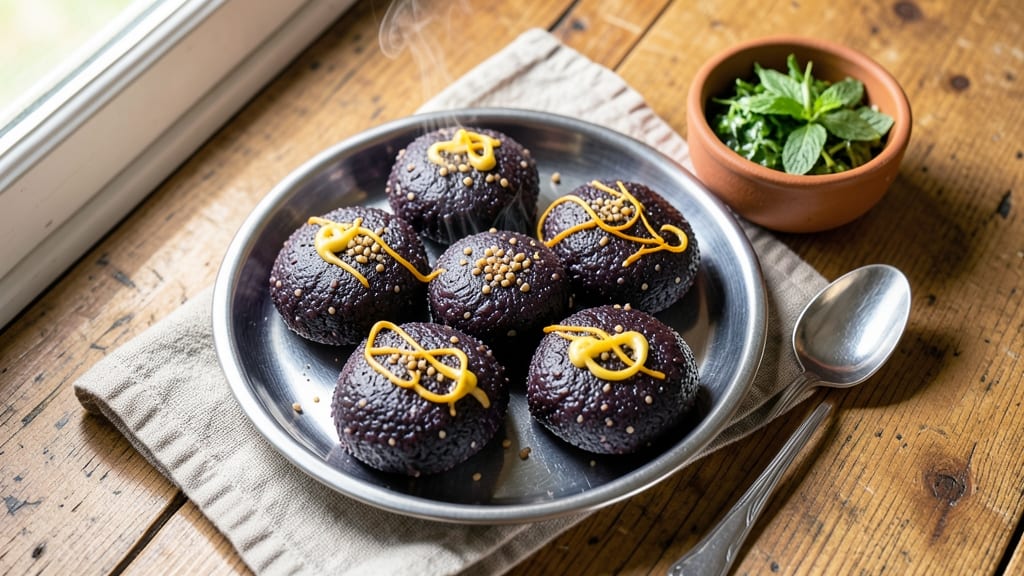
Black rice idli transforms traditional breakfast into a nutrient powerhouse with its deep purple hue and earthy, nutty flavor. Unlike regular idlis, this fermented batter uses black rice for a denser texture and higher antioxidant content, making every bite both satisfying and health-focused.
The fermentation process unlocks deeper flavors while creating that signature fluffy yet firm steamed cake.
This recipe delivers restaurant-quality results at home with simple techniques—soaking the rice overnight, grinding it to a smooth batter, and letting it ferment for 8-12 hours. The steaming method ensures perfect rise and texture, while serving with coconut chutney or sambar enhances the dish's natural richness.
Perfect for health-conscious eaters or anyone craving a flavorful twist on a classic.
Ingredients for black rice idli
Transform your breakfast with these nutrient-rich ingredients for restaurant-quality black rice idlis.
| Ingredient | Amount | Notes |
|---|---|---|
| Black Rice 🌾 | 1 cup | Uncooked, high-quality variety |
| Urad Dal 🌱 | ½ cup | Split black gram, soaked overnight |
| Rice Flour 🌾 | ¼ cup | White rice flour preferred |
| Fresh Curd 🥛 | ½ cup | Whisked, unsweetened yogurt |
| Baking Soda 🧪 | ½ tsp | Essential for fluffiness |
| Asafoetida 🌿 | ⅛ tsp | Pinch for authentic flavor |
| Salt 🧂 | ½ tsp | Adjust to taste |
| Fresh Cilantro 🌿 | ¼ cup | Chopped, stems removed |
| Green Chilies 🌶️ | 2 whole | Slit lengthwise, seeds removed |
| Ginger 🧄 | ½ tsp | Freshly grated, aromatic |
| Coconut Oil 🫒 | 2 tbsp | For greasing idli plates |
Black rice is the star—look for high-quality organic black rice at Whole Foods or Indian specialty stores for the deepest purple hue and richest flavor. The urad dal must be split and soaked for at least 8 hours to soften properly, which unlocks its natural creaminess. Rice flour acts as a binder, creating that signature dense yet fluffy texture. For the curd, use fresh, unsweetened yogurt—the tanginess is crucial for fermentation. If you can't find asafoetida (hing), substitute with a pinch of garlic powder, though it won't be identical.
No fresh ginger? Powdered ginger at half the amount works in a pinch, but fresh is ideal for that bright, zesty kick. The green chilies can be swapped for red chilies if you prefer milder heat, but leave the seeds in for extra spice. Cilantro stems are edible and packed with flavor—don't toss them! For a nutrient boost, add 1 tablespoon of flaxseeds to the batter. The coconut oil should be melted before greasing the idli plates to ensure even distribution. If you're short on time, reduce fermentation to 6 hours, though flavor will be slightly muted.
Store the batter in an airtight container in the fridge for up to 24 hours before steaming—this gives it time to ferment fully. Pre-steam the idli plates for 5 minutes to prevent sticking. These idlis reheat beautifully—microwave for 30 seconds with a damp paper towel to restore moisture. For longer storage, freeze cooked idlis on a tray before transferring to a bag for up to 3 months. Serve warm with coconut chutney or tomato sambar to complement their earthy depth.
Why You'll Love This Recipe
- No-Soak Needed: I’ll be real—soaking rice overnight isn’t always my vibe. This black rice idli skips the wait by using pre-soaked urad dal and rice flour, so the batter’s ready in 15 minutes. Just mix, steam, and enjoy—no patience required.
- Earthy Nutty Magic: That deep purple-black rice? It’s not just pretty—it’s packed with a toasty, almost caramelized flavor that regular idlis can’t touch. The urad dal adds a subtle tang, and the curd keeps it light. Honestly, the first bite makes me want to eat them straight from the idli pot.
- Lunchbox Hero: Between us, these idlis reheat like a dream—soft, fluffy, and never gummy. Pack them with coconut chutney or sambar, and they’ll still taste fresh hours later. My kids take them to school, and I don’t get the “mom, this is sad” texts. (Yes, even on a Tuesday night.)
- Pantry Stash Winner: Black rice might sound fancy, but it’s cheaper than you think—and this recipe uses just a cup. Urad dal and rice flour are staples, and curd stretches the batter for more idlis. I made a double batch last week, froze half, and still had leftovers for breakfast. Zero waste, all win.
Step-by-step instructions for black rice idli
Transform simple ingredients into nutrient-rich, fluffy idlis with this precise fermentation and steaming method.
Soak and Grind the Black Rice and Urad Dal
Combine the 1 cup black rice and 0.5 cup urad dal in a large bowl and add enough water to cover by 2 inches. Let soak for 6-8 hours or overnight at room temperature. The grains should soften noticeably and the water should develop a slightly sour aroma—this indicates fermentation has begun.
Drain the soaked mixture thoroughly using a fine-mesh strainer, pressing gently to remove excess water. Transfer to a wet grinder or food processor and grind with 0.5 cup fresh curd and 2 tbsp water until you achieve a smooth, batter-like consistency. The batter should be thick but pourable, similar to heavy cream. If it's too thick, add 1-2 tablespoons water at a time until it reaches the right texture.
Prepare the Idli Batter with Key Ingredients
In a large mixing bowl, combine the ground batter with 0.25 cup rice flour, 0.5 tsp salt, 0.5 tsp ginger, 2 slit green chilies (finely chopped), and 0.25 cup chopped cilantro. Mix gently using a spatula or wooden spoon until all ingredients are fully incorporated and the batter appears uniform in color.
Add the 0.5 tsp baking soda and 0.125 tsp asafoetida to the batter. The baking soda will react immediately, causing the mixture to bubble slightly—this is normal and essential for achieving the signature fluffiness. Mix just until combined, being careful not to overwork the batter, which could deflate it.
Ferment the Batter for Optimal Texture
Transfer the batter to a clean, greased bowl and cover tightly with a damp cloth or plastic wrap. Let it ferment at room temperature for 8-10 hours or until it nearly doubles in volume and develops a tangy aroma. The ideal fermentation point occurs when the batter rises significantly but still maintains a thick, spreadable consistency—it should hold its shape when you lift the bowl but be noticeably lighter than before.
I always check fermentation by inserting a clean finger into the batter. If it springs back slowly (rather than immediately), the batter is ready. Over-fermenting can make the idlis dense, so don't exceed 12 hours of total fermentation time. The black rice will give these idlis their distinctive deep purple hue and enhanced nutritional profile compared to traditional idlis.
Steam the Idlis to Perfection
Grease your idli molds generously with coconut oil, ensuring every crevice is coated. Pour the fermented batter into the molds, filling them about ¾ full. Tap the molds gently on the counter to remove any air bubbles that may have formed during pouring.
Place the filled molds in your steamer and steam over medium-high heat for 10-12 minutes. You'll know they're perfectly cooked when the idlis release easily from the molds with a gentle tap and have a slightly spongy texture at the top. Avoid oversteaming, which can make them gummy. Remove from molds immediately and serve warm with coconut chutney or sambar.
Pro Tips For Making Black Rice Idli
- Soak Black Rice Twice: Black rice needs more love than regular rice—soak it for 4 hours first, then drain and soak again for another 3 hours. I learned this the hard way when my idlis turned dense; the extra soak breaks down the tough bran and absorbs water properly, giving you that perfect fluffy texture.
- Grind Urad Dal Wet: Skip the dry grind—add just enough water to the dal while grinding to make a smooth, thin batter (like heavy cream). This prevents grittiness in your idlis and ensures the fermenting agent distributes evenly. Yes, it’s messier, but your idlis will thank you.
- Steam on Medium Heat: Don’t blast the steamer—medium heat is your friend. Too hot, and the idlis rise too fast, collapsing like sad pancakes. Too low, and they won’t cook through. Aim for a steady stream of condensation, about 12-15 minutes. (Your steamer’s thermometer is your new best friend.)
- Add Baking Soda Last: Mix the baking soda with the curd right before steaming—never earlier. It reacts with the acid in the curd immediately, and if you add it too soon, your batter will curdle into a gloopy mess. Stir gently, then steam fast. Timing is everything here.
Wine and beer pairings for this dish
Unexpected Wine Pairings
Black rice idli's earthy, nutty depth pairs surprisingly well with dry Riesling from Germany—its crisp acidity and subtle stone fruit notes cut through the richness without overpowering.
I reach for a 2022 Dr. Loosen Blue Slate Riesling ($22) from the Mosel region, where the mineral finish complements the black rice's antioxidant profile. The wine's slight sweetness also balances the idli's tangy fermentation. 🍷
Craft Beer Contrasts
For a bold contrast, try a Belgian-style witbier like Stella Artois Wit ($4.50) or Hoegaarden ($5). The coriander and citrus notes in these beers create a refreshing interplay with the idli's earthy flavors, while the effervescence cleanses your palate between bites.
If you prefer darker beers, a German Dunkelweizen with its caramel and banana undertones provides a satisfying depth. 🍺
Non-Alcoholic Options
For a vibrant mocktail, blend sparkling pomegranate juice with fresh mint leaves and a squeeze of lime. The tartness mirrors the idli's fermentation tang, while the effervescence mimics wine's cleansing effect. Serve chilled in a copper mug for an authentic South Indian touch.
I also love coconut water with a pinch of black salt (kala namak)—it enhances the idli's mineral notes beautifully. ✨
Regional Indian Pairings
While wine and beer work, traditional pairings often shine brighter. Coconut chutney with its creamy texture and tomato sambar with its tangy lentils create the perfect balance. For a spicy kick, add mint-coriander chutney—the cool mint contrasts the idli's warmth.
I always serve these with filter coffee for a complete South Indian breakfast experience. ☕
Sweet Endings
Finish your meal with mango lassi or rose-flavored milk to complement the idli's earthy flavors. The sweetness neutralizes any lingering spice, while the dairy richness satisfies. For a modern twist, try cardamom-infused vanilla ice cream—the warm spices echo the idli's ginger and green chili notes. 🍦
Nutrition facts
Frequently asked questions
Why does black rice idli have a different texture than regular idli?
The black rice adds a denser, slightly chewier texture compared to traditional idlis made with white rice. This happens because black rice contains more fiber and resistant starch, which absorbs moisture differently during fermentation. The result is a more substantial bite while maintaining the signature fluffy steamed quality. The urad dal also contributes to this unique texture, creating a satisfying contrast to the softness.
Can I make black rice idli without a wet grinder?
Yes! If you don't have a wet grinder, blend the soaked black rice and urad dal with 0.5 cup fresh curd and 2 tbsp water in a high-powered food processor. Process in batches, scraping down the sides, until completely smooth. For an even finer texture, transfer to a blender and pulse briefly. You may need to add 1-2 tbsp water to achieve the right consistency. The batter will be slightly thicker but will still steam perfectly.
How do I know when the batter is properly fermented?
Look for three key signs: the batter should nearly double in volume, develop a tangy aroma, and have a slightly bubbly surface. Insert a clean finger—if it springs back slowly (not immediately), fermentation is complete. For black rice idlis, aim for 8-10 hours at room temperature. Over-fermenting beyond 12 hours can make the idlis dense, while under-fermenting (6 hours) may result in a flat texture. The deep purple hue will also darken slightly as fermentation progresses.
Can I use black rice flour instead of whole black rice?
While you can substitute, whole black rice creates a richer flavor and texture. Black rice flour lacks the same fiber content and fermentation properties that develop during soaking. If using flour, soak it for 4-5 hours with 0.5 cup urad dal and grind with extra water to compensate for the lack of natural starch. Expect slightly less depth in flavor and a more uniform, but less complex, texture. For best results, stick with whole black rice for that authentic, nutrient-packed bite.
What's the best way to reheat leftover black rice idlis?
Reheat in a steamer for 2-3 minutes to restore their fluffy texture. For microwave reheating, place idlis on a plate with a damp paper towel, cover with another towel, and heat for 20-30 seconds at medium-high power. Avoid reheating in the oven, as it can dry them out. To prevent sogginess, store cooked idlis in an airtight container in the fridge for up to 3 days or freeze for up to 3 months. Thaw frozen idlis overnight in the fridge before reheating.